Lupinus polyphyllus var. burkei
Burke's lupine
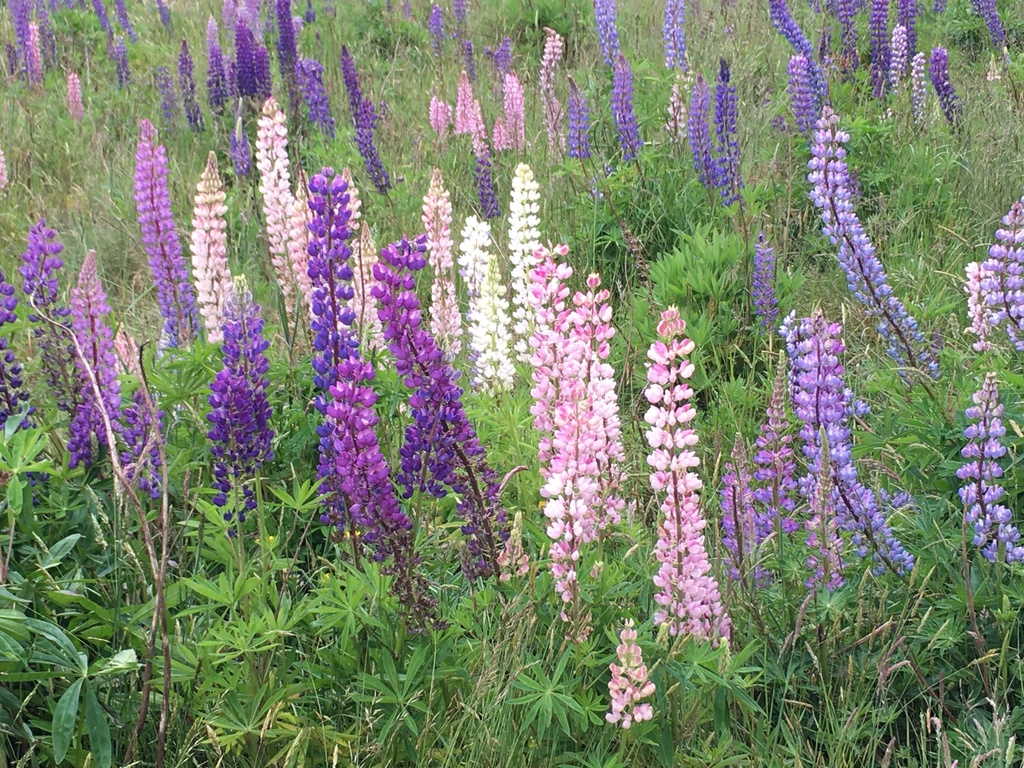
Photo: parent species Lupinus polyphyllus · (c) Henrik Kibak, some rights reserved (CC BY) · licence
Family: Fabaceae · Type: Herb · Native
Lupinus polyphyllus var. burkei (Burke's lupine) is a native California herb in the Fabaceae family, recognized by var. polyphyllus by stem and leaf features.
Burke's lupine is a California native perennial found in the Klamath Ranges, Cascade Range, Sierra Nevada, Transverse Ranges, San Jacinto Mountains, and Great Basin in wet habitats at elevations of 900 to 3,000 meters. Flowering from May to August, this plant produces purple to blue flowers in elongated clusters. Growing 55 to 120 centimeters tall with somewhat hollow stems that branch from an underground caudex, it forms a robust and distinctive woodland wildflower. Its compound leaves have 5 to 11 leaflets that are glabrous on the upper surface and occasionally sparsely hairy underneath, creating a rich green foliage. The upper keel of its flowers is generally glabrous, with only minimal ciliate edges.
Identification and appearance
Key characters: 82 sympatric species; distinguished from var. polyphyllus by stem and leaf features
Habitat and range
Habitat: Wet places
Elevation: 900-3000 m
California counties: Mono, Tulare, Fresno, Butte, Nevada, San Bernardino, El Dorado, Riverside, Alpine, Yuba, Amador, Placer, Sierra, Modoc, Plumas, Siskiyou, Madera, Tuolumne, Shasta, Mariposa, Tehama, Inyo, Ventura, Lassen, Trinity, Calaveras, Los Angeles, San Luis Obispo, Kern
Outside California: to Washington, Idaho, Wyoming, Nevada
Bloom period
Lupinus polyphyllus var. burkei blooms May-Aug.
How to tell it apart
vs Salvia: Lupine has pea flowers and palmate leaves; sage has tubular two-lipped flowers and opposite leaves.; vs Artemisia: Lupine has large showy flower spikes; sagebrush has tiny inconspicuous flowers and silvery aromatic foliage.; vs Thermopsis: Lupine typically has 7-11 leaflets; false lupine has exactly 3 leaflets and bright yellow flowers.; vs Delphinium: Lupine has pea flowers; larkspur has flowers with prominent backward-pointing spur.; vs Vicia: Lupine is upright with palmate leaves; vetch is climbing with pinnate leaves and tendrils.
Frequently asked questions
Is Lupinus polyphyllus var. burkei native to California?
Yes. Lupinus polyphyllus var. burkei is native to California (recorded as native).
When does Lupinus polyphyllus var. burkei bloom?
Lupinus polyphyllus var. burkei blooms May-Aug.
Where in California does Lupinus polyphyllus var. burkei grow?
Lupinus polyphyllus var. burkei occurs in Mono, Tulare, Fresno, Butte, Nevada, San Bernardino, El Dorado, Riverside and other counties, at elevations of 900-3000 m.
What plant family does Lupinus polyphyllus var. burkei belong to?
Lupinus polyphyllus var. burkei is in the Fabaceae family, genus Lupinus.
What habitat does Lupinus polyphyllus var. burkei grow in?
Lupinus polyphyllus var. burkei grows in Wet places.
Related species
Other California species in the same genus, family, or bioregion.
- Lupinus polyphyllus var. humicola — Holmgren's lupine
- Lupinus polyphyllus var. polyphyllus — Meadow lupine
- Lupinus polyphyllus var. saxosus — Rock lupine
- Lupinus pratensis — Inyo meadow lupine
- Lupinus pratensis var. eriostachyus — Hairy bannered inyo meadow lupine
- Lupinus pratensis var. pratensis — Inyo meadow lupine
Sources: Jepson eFlora · Index of California Plant Names · CalPhotos
Last updated 2026-10-07
Data from The California Species Project — 14,000+ California species with verified data from CNPS, CDFW, USFWS, Cal-IPC, and more.