Luzula spicata subsp. spicata
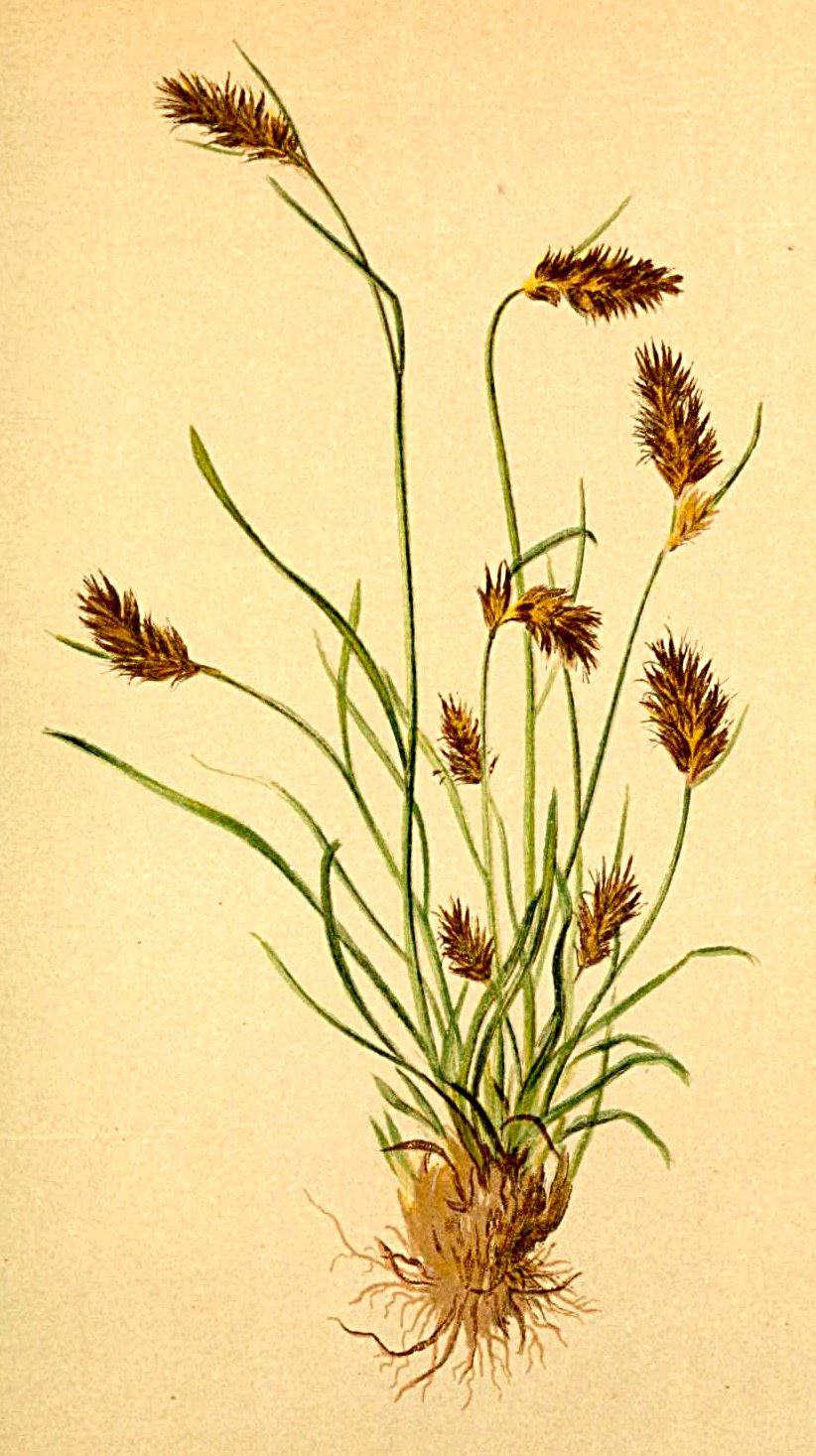
Anton Hartinger (via Wikimedia Commons) · CC0
Family: Juncaceae · Type: Perennial · Native
Luzula spicata subsp. spicata is a native California perennial in the Juncaceae family.
Spike woodrush is a native perennial found in alpine and subalpine zones of the Sierra Nevada at elevations of 2,900 to 3,800 meters. Its inflorescence is a dense, dark head-like cluster that becomes nodding at maturity, with dark brown to dark purple perianth parts that often have wide pale margins. Growing in densely tufted clusters 5 to 32 centimeters tall, this plant forms compact bunches with numerous narrow basal leaves. Its leaves are channeled, particularly toward the tip, with acute to acuminate ends measuring 0.5 to 3 millimeters wide. The small flowers produce oblong seeds approximately 1 millimeter long, characteristic of this high-elevation alpine species.
Identification and appearance
Key characters: Geographically isolated with highest elevation range and nodding dark flower heads
Habitat and range
Habitat: Rocky alpine slopes and meadows
Elevation: 2900-3800 m
Outside California: to Alaska, Alberta, New Mexico, New York to Greenland, Eurasia, northwest Africa
How to tell it apart
vs Juncus: Run finger along leaf edge - hairy = Luzula, smooth = Juncus.; vs Carex: Luzula has hairy leaf margins; Carex has smooth margins and triangular stems.
Frequently asked questions
Is Luzula spicata subsp. spicata native to California?
Yes. Luzula spicata subsp. spicata is native to California (recorded as native).
What plant family does Luzula spicata subsp. spicata belong to?
Luzula spicata subsp. spicata is in the Juncaceae family, genus Luzula.
What habitat does Luzula spicata subsp. spicata grow in?
Luzula spicata subsp. spicata grows in Rocky alpine slopes and meadows.
Related species
Other California species in the same genus, family, or bioregion.
Sources: Jepson eFlora · CalPhotos
Last updated 2026-10-06
Data from The California Species Project — 14,000+ California species with verified data from CNPS, CDFW, USFWS, Cal-IPC, and more.