Lycium cooperi
Cooper's wolfberry, cooper's desert-thorn
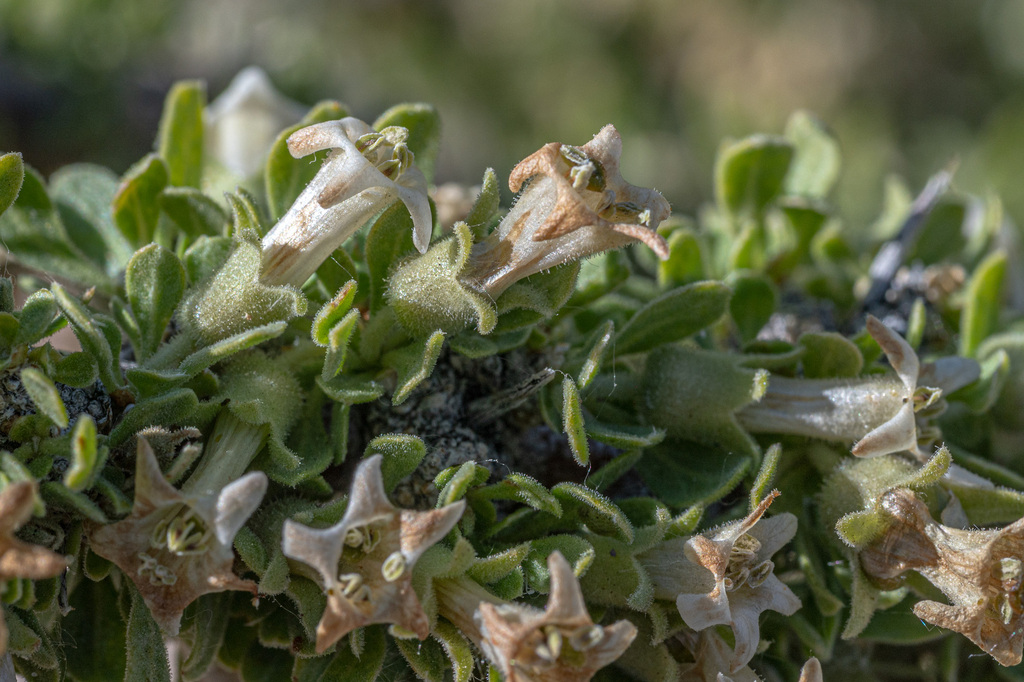
(c) Tim Messick, some rights reserved (CC BY) · licence
Family: Solanaceae · Type: Shrub · Native
Lycium cooperi (Cooper's wolfberry) is a native California shrub in the Solanaceae family, recognized by large obovate leaves and grooved yellow-orange fruits.
Cooper's wolfberry is a California native shrub found in the eastern Sierra Nevada slopes, southern San Joaquin Valley, Sierra Nevada eastern regions, and desert areas at elevations below 2,000 meters in sandy to rocky flats and washes. Flowering from March to May, this plant produces green-white to lavender-tinged flowers with narrow funnel-shaped corollas approximately 9 to 12 millimeters long. Growing up to 2.5 meters tall with rigidly ascending branches, it forms an erect shrub with glandular-puberulent stems. Its leaves are oblanceolate to obovate, measuring 1 to 3 centimeters long, arranged along leafy branches. The fruit is a distinctive yellow to orange berry 5 to 9 millimeters long, marked with two cross-grooves above its middle.
Identification and appearance
Key characters: 6 sympatric species; key features are large obovate leaves and grooved yellow-orange fruits
Habitat and range
Habitat: Sandy to rocky flats, washes
Elevation: < 2000 m
California counties: San Bernardino, Los Angeles, Kern, Riverside, Inyo, Mono, San Diego, Imperial
Outside California: to Utah, Arizona
Bloom period
Lycium cooperi blooms Mar-May.
How to tell it apart
vs Prunus: Lycium has small tubular nightshade flowers; Prunus has 5-petaled rose-family flowers with many stamens.; vs Salvia: Lycium has thorny branches; Salvia has square stems and 2-lipped mint-family flowers without thorns.; vs Ceanothus: Lycium has thorns and tubular flowers; Ceanothus has tiny clustered flowers and no thorns.; vs Tetradymia: Lycium has tubular nightshade flowers; Tetradymia has yellow daisy-like composite flowers.; vs Atriplex: Lycium has tubular flowers and thorns; Atriplex has tiny wind-pollinated flowers without petals.
Frequently asked questions
Is Lycium cooperi native to California?
Yes. Lycium cooperi is native to California (recorded as native).
When does Lycium cooperi bloom?
Lycium cooperi blooms Mar-May.
Where in California does Lycium cooperi grow?
Lycium cooperi occurs in San Bernardino, Los Angeles, Kern, Riverside, Inyo, Mono, San Diego, Imperial, at elevations of < 2000 m.
What plant family does Lycium cooperi belong to?
Lycium cooperi is in the Solanaceae family, genus Lycium.
What habitat does Lycium cooperi grow in?
Lycium cooperi grows in Sandy to rocky flats, washes.
Related species
Other California species in the same genus, family, or bioregion.
Sources: Jepson eFlora · Index of California Plant Names · CalPhotos
Last updated 2026-10-07
Data from The California Species Project — 14,000+ California species with verified data from CNPS, CDFW, USFWS, Cal-IPC, and more.