Lycium ferocissimum
African boxthorn
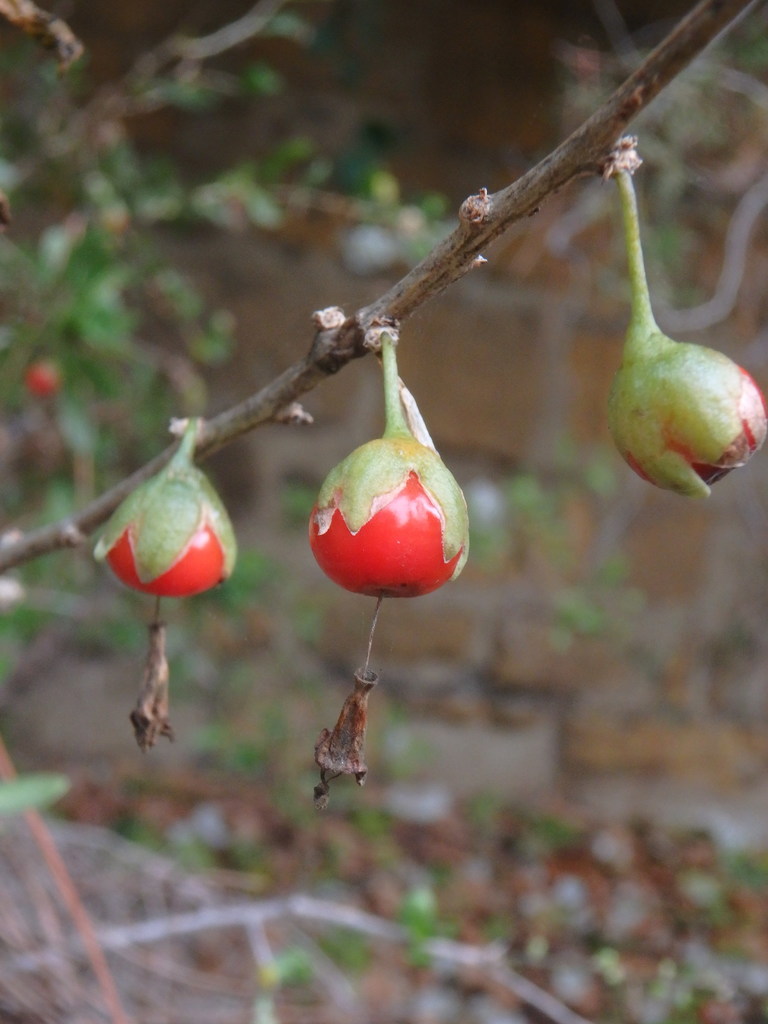
(c) Daniel Cahen, some rights reserved (CC BY), uploaded by Daniel Cahen · licence
Family: Solanaceae · Type: Shrub
Lycium ferocissimum (African boxthorn) is a California shrub in the Solanaceae family.
African boxthorn is a naturalized shrub found in coastal salt marshes, dunes, and brushy sites at elevations below 100 meters. Flowering throughout the year, this plant produces white to blue-purple flowers with spreading to reflexed lobes, sometimes featuring purple veins or blotches. Growing 2 to 3 meters tall with erect and arching branches, it has smooth gray to pinkish brown bark that becomes rough with age. Its leaves are bright green, 12 to 35 millimeters long, oblanceolate to obovate, and slightly fleshy with glabrous margins. The fruit is a distinctive bright red berry approximately 8 to 10 millimeters in size.
Identification and appearance
Key characters: 0 sympatric species; geographically isolated but range data limited
Habitat and range
Habitat: Coastal salt marsh, dunes, brushy sites
Elevation: < 100 m
Outside California: native to southern Africa, introduced southern Europe, northern Africa, Australia, New Zealand
How to tell it apart
vs Prunus: Lycium has small tubular nightshade flowers; Prunus has 5-petaled rose-family flowers with many stamens.; vs Salvia: Lycium has thorny branches; Salvia has square stems and 2-lipped mint-family flowers without thorns.; vs Ceanothus: Lycium has thorns and tubular flowers; Ceanothus has tiny clustered flowers and no thorns.; vs Tetradymia: Lycium has tubular nightshade flowers; Tetradymia has yellow daisy-like composite flowers.; vs Atriplex: Lycium has tubular flowers and thorns; Atriplex has tiny wind-pollinated flowers without petals.
Frequently asked questions
What plant family does Lycium ferocissimum belong to?
Lycium ferocissimum is in the Solanaceae family, genus Lycium.
What habitat does Lycium ferocissimum grow in?
Lycium ferocissimum grows in Coastal salt marsh, dunes, brushy sites.
Related species
Other California species in the same genus, family, or bioregion.
Sources: Jepson eFlora · CalPhotos
Last updated 2026-10-07
Data from The California Species Project — 14,000+ California species with verified data from CNPS, CDFW, USFWS, Cal-IPC, and more.