Lycium parishii
Parish's desert-thorn
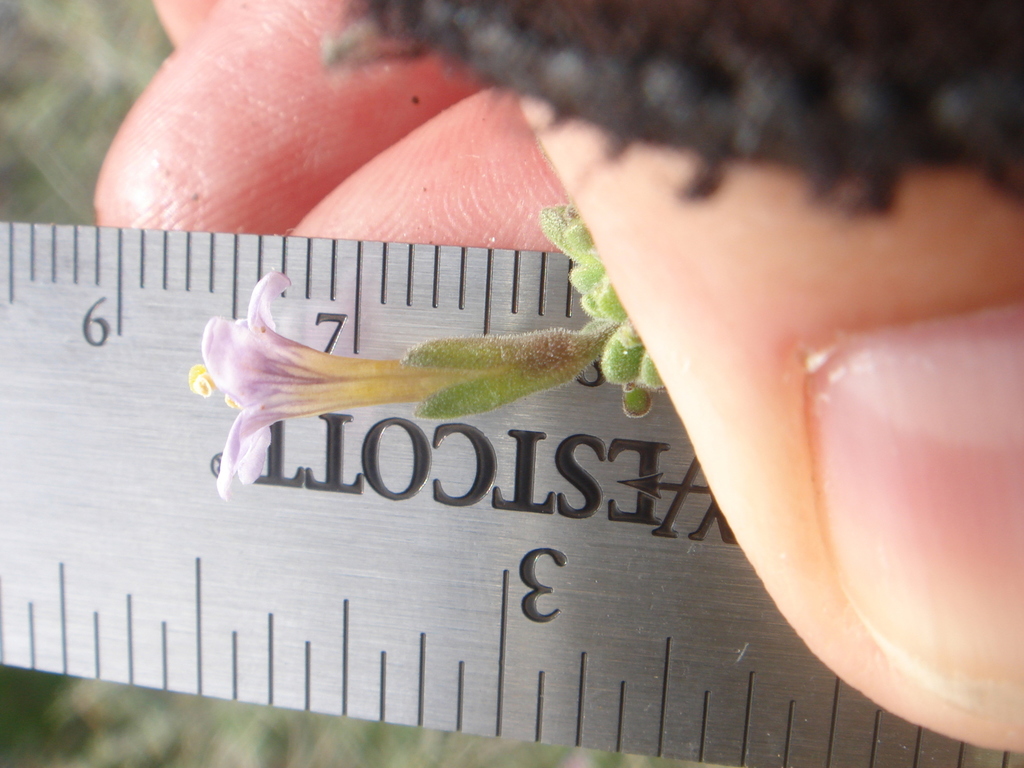
no rights reserved · CC0
Family: Solanaceae · Type: Shrub · Native
Conservation status: CNPS 2B.3
Lycium parishii (Parish's desert-thorn) is a native California shrub in the Solanaceae family, recognized by intricate branching, purple flowers, and small corolla size.
Parish's desert-thorn is a rare (CNPS 2B.3) California native shrub found in eastern Santa Catalina and western Colorado Desert bioregions on sandy to rocky slopes and in canyons at elevations below 1,000 meters. Flowering from March to April, this plant produces distinctive purple flowers with narrow funnel-shaped corollas 6 to 10 millimeters long. Growing 1 to 3 meters tall with an intricate, spreading-branched form and glandular-hairy stems, it develops an open, intricately structured silhouette. Its leaves are oblanceolate, measuring 5 to 30 millimeters long, and the plant bears small red fruits 4 to 7 millimeters in diameter. The shrub produces flowers with short pedicels and a bell-shaped calyx, creating a delicate desert landscape presence.
Identification and appearance
Key characters: 7 sympatric species; key features are intricate branching, purple flowers, and small corolla size
Habitat and range
Habitat: Sandy to rocky slopes, canyons
Elevation: < 1000 m
California counties: Imperial, Los Angeles, San Diego, San Bernardino, Riverside
Outside California: Arizona, northwestern Mexico
Bloom period
Lycium parishii blooms Mar-Apr.
Conservation status
CNPS 2B.3
How to tell it apart
vs Prunus: Lycium has small tubular nightshade flowers; Prunus has 5-petaled rose-family flowers with many stamens.; vs Salvia: Lycium has thorny branches; Salvia has square stems and 2-lipped mint-family flowers without thorns.; vs Ceanothus: Lycium has thorns and tubular flowers; Ceanothus has tiny clustered flowers and no thorns.; vs Tetradymia: Lycium has tubular nightshade flowers; Tetradymia has yellow daisy-like composite flowers.; vs Atriplex: Lycium has tubular flowers and thorns; Atriplex has tiny wind-pollinated flowers without petals.
Frequently asked questions
Is Lycium parishii native to California?
Yes. Lycium parishii is native to California (recorded as native).
When does Lycium parishii bloom?
Lycium parishii blooms Mar-Apr.
Where in California does Lycium parishii grow?
Lycium parishii occurs in Imperial, Los Angeles, San Diego, San Bernardino, Riverside, at elevations of < 1000 m.
What plant family does Lycium parishii belong to?
Lycium parishii is in the Solanaceae family, genus Lycium.
Is Lycium parishii rare or endangered?
Lycium parishii carries California Rare Plant Rank 2B.3, state rank S1.
Related species
Other California species in the same genus, family, or bioregion.
Sources: Jepson eFlora · CNPS Rare Plant Inventory · Index of California Plant Names · CalPhotos · CDFW CNDDB
Last updated 2026-10-07
Data from The California Species Project — 14,000+ California species with verified data from CNPS, CDFW, USFWS, Cal-IPC, and more.