Lycopus americanus
American water horehound
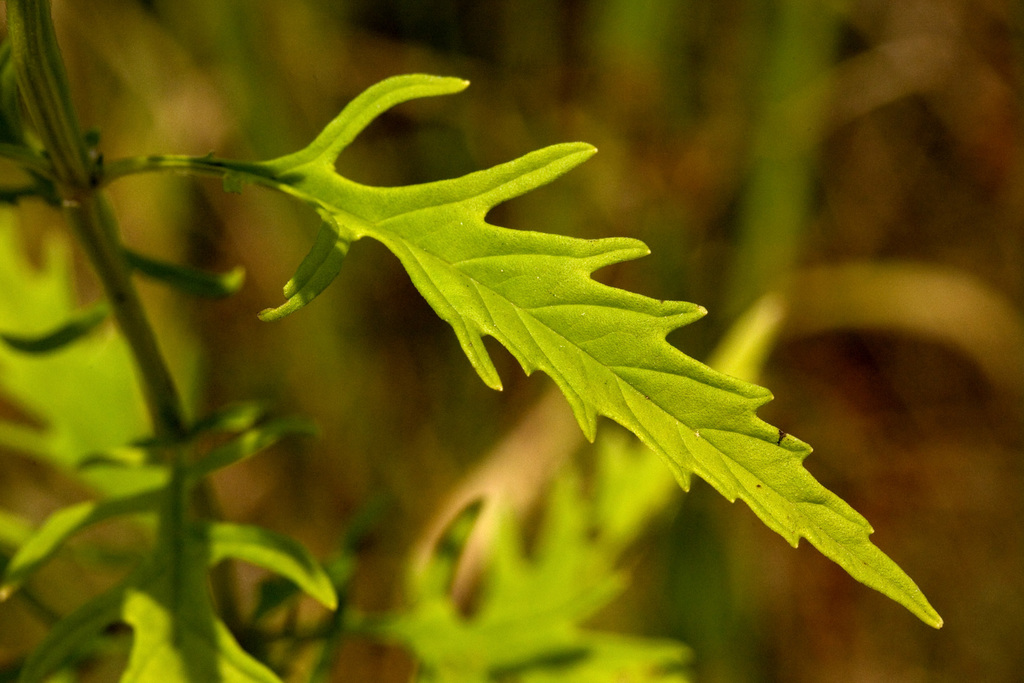
no rights reserved · CC0
Family: Lamiaceae · Type: Herb · Native
Lycopus americanus (American water horehound) is a native California herb in the Lamiaceae family, recognized by . Key features: deeply lobed leaves, slender rhizomes, smallest flowers.
American water horehound is a California native perennial found in the Central California Foothills and Transverse Ranges, and the Sierra Nevada eastern slopes in moist areas, marshes, and streambanks at elevations below 1,000 meters. Flowering from August to September, this plant produces small white flowers approximately 2 to 3 millimeters long with delicate, almost equal-sized calyx lobes. Growing with erect stems 20 to 80 centimeters tall that are generally glabrous with short-hairy nodes, it spreads through slender rhizomes. Its leaves are oblong to lanceolate, typically 2 to 8 centimeters long, deeply lobed especially in the lower half, with subtle hair variations on leaf veins. The small nutlets are 1 to 1.5 millimeters long with rounded tips, contributing to the plant's compact and understated character.
Identification and appearance
Key characters: Co-occurs with 2 species. Key features: deeply lobed leaves, slender rhizomes, smallest flowers
Habitat and range
Habitat: Moist areas, marshes, streambanks
Elevation: < 1000 m
California counties: Riverside, Butte, Orange, San Bernardino, Colusa, Los Angeles, Kern, Inyo, Shasta, Tehama, Sacramento, Placer, El Dorado, Glenn, Contra Costa, Yolo, Lassen, Sutter, Yuba, Solano, San Joaquin, Merced, Humboldt, Stanislaus, Siskiyou, Santa Barbara, Plumas
Outside California: to British Columbia, eastern North America
Bloom period
Lycopus americanus blooms Aug-Sep.
How to tell it apart
vs Dysphania: Lycopus has opposite leaves and square stems (mint family), while Dysphania has alternate leaves and round stems.; vs Marrubium: Lycopus has 4-lobed flowers without an obvious lip, while Marrubium has strongly two-lipped hooded flowers.; vs Salvia: Lycopus has tiny 2-5mm white flowers with 4 equal lobes, while Salvia has larger two-lipped flowers.; vs Monarda: Lycopus grows in wetlands with tiny white flowers, while Monarda grows in desert mountains with larger radial flowers.; vs Acanthomintha: Lycopus lacks the spiny-edged bracts that make Acanthomintha look thorny beneath flower clusters.
Frequently asked questions
Is Lycopus americanus native to California?
Yes. Lycopus americanus is native to California (recorded as native).
When does Lycopus americanus bloom?
Lycopus americanus blooms Aug-Sep.
Where in California does Lycopus americanus grow?
Lycopus americanus occurs in Riverside, Butte, Orange, San Bernardino, Colusa, Los Angeles, Kern, Inyo and other counties, at elevations of < 1000 m.
What plant family does Lycopus americanus belong to?
Lycopus americanus is in the Lamiaceae family, genus Lycopus.
What habitat does Lycopus americanus grow in?
Lycopus americanus grows in Moist areas, marshes, streambanks.
Related species
Other California species in the same genus, family, or bioregion.
Sources: Jepson eFlora · Index of California Plant Names · CalPhotos
Last updated 2026-10-07
Data from The California Species Project — 14,000+ California species with verified data from CNPS, CDFW, USFWS, Cal-IPC, and more.