Lyonothamnus floribundus subsp. aspleniifolius
Santa cruz island ironwood, Santa Cruz Island Ironwood
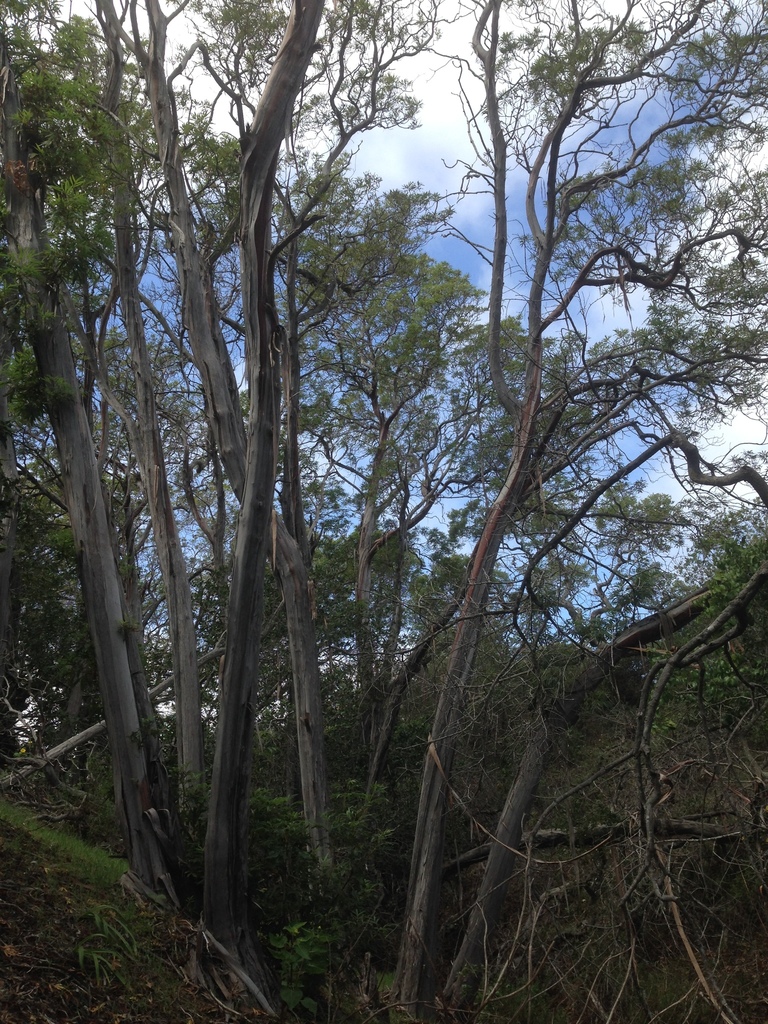
(c) Adam J. Searcy, some rights reserved (CC BY), uploaded by Adam J. Searcy · licence
Family: Rosaceae · Type: Tree · Native
Conservation status: CNPS 1B.2
Lyonothamnus floribundus subsp. aspleniifolius (Santa cruz island ironwood) is a native California tree in the Rosaceae family, recognized by 2 sympatric subspecies; distinguished by compound vs simple leaves.
Santa cruz island ironwood is a rare (CNPS 1B.2) California native tree found in the Channel Islands, specifically on Santa Cruz, Santa Rosa, and San Clemente islands, in rocky slopes, canyons, oak woodland, and chaparral at elevations of 20 to 500 meters. Flowering from May to July, this tree produces white flowers in distinctive clusters. Growing 4 to 12 meters tall with an upright, branching form, it develops a sturdy, woody structure. Its complex leaves are large, typically 9 to 21 centimeters long, with primary leaflets that are linear and measuring 5 to 14 centimeters, and secondary leaflets closely arranged in 20 to 30 small segments. The tree has a distinctive, fern-like leaf structure that creates a dramatic silhouette in its native island habitats.
Identification and appearance
Key characters: 2 sympatric subspecies; distinguished by compound vs simple leaves
Habitat and range
Habitat: Rocky slopes, canyons, oak woodland, chaparral
Elevation: 20-500 m
California counties: Santa Barbara, Los Angeles, Alameda, Del Norte, San Luis Obispo, Santa Clara
Bloom period
Lyonothamnus floribundus subsp. aspleniifolius blooms May-Jul.
Conservation status
CNPS 1B.2
How to tell it apart
vs Comptonia: Lyonothamnus has opposite leaves and peeling bark; sweetfern has alternate leaves and non-peeling bark.; vs Podocarpus: Lyonothamnus has flat-topped white flower clusters; podocarpus has cone-like seed structures.; vs Banksia: Lyonothamnus has small white flowers in flat clusters; banksia has large cylindrical flower spikes.; vs Acacia: Lyonothamnus has opposite leaves with toothed edges; acacia has alternate feathery or simple leaves.; vs Purshia: Lyonothamnus is a tree with opposite leaves and peeling bark; Purshia is a shrub with alternate lobed leaves.
Frequently asked questions
Is Lyonothamnus floribundus subsp. aspleniifolius native to California?
Yes. Lyonothamnus floribundus subsp. aspleniifolius is native to California (recorded as native).
When does Lyonothamnus floribundus subsp. aspleniifolius bloom?
Lyonothamnus floribundus subsp. aspleniifolius blooms May-Jul.
Where in California does Lyonothamnus floribundus subsp. aspleniifolius grow?
Lyonothamnus floribundus subsp. aspleniifolius occurs in Santa Barbara, Los Angeles, Alameda, Del Norte, San Luis Obispo, Santa Clara, at elevations of 20-500 m.
What plant family does Lyonothamnus floribundus subsp. aspleniifolius belong to?
Lyonothamnus floribundus subsp. aspleniifolius is in the Rosaceae family, genus Lyonothamnus.
Is Lyonothamnus floribundus subsp. aspleniifolius rare or endangered?
Lyonothamnus floribundus subsp. aspleniifolius carries California Rare Plant Rank 1B.2, state rank S3.
Related species
Other California species in the same genus, family, or bioregion.
Sources: Jepson eFlora · CNPS Rare Plant Inventory · Index of California Plant Names · CalPhotos · CDFW CNDDB
Last updated 2026-10-07
Data from The California Species Project — 14,000+ California species with verified data from CNPS, CDFW, USFWS, Cal-IPC, and more.