Lysimachia arvensis
Scarlet pimpernel, Scarlet Pimpernel
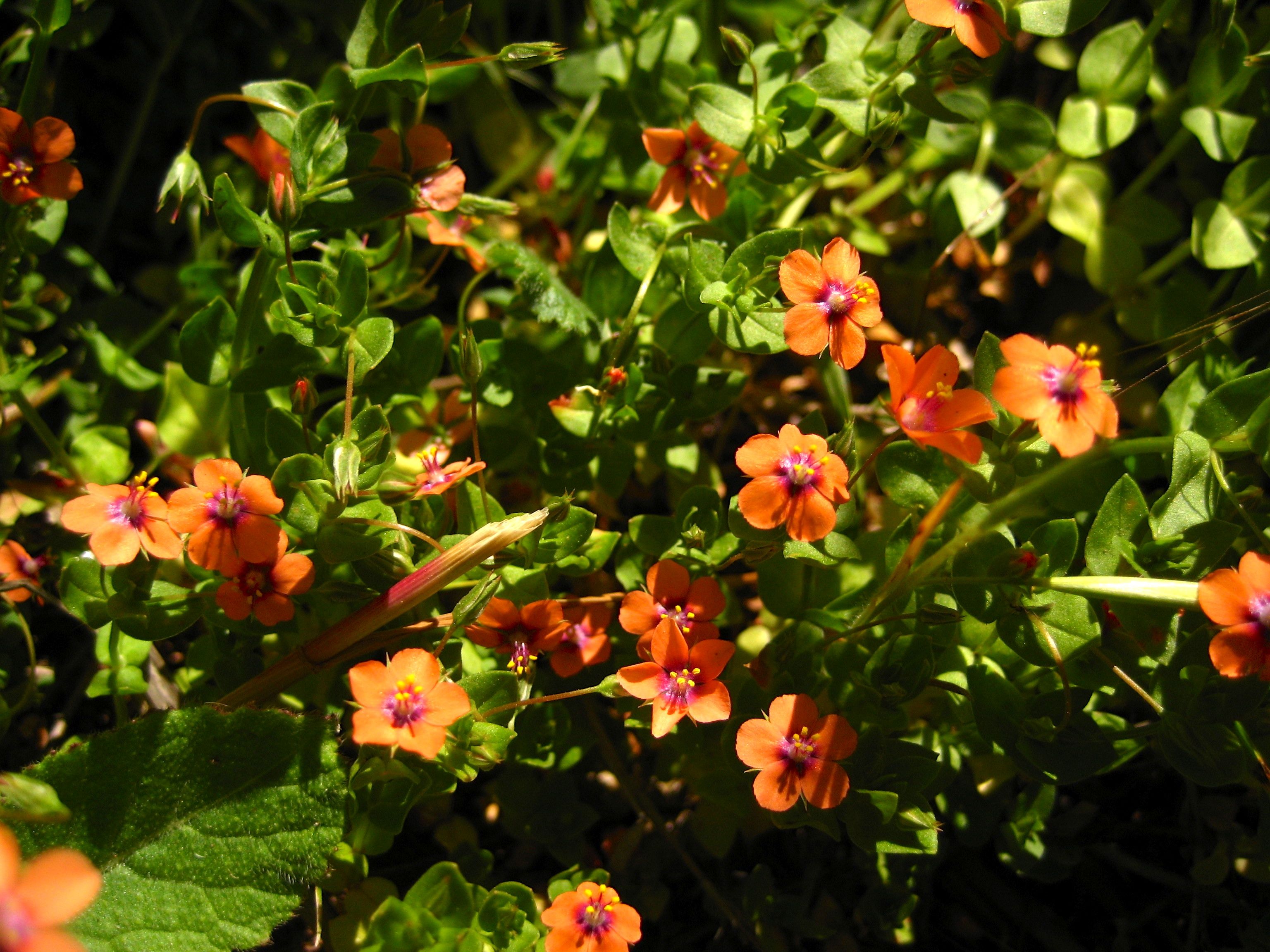
Photo by Chez Brungraber
Family: Myrsinaceae · Type: Herb · Not Native
Lysimachia arvensis (Scarlet pimpernel) is a non-native California herb in the Myrsinaceae family, recognized by key features: annual habit, colorful flowers, recurved fruiting pedicels.
Scarlet pimpernel is a naturalized annual herb found in the California Floristic Province and desert regions, commonly occurring in disturbed places and ocean beaches at elevations generally below 1,000 meters. Flowering from March to May, this plant produces delicate salmon, red, blue, or blue-white flowers about 4 to 7 millimeters wide, typically solitary in leaf axils. Growing with freely branched stems 5 to 40 centimeters tall that ascend or grow erect, it spreads easily in open ground. Its opposite or whorled leaves are small, ranging 5 to 20 millimeters long, with ovate to elliptic shapes that become more lance-shaped toward the stem tips. The fruit is a circumscissile capsule that opens around its circumference, allowing seed dispersal.
Identification and appearance
Key characters: 7 sympatric species; key features: annual habit, colorful flowers, recurved fruiting pedicels
Habitat and range
Habitat: Common. Disturbed places, ocean beaches
Elevation: generally < 1000 m
California counties: Los Angeles, Santa Barbara, San Mateo, San Luis Obispo, Ventura, Monterey, Alameda, Orange, San Diego
Outside California: to eastern North America, native to Europe
Bloom period
Lysimachia arvensis blooms Mar-May.
How to tell it apart
vs Modiola: Lysimachia has stamens opposite petals; Modiola has stamens fused in a central column.; vs Euphorbia: Lysimachia has true petals; spurge has petal-like bracts around flower clusters and milky sap.; vs Honckenya: Lysimachia has stamens opposite petals; sandwort has stamens alternating with petals.; vs Erythranthe: Lysimachia has radially symmetric flowers; monkeyflower has bilateral tubular flowers.; vs Veronica: Lysimachia has 5 petals and stamens opposite petals; speedwell has 4 petals and 2 stamens.
Frequently asked questions
Is Lysimachia arvensis native to California?
No. Lysimachia arvensis is not native to California (recorded as not native).
When does Lysimachia arvensis bloom?
Lysimachia arvensis blooms Mar-May.
Where in California does Lysimachia arvensis grow?
Lysimachia arvensis occurs in Los Angeles, Santa Barbara, San Mateo, San Luis Obispo, Ventura, Monterey, Alameda, Orange and other counties, at elevations of generally < 1000 m.
What plant family does Lysimachia arvensis belong to?
Lysimachia arvensis is in the Myrsinaceae family, genus Lysimachia.
What habitat does Lysimachia arvensis grow in?
Lysimachia arvensis grows in Common. Disturbed places, ocean beaches.
Related species
Other California species in the same genus, family, or bioregion.
Sources: Jepson eFlora · Index of California Plant Names · CalPhotos
Last updated 2026-10-07
Data from The California Species Project — 14,000+ California species with verified data from CNPS, CDFW, USFWS, Cal-IPC, and more.