Malacothrix foliosa subsp. polycephala
Many-headed malacothrix, Many-Headed Malacothrix
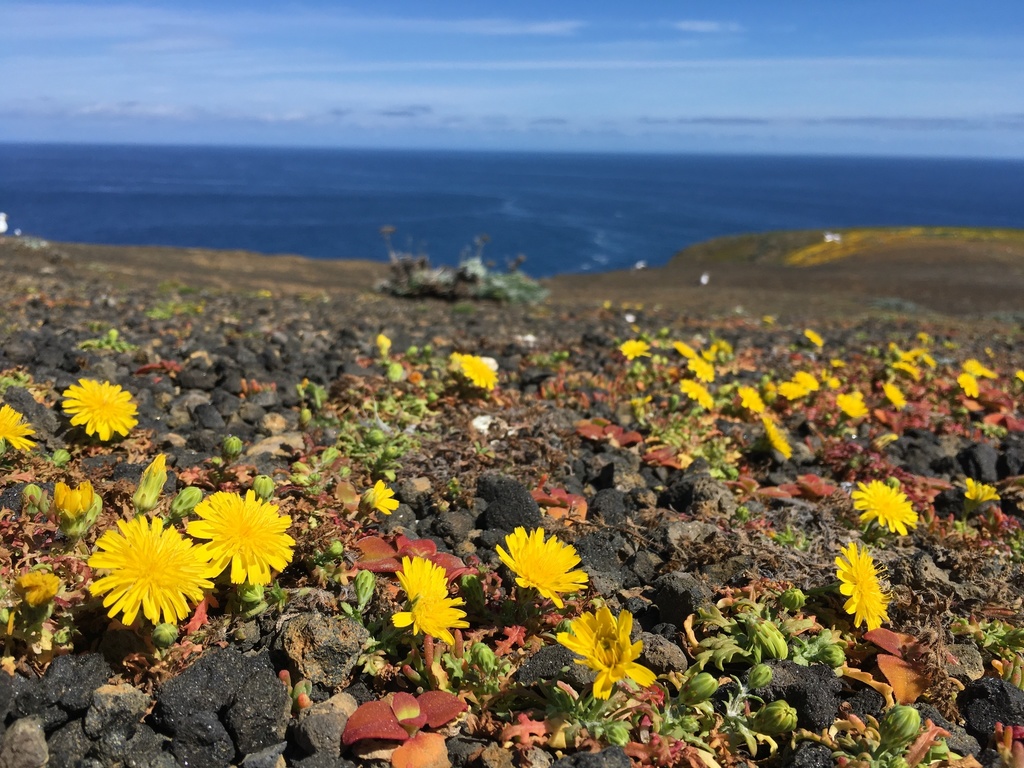
(c) Adam J. Searcy, some rights reserved (CC BY) · licence
Family: Asteraceae · Type: Herb · Native
Conservation status: CNPS 4.2
Malacothrix foliosa subsp. polycephala (Many-headed malacothrix) is a native California herb in the Asteraceae family, recognized by on Channel Islands; smallest flowers in the complex.
Many-headed malacothrix is a California native annual herb ranked 4.2 by CNPS, found on San Nicolas Island in southern Channel Islands in sandy coastal canyons, bluffs, and open sandy loam areas near the ocean at elevations of 2 to 200 meters. Flowering from March to July, this plant produces white to yellow flowers in heads 5 to 7 millimeters long with outer flower ligules extending 1.5 to 3.5 millimeters. Growing with a single erect stem 10 to 30 centimeters tall, branching outward from the upper portions, it has a delicate and spreading growth habit. Its leaves are distinctive, with distal leaves having narrow triangular shapes and 1 to 2 pairs of narrow basal lobes, creating an intricate foliage pattern. The small fruits are 0.9 to 1.5 millimeters long with approximately equal ribs, reflecting the plant's delicate structural characteristics.
Identification and appearance
Key characters: 15 sympatric species on Channel Islands; smallest flowers in the complex
Habitat and range
Habitat: Canyons, bluffs, open sandy loam on flats near but not on dunes, near ocean
Elevation: 2-200 m
California counties: Ventura
Bloom period
Malacothrix foliosa subsp. polycephala blooms Mar-Jul.
Conservation status
CNPS 4.2
How to tell it apart
vs Rafinesquia: Rafinesquia has persistent pappus that stays attached; Malacothrix pappus falls off easily when disturbed.; vs Pinaropappus: Pinaropappus pappus remains attached to seeds; Malacothrix pappus falls away easily.; vs Anisocoma: Anisocoma has scale-like pappus; Malacothrix has bristly pappus that falls off easily.; vs Calycoseris: Calycoseris leaves have glandular-sticky stems; Malacothrix lacks the sticky glandular feel.; vs Agoseris: Agoseris pappus stays firmly attached; Malacothrix pappus falls off at the slightest touch.
Frequently asked questions
Is Malacothrix foliosa subsp. polycephala native to California?
Yes. Malacothrix foliosa subsp. polycephala is native to California (recorded as native).
When does Malacothrix foliosa subsp. polycephala bloom?
Malacothrix foliosa subsp. polycephala blooms Mar-Jul.
Where in California does Malacothrix foliosa subsp. polycephala grow?
Malacothrix foliosa subsp. polycephala occurs in Ventura, at elevations of 2-200 m.
What plant family does Malacothrix foliosa subsp. polycephala belong to?
Malacothrix foliosa subsp. polycephala is in the Asteraceae family, genus Malacothrix.
Is Malacothrix foliosa subsp. polycephala rare or endangered?
Malacothrix foliosa subsp. polycephala carries California Rare Plant Rank 4.2, state rank S3.
Related species
Other California species in the same genus, family, or bioregion.
Sources: Jepson eFlora · CNPS Rare Plant Inventory · Index of California Plant Names · CalPhotos · CDFW CNDDB
Last updated 2026-10-07
Data from The California Species Project — 14,000+ California species with verified data from CNPS, CDFW, USFWS, Cal-IPC, and more.