Malus pumila
Apple, Apple
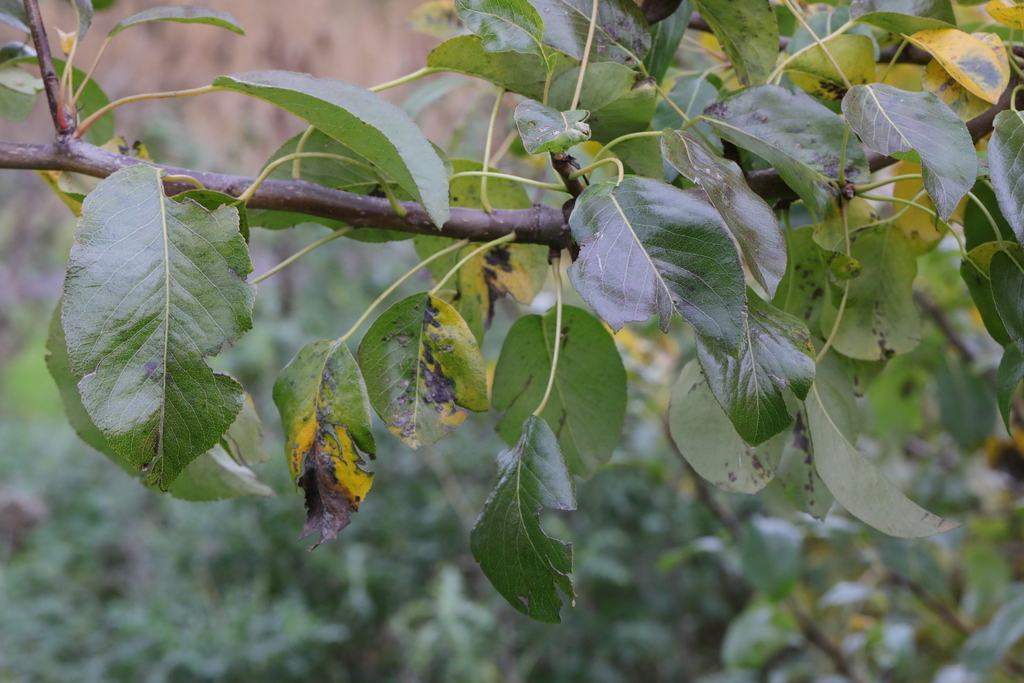
no rights reserved · CC0
Family: Rosaceae · Type: Tree · Not Native
Malus pumila (Apple) is a non-native California tree in the Rosaceae family, recognized by (Malus fusca); distinguished by non-native status, tree habit, and large edible fruits.
Apple is a naturalized tree found in the California Floristic Province in disturbed places at elevations below 2,080 meters. Flowering from April to May, this tree produces white or pink flowers with delicate petals. Growing with a spreading form and multiple branches, it reaches heights of 4 to 10 meters in cultivated settings. Its leaves are elliptical to widely ovate, measuring 5 to 11 centimeters long with petioles 10 to 40 millimeters in length. The fruit develops on pedicels 10 to 25 millimeters long, offering a characteristic round shape typical of cultivated apple varieties.
Identification and appearance
Key characters: 1 sympatric species (Malus fusca); distinguished by non-native status, tree habit, and large edible fruits
Habitat and range
Habitat: Disturbed places
Elevation: < 2080 m
California counties: Los Angeles, San Mateo, Glenn, Marin, Nevada, San Bernardino, Tulare, Ventura, Yuba, Contra Costa, Modoc, Shasta, Mendocino, Del Norte, Santa Barbara, Monterey, San Diego, El Dorado, Sonoma
Outside California: native to Eurasia
Bloom period
Malus pumila blooms Apr-May.
How to tell it apart
vs Prunus: Prunus fruits have a single hard pit; Malus fruits have a papery core with multiple seeds.; vs Chaenomeles: Chaenomeles has thorns and hard, aromatic quince-like fruits; Malus is typically thornless with softer apples.; vs Pyrus: Pyrus fruits are pear-shaped with gritty flesh; Malus fruits are round with smooth flesh.; vs Cydonia: Cydonia has fuzzy leaves and large aromatic quinces; Malus has smooth leaves and typical apples.; vs Crataegus: Crataegus has deeply lobed leaves and tiny fruits; Malus has unlobed leaves and large apple fruits.
Frequently asked questions
Is Malus pumila native to California?
No. Malus pumila is not native to California (recorded as not native).
When does Malus pumila bloom?
Malus pumila blooms Apr-May.
Where in California does Malus pumila grow?
Malus pumila occurs in Los Angeles, San Mateo, Glenn, Marin, Nevada, San Bernardino, Tulare, Ventura and other counties, at elevations of < 2080 m.
What plant family does Malus pumila belong to?
Malus pumila is in the Rosaceae family, genus Malus.
What habitat does Malus pumila grow in?
Malus pumila grows in Disturbed places.
Related species
Other California species in the same genus, family, or bioregion.
Sources: Jepson eFlora · Index of California Plant Names · CalPhotos
Last updated 2026-10-07
Data from The California Species Project — 14,000+ California species with verified data from CNPS, CDFW, USFWS, Cal-IPC, and more.