Maurandella antirrhiniflora
Violet twining snapdragon, Violet Twining Snapdragon
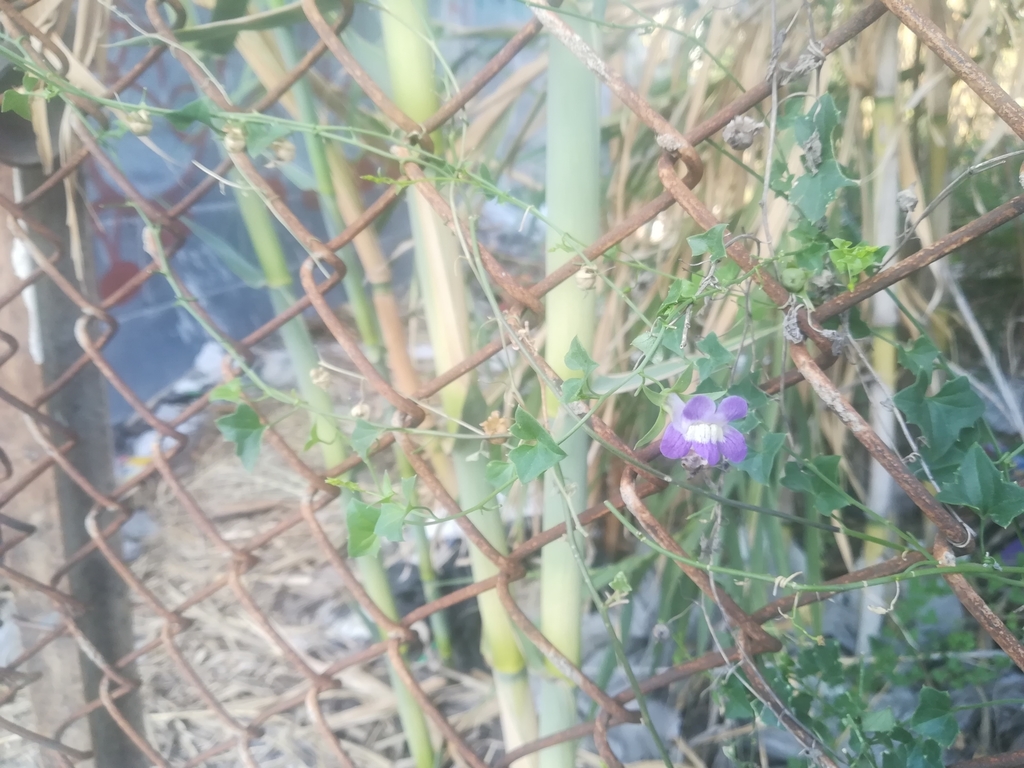
(c) Francisco Martínez González, some rights reserved (CC BY-SA) · licence
Family: Plantaginaceae · Type: Vine · Native
Conservation status: CNPS 2B.3
Maurandella antirrhiniflora (Violet twining snapdragon) is a native California vine in the Plantaginaceae family, recognized by Eastern species at extreme western range limit; unique vining habit with sagittate leaves within snapdragon family.
Violet twining snapdragon is a rare (CNPS 2B.3) California native perennial found in the eastern Desert Mountains, specifically the Providence Mountains, in desert flats and washes at elevations below 2,600 meters. Flowering from February to December, this plant produces pink, red, and violet flowers with a delicate tube-throat 13 to 17 millimeters long and lobes 4 to 8 millimeters wide. Growing with slender, nearly hairless stems that twist and climb, it develops a vine-like habit characteristic of snapdragon relatives. Its leaves are distinctive, with petioles 5 to 33 millimeters long and blades 5 to 30 millimeters in size, shaped like arrowheads (hastate to sagittate) and remaining entire along their margins. The flower's calyx features lobes 9 to 14 millimeters long, adding to its delicate and intricate appearance.
Identification and appearance
Key characters: Eastern species at extreme western range limit; unique vining habit with sagittate leaves within snapdragon family
Habitat and range
Habitat: Desert flats, washes
Elevation: < 2600 m
California counties: San Bernardino, San Mateo
Outside California: to Texas, Mexico
Bloom period
Maurandella antirrhiniflora blooms Feb-Dec.
Conservation status
CNPS 2B.3
How to tell it apart
vs Maurandya: Maurandella has arrow-shaped leaves; Maurandya has heart-shaped or triangular leaves with rounded bases.; vs Calystegia: Maurandella has snapdragon flowers with long stalks; Calystegia has funnel-shaped morning glory flowers.; vs Mohavea: Maurandella actively twines with arrow-shaped leaves; Mohavea grows upright with narrow leaves.; vs Antirrhinum: Maurandella twines with arrow-shaped leaves on long petioles; Antirrhinum has narrow stalkless leaves.; vs Linaria: Maurandella twines with triangular leaves; Linaria stands upright with thread-like leaves.
Frequently asked questions
Is Maurandella antirrhiniflora native to California?
Yes. Maurandella antirrhiniflora is native to California (recorded as native).
When does Maurandella antirrhiniflora bloom?
Maurandella antirrhiniflora blooms Feb-Dec.
Where in California does Maurandella antirrhiniflora grow?
Maurandella antirrhiniflora occurs in San Bernardino, San Mateo, at elevations of < 2600 m.
What plant family does Maurandella antirrhiniflora belong to?
Maurandella antirrhiniflora is in the Plantaginaceae family, genus Maurandella.
Is Maurandella antirrhiniflora rare or endangered?
Maurandella antirrhiniflora carries California Rare Plant Rank 2B.3, state rank S2?.
Related species
Other California species in the same genus, family, or bioregion.
Sources: Jepson eFlora · CNPS Rare Plant Inventory · Index of California Plant Names · CalPhotos · CDFW CNDDB
Last updated 2026-10-07
Data from The California Species Project — 14,000+ California species with verified data from CNPS, CDFW, USFWS, Cal-IPC, and more.