Mauranthemum paludosum
Mini-marguerite, Mini-Marguerite
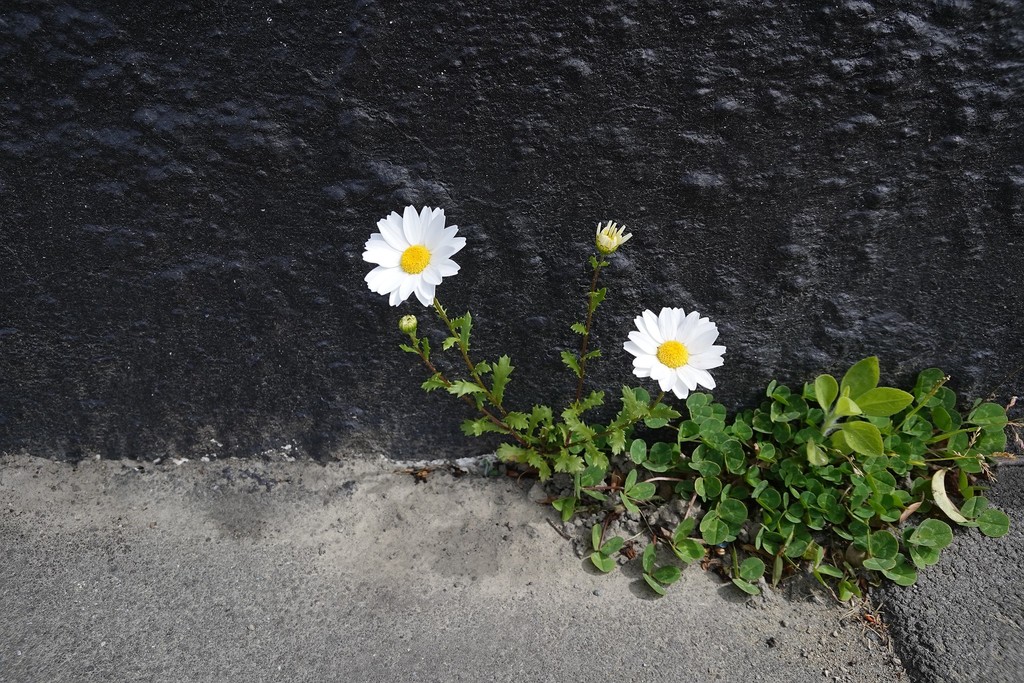
(c) Jon Sullivan, some rights reserved (CC BY), uploaded by Jon Sullivan · licence
Family: Asteraceae · Type: Perennial · Not Native
Mauranthemum paludosum (Mini-marguerite) is a non-native California perennial in the Asteraceae family, recognized by Rare garden escape; horticultural selection with compact growth form.
Mini-marguerite is a naturalized perennial found in the Santa Cruz Mountains in disturbed sites and cultivated as an ornamental at elevations below 200 meters. Flowering from March to June, this plant produces white daisy-like flowers with ray petals 6 to 12 millimeters long. Growing with multiple delicate stems, it forms compact clusters of blooms. Its leaves are relatively small, with blades 15 to 35 millimeters long and 3 to 12 millimeters wide, creating a fine-textured green backdrop for the bright flowers. The fruit is tiny, measuring 2 to 3 millimeters in length.
Identification and appearance
Key characters: Rare garden escape; horticultural selection with compact growth form
Habitat and range
Habitat: Disturbed sites, cultivated as ornamental
Elevation: < 200 m
Outside California: native to Europe, northern Africa (cultivated)
Bloom period
Mauranthemum paludosum blooms Mar-Jun.
How to tell it apart
vs Tripleurospermum: Tripleurospermum has thread-like dissected leaves; Mauranthemum has simple toothed or lobed leaves.; vs Leucanthemum: Leucanthemum has much larger flower heads (6-9 cm); Mauranthemum's are only 2.5-4 cm.; vs Argyranthemum: Argyranthemum is a woody shrub; Mauranthemum is an annual herb.
Frequently asked questions
Is Mauranthemum paludosum native to California?
No. Mauranthemum paludosum is not native to California (recorded as not native).
When does Mauranthemum paludosum bloom?
Mauranthemum paludosum blooms Mar-Jun.
What plant family does Mauranthemum paludosum belong to?
Mauranthemum paludosum is in the Asteraceae family, genus Mauranthemum.
What habitat does Mauranthemum paludosum grow in?
Mauranthemum paludosum grows in Disturbed sites, cultivated as ornamental.
Related species
Other California species in the same genus, family, or bioregion.
Sources: Jepson eFlora · CalPhotos
Last updated 2026-09-30
Data from The California Species Project — 14,000+ California species with verified data from CNPS, CDFW, USFWS, Cal-IPC, and more.