Melaleuca citrina
Crimson bottlebrush, Crimson Bottlebrush
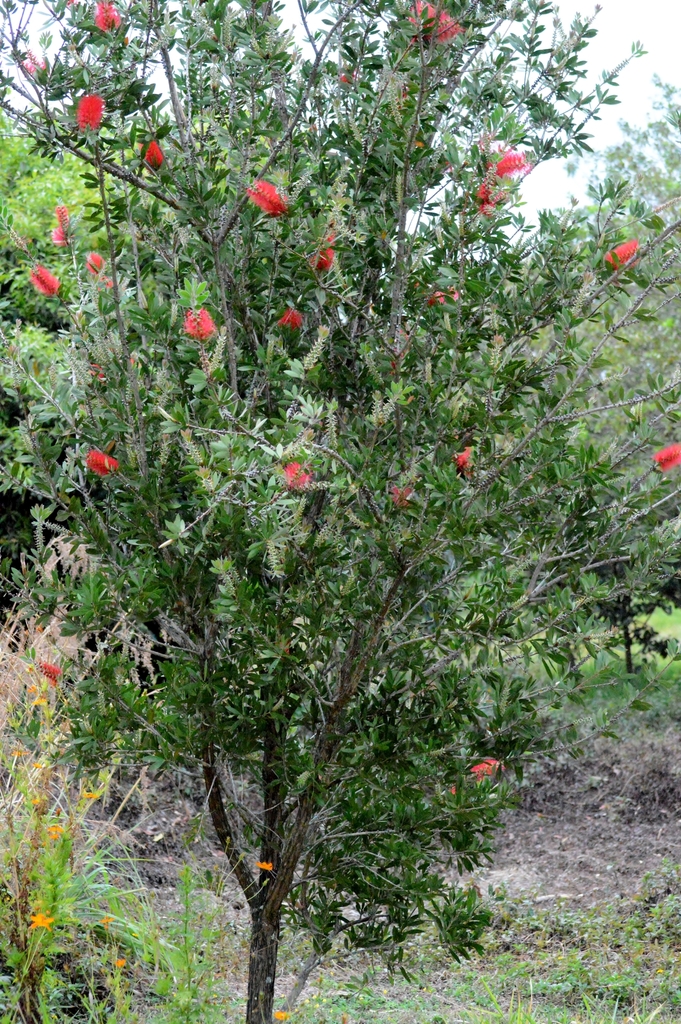
(c) Douglas, some rights reserved (CC BY), uploaded by Douglas · licence
Family: Myrtaceae · Type: Shrub / Tree · Not Native
Melaleuca citrina (Crimson bottlebrush) is a non-native California shrub / tree in the Myrtaceae family, recognized by distinguished primarily by size and fruit dimensions.
Crimson bottlebrush is a naturalized shrub found in southern coastal California and the Peninsular Ranges in disturbed areas at elevations below 950 meters. Without specific flowering time details, this plant is known for its distinctive bottlebrush-like appearance with bright crimson flowers. Growing as a compact shrub less than 5 meters tall, it features dense, woody branching. Its leaves are narrow and elongated, measuring 3 to 10 centimeters in length. Small fruits approximately 4.5 to 7 millimeters long develop after flowering.
Identification and appearance
Key characters: 1 sympatric species; distinguished primarily by size and fruit dimensions
Habitat and range
Habitat: Disturbed areas
Elevation: < 950 m
Outside California: native to eastern Australia
How to tell it apart
vs Metrosideros: Check flower cluster position - Metrosideros at branch ends, Melaleuca encircles whole stem; vs Eucalyptus: Eucalyptus flowers have detachable caps; bottlebrush has normal petals in dense spikes; vs Calliandra: Fairy duster has pink puffballs and compound leaves; bottlebrush has simple leaves and cylinders; vs Veronica: Speedwell has small tubular flowers in loose spikes; bottlebrush has dense stamen bursts; vs Acacia: Acacia has yellow fuzzy spheres; bottlebrush has colorful cylindrical spikes
Frequently asked questions
Is Melaleuca citrina native to California?
No. Melaleuca citrina is not native to California (recorded as not native).
What plant family does Melaleuca citrina belong to?
Melaleuca citrina is in the Myrtaceae family, genus Melaleuca.
What habitat does Melaleuca citrina grow in?
Melaleuca citrina grows in Disturbed areas.
Related species
Other California species in the same genus, family, or bioregion.
Sources: Jepson eFlora · CalPhotos
Last updated 2026-10-07
Data from The California Species Project — 14,000+ California species with verified data from CNPS, CDFW, USFWS, Cal-IPC, and more.