Melinis repens subsp. repens
Natal grass, ruby grass, Ruby Grass
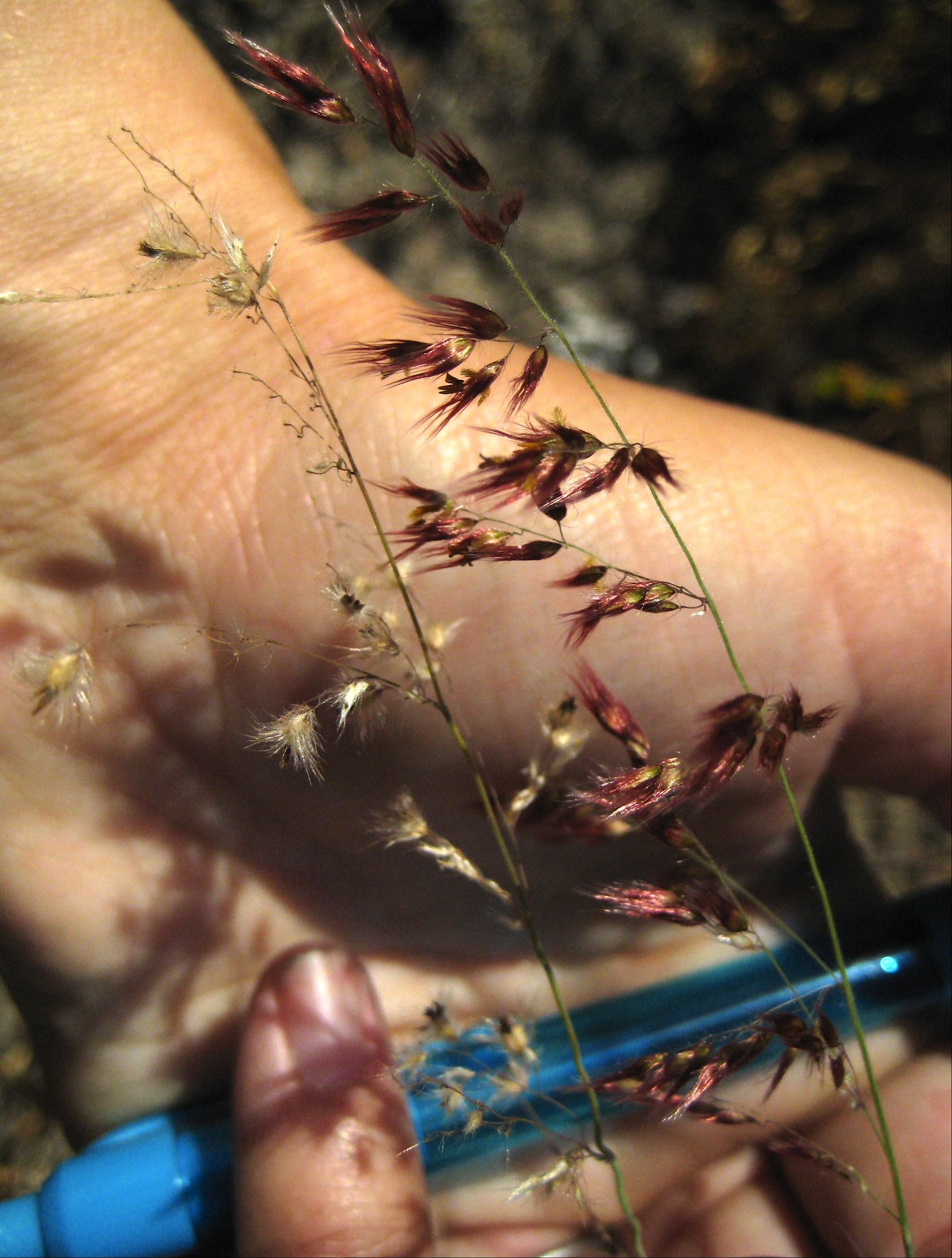
Photo by Chez Brungraber
Family: Poaceae · Type: Perennial · Not Native
Conservation status: Cal-IPC Yes
Melinis repens subsp. repens (Natal grass) is a non-native California perennial in the Poaceae family, recognized by Naturalized South African species; distinctive colorful plumose seed heads unique among California grasses.
Natal grass is a naturalized perennial grass found in southern California regions including San Joaquin Valley, Santa Clara Coast, San Diego County, and Transverse Ranges at elevations below 850 meters in disturbed areas and on slopes. Flowering throughout the year, this grass produces rose to purple spikelets that fade to pink or white, with delicate silky hairs creating a soft, shimmering appearance. Growing with decumbent to erect stems 40 to 150 centimeters tall, it has distinctive internodes that are either glabrous or bear swollen-based hairs. Its grass blades are 3 to 27 centimeters long and 2 to 9 millimeters wide, with upper surfaces remaining smooth and unadorned. The inflorescence develops 6 to 22 centimeters long, with primary branches ranging 2.5 to 6 centimeters and spikelets that are 2 to 5.5 millimeters in length.
Identification and appearance
Key characters: Naturalized South African species; distinctive colorful plumose seed heads unique among California grasses
Habitat and range
Habitat: Disturbed areas, slopes
Elevation: < 850 m
Outside California: to southern United States, native to South Africa, western Asia
Bloom period
Melinis repens subsp. repens blooms All year.
Conservation status
Cal-IPC Yes
How to tell it apart
vs Bothriochloa: Silver beardgrass bears silvery-white hairy racemes along an axis with awned spikelets; Natal grass has an open panicle of spikelets cloaked in rose-pink silky hairs.; vs Bromus: Brome spikelets are large, several-flowered, and awned in a green panicle without colored hairs; Natal grass spikelets are small and clothed in conspicuous pink hairs.; vs Polypogon: Rabbitsfoot grass has a dense, spike-like, bristly-awned greenish panicle; Natal grass has an open, airy panicle tinted rose-pink.; vs Agrostis: Bentgrass panicles are open but the spikelets are tiny, one-flowered, and glabrous-greenish; Natal grass spikelets are larger and densely pink-silky-hairy.; vs Aira: Hairgrass has a delicate silvery panicle of tiny awned florets; Natal grass is coarser with showy pink hairs draping the spikelets.
Frequently asked questions
Is Melinis repens subsp. repens native to California?
No. Melinis repens subsp. repens is not native to California (recorded as not native).
When does Melinis repens subsp. repens bloom?
Melinis repens subsp. repens blooms All year.
What plant family does Melinis repens subsp. repens belong to?
Melinis repens subsp. repens is in the Poaceae family, genus Melinis.
Is Melinis repens subsp. repens invasive in California?
Melinis repens subsp. repens is listed by Cal-IPC with an invasiveness rating of Yes.
What habitat does Melinis repens subsp. repens grow in?
Melinis repens subsp. repens grows in Disturbed areas, slopes.
Related species
Other California species in the same genus, family, or bioregion.
Sources: Jepson eFlora · CalPhotos
Last updated 2026-09-30
Data from The California Species Project — 14,000+ California species with verified data from CNPS, CDFW, USFWS, Cal-IPC, and more.