Mentha arvensis
Field mint, Field Mint
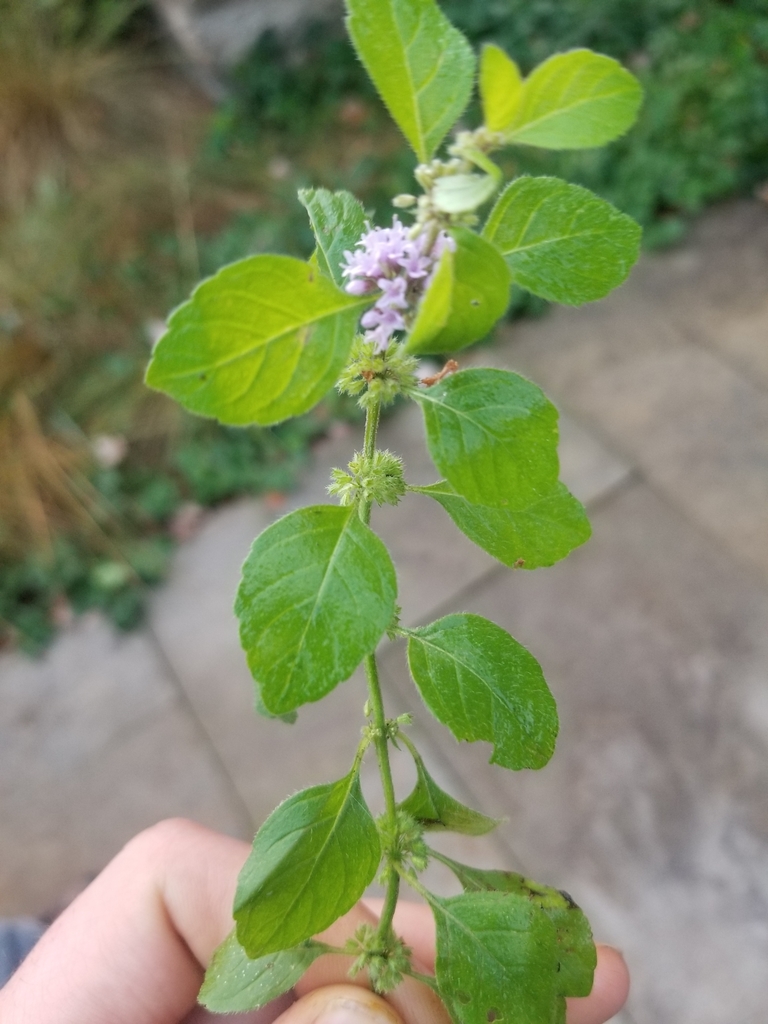
(c) Brandon McCracken, some rights reserved (CC BY) · licence
Family: Lamiaceae · Type: Herb · Native
Mentha arvensis (Field mint) is a native California herb in the Lamiaceae family, recognized by Co-occurs with 7 other mint species; limited to San Joaquin Valley with spreading subtending leaves.
Field mint is a naturalized perennial found in the San Joaquin Valley and cultivated elsewhere, growing in moist places and fields at elevations below 550 meters. Flowering from July to October, this plant produces white to pink or violet flowers in small clusters. Growing with upright stems 10 to 50 centimeters tall, it has spreading branches that root easily. Its leaves are ovate, 2 to 4 centimeters long with serrated edges and pointed tips, creating a distinctive aromatic herb. The small flowers are nestled among the spreading leaves, with delicate white to pink petals barely 3 millimeters long.
Identification and appearance
Key characters: Co-occurs with 7 other mint species; limited to San Joaquin Valley with spreading subtending leaves
Habitat and range
Habitat: Moist places, fields
Elevation: < 550 m
California counties: Ventura, Butte, San Bernardino, San Luis Obispo, Fresno, Colusa, Plumas, El Dorado, Lassen, Tulare, Glenn, Placer, Santa Barbara, Modoc, Mono, Sacramento, Nevada, Siskiyou, Mendocino, Tuolumne, Stanislaus, Napa, Los Angeles, Sierra, Inyo, San Diego, Humboldt, Santa Cruz, Mariposa, Madera, Monterey
Outside California: to Canada, eastern United States, native to Europe, naturalized from cultivation
Bloom period
Mentha arvensis blooms Jul-Oct.
How to tell it apart
vs Monardella: Monardella has one pom-pom head per stem; Mentha has multiple clusters stacked at intervals up the stem.; vs Salvia: Sage has flowers in an elongated terminal spike; Mentha has clusters distributed along the stem at leaf joints.; vs Stachys: Hedge-nettle has larger flowers and lacks the classic mint smell; Mentha is aromatic with smaller flowers.; vs Melissa: Lemon balm has flowers all on one side of the stem; Mentha's clusters encircle the stem evenly.; vs Clinopodium: Clinopodium has tiny flowers (pencil-eraser size); Mentha's flowers are noticeably larger and more visible.
Frequently asked questions
Is Mentha arvensis native to California?
Yes. Mentha arvensis is native to California (recorded as native).
When does Mentha arvensis bloom?
Mentha arvensis blooms Jul-Oct.
Where in California does Mentha arvensis grow?
Mentha arvensis occurs in Ventura, Butte, San Bernardino, San Luis Obispo, Fresno, Colusa, Plumas, El Dorado and other counties, at elevations of < 550 m.
What plant family does Mentha arvensis belong to?
Mentha arvensis is in the Lamiaceae family, genus Mentha.
What habitat does Mentha arvensis grow in?
Mentha arvensis grows in Moist places, fields.
Related species
Other California species in the same genus, family, or bioregion.
Sources: Jepson eFlora · Index of California Plant Names · CalPhotos
Last updated 2026-10-08
Data from The California Species Project — 14,000+ California species with verified data from CNPS, CDFW, USFWS, Cal-IPC, and more.