Mentzelia affinis
Yellow blazing star
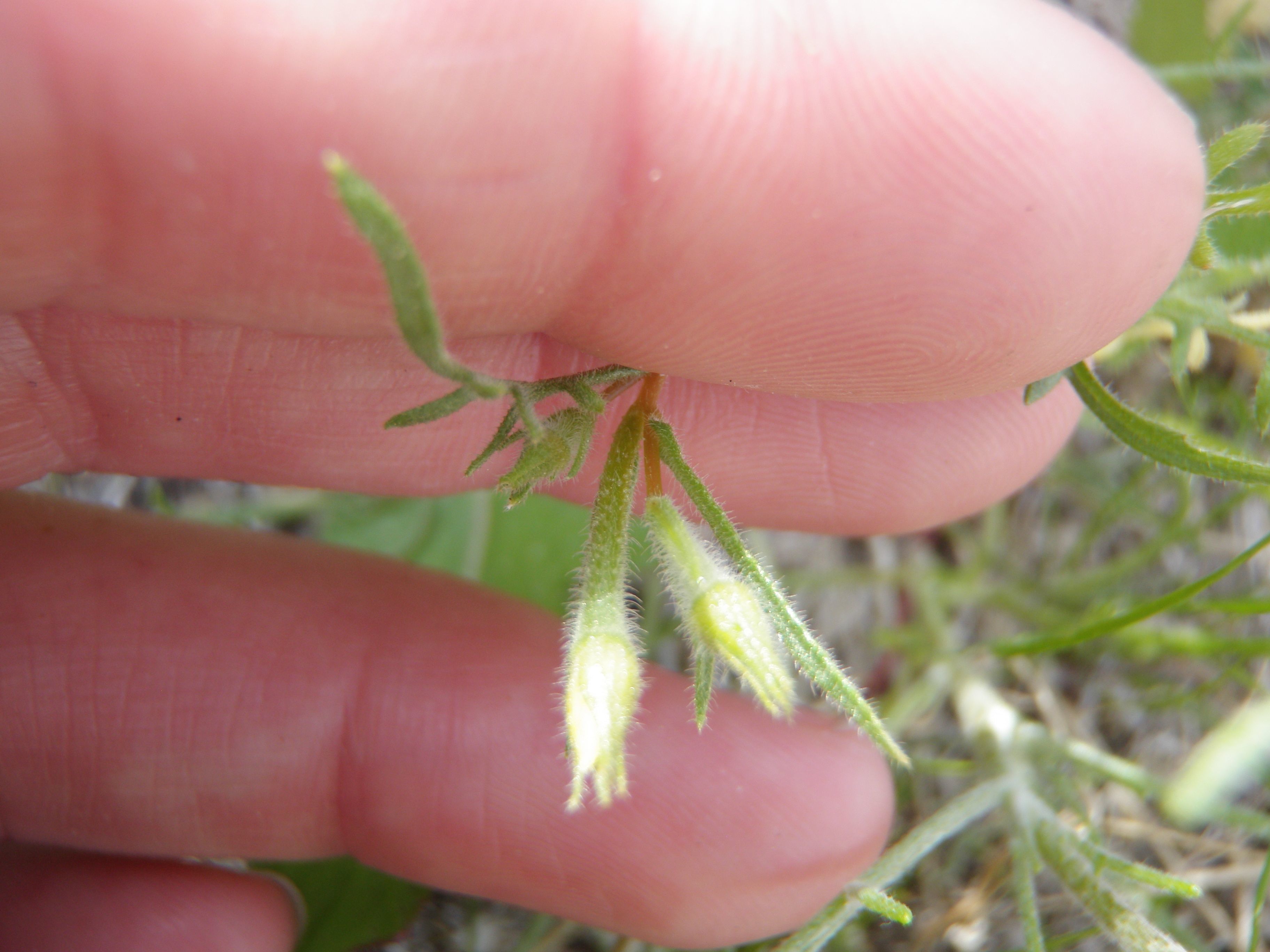
Photo by Chez Brungraber
Family: Loasaceae · Type: Herb · Native
Mentzelia affinis (Yellow blazing star) is a native California herb in the Loasaceae family, recognized by single seed row is key distinguishing feature.
Yellow blazing star is a California native annual found in southern Sierra Nevada, San Joaquin Valley, southeastern San Francisco Bay (Mount Hamilton), southern Coast Ranges, southern Channel Islands, Transverse Ranges, San Jacinto Mountains, and Desert regions in rocky or gray-white soils of grassland, woodland, and creosote-bush scrub at elevations below 1,200 meters. Flowering from April to May, this plant produces bright yellow flowers with yellow to orange bases, generally ovate and 3 to 10 millimeters long. Growing with erect, hairy stems 5 to 47 centimeters tall, it has an upright and somewhat delicate appearance. Its leaves vary from 1 to 17 centimeters long, with proximal leaves having lobed or toothed edges while distal leaves are entire to slightly lobed. The fruit is an erect to slightly curved narrow cylindric structure 12 to 28 millimeters long, containing small tan seeds with distinctive grooved triangular cross-sections.
Identification and appearance
Key characters: 26 sympatric species; single seed row is key distinguishing feature
Habitat and range
Habitat: Rocky or gray-white soils in grassland, woodland, creosote-bush scrub
Elevation: < 1200 m
California counties: San Bernardino, Santa Barbara, Riverside, Inyo, Los Angeles, Kern, Ventura, Alameda, Fresno, San Benito, Stanislaus, Orange, Imperial, San Luis Obispo, San Diego, Contra Costa, Monterey, San Joaquin, Merced, Tulare, Kings
Outside California: to Arizona, Baja California
Bloom period
Mentzelia affinis blooms Apr-May.
How to tell it apart
vs Camissoniopsis: Mentzelia has many stamens and 3 stigmas; Camissoniopsis has 8 stamens and 4 stigmas.; vs Leptosiphon: Mentzelia has free petals and many stamens; Leptosiphon has fused petals forming a tube.; vs Emmenanthe: Mentzelia has free petals and 3 stigmas; Emmenanthe has fused bell-shaped petals.; vs Eschscholzia: Mentzelia has many stamens and 3 stigmas; Eschscholzia has many stamens and 4 stigmas.; vs Potentilla: Mentzelia has 3 stigmas and capsule fruit; Potentilla has many pistils and achene fruits.
Frequently asked questions
Is Mentzelia affinis native to California?
Yes. Mentzelia affinis is native to California (recorded as native).
When does Mentzelia affinis bloom?
Mentzelia affinis blooms Apr-May.
Where in California does Mentzelia affinis grow?
Mentzelia affinis occurs in San Bernardino, Santa Barbara, Riverside, Inyo, Los Angeles, Kern, Ventura, Alameda and other counties, at elevations of < 1200 m.
What plant family does Mentzelia affinis belong to?
Mentzelia affinis is in the Loasaceae family, genus Mentzelia.
What habitat does Mentzelia affinis grow in?
Mentzelia affinis grows in Rocky or gray-white soils in grassland, woodland, creosote-bush scrub.
Related species
Other California species in the same genus, family, or bioregion.
Sources: Jepson eFlora · Index of California Plant Names · CalPhotos
Last updated 2026-10-07
Data from The California Species Project — 14,000+ California species with verified data from CNPS, CDFW, USFWS, Cal-IPC, and more.