Micropus amphibolus
Mount diablo cottonseed, Mount Diablo Cottonseed
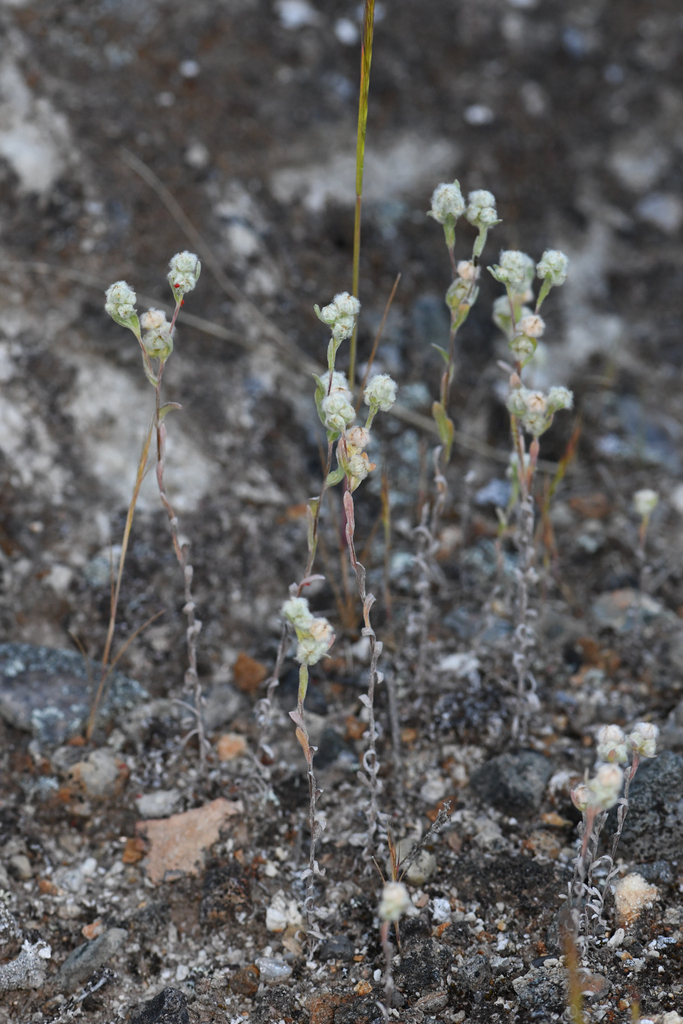
(c) Trevor Van Loon, some rights reserved (CC BY) · licence
Family: Asteraceae · Type: Herb · Native
Conservation status: CNPS 3.2
Micropus amphibolus (Mount diablo cottonseed) is a native California herb in the Asteraceae family, recognized by larger spherical heads, 2-ranked paleae, helmet-like paleae with persistent wings.
Mount diablo cottonseed is a California native annual found in southern North Coast Ranges, western North Coast Ranges, northern Sierra Nevada Foothills, northern Central Coast, San Francisco Bay Area, and southern South Coast Ranges in openings on slopes, ridges, and shallow soils at elevations of 40 to 900 meters. Flowering from March to June, this plant produces white flowers in small spherical heads approximately 3.5 to 5 millimeters in diameter. Growing with compact stems 2 to 20 centimeters tall, the plant forms low, delicate clusters across rocky terrain. Its distinctive paleae (bracts) feature helmet-like shapes with thick, cartilaginous midveins and prominent, flat wings that give the flower heads a unique architectural quality. The tiny fruits are 1 to 1.5 millimeters long with 1 to 5 short bristles.
Identification and appearance
Key characters: 3 sympatric species; distinguished by larger spherical heads, 2-ranked paleae, helmet-like paleae with persistent wings
Habitat and range
Habitat: Openings on slopes, ridges, shallow soils, sedimentary or volcanic rocks
Elevation: 40-900 m
Bloom period
Micropus amphibolus blooms Mar-Jun.
Conservation status
CNPS 3.2
How to tell it apart
vs Plantago: Micropus has composite flower heads with papery bracts; Plantago has simple flowers on leafless spikes.; vs Logfia: Micropus has 4-6 prominent petal-like outer bracts; Logfia has mushroom-shaped heads without showy bracts.; vs Cryptantha: Micropus is in Asteraceae with composite heads; Cryptantha is in Boraginaceae with 5-petaled flowers.; vs Stylocline: Micropus has prominent spoon-shaped outer bracts; Stylocline has tiny heads hidden among dense leaves.; vs Pseudognaphalium: Micropus has distinctive petal-like outer bracts; Pseudognaphalium has uniform overlapping papery bracts.
Frequently asked questions
Is Micropus amphibolus native to California?
Yes. Micropus amphibolus is native to California (recorded as native).
When does Micropus amphibolus bloom?
Micropus amphibolus blooms Mar-Jun.
What plant family does Micropus amphibolus belong to?
Micropus amphibolus is in the Asteraceae family, genus Micropus.
Is Micropus amphibolus rare or endangered?
Micropus amphibolus carries California Rare Plant Rank 3.2, state rank S3S4.
What habitat does Micropus amphibolus grow in?
Micropus amphibolus grows in Openings on slopes, ridges, shallow soils, sedimentary or volcanic rocks.
Related species
Other California species in the same genus, family, or bioregion.
Sources: Jepson eFlora · CNPS Rare Plant Inventory · Index of California Plant Names · CalPhotos · CDFW CNDDB
Last updated 2026-10-07
Data from The California Species Project — 14,000+ California species with verified data from CNPS, CDFW, USFWS, Cal-IPC, and more.