Microseris douglasii subsp. douglasii
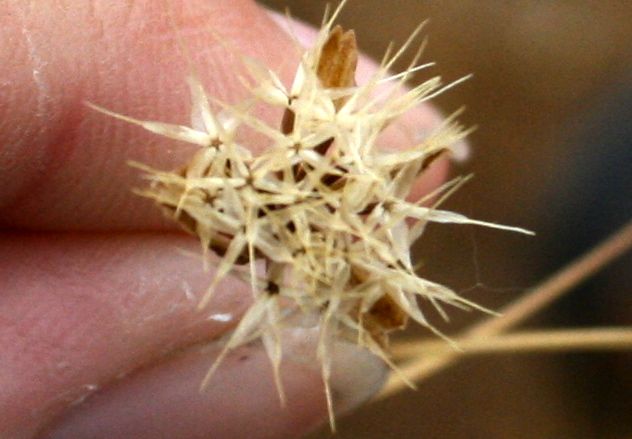
Photo: parent species Microseris douglasii · Photo by Chez Brungraber
Family: Asteraceae · Type: Herb · Native
Microseris douglasii subsp. douglasii is a native California herb in the Asteraceae family, recognized by fruit shape and pappus scale curvature are key features.
Douglas' microseris is a native annual herb found in northern California, the California Roaring Fork region, Sierra Nevada foothills, Tehachapi, Central Valley, Central Western California, and southern coastal areas, inhabiting inland clay soils and grasslands, often near vernal pools or serpentine outcrops at elevations below 1,100 meters. Flowering from March to June, this delicate plant produces pale yellow to cream-colored flowers in small, drooping heads. Growing with slender stems 10 to 40 centimeters tall, it emerges from a thin taproot in open grassland environments. Its leaves are narrow and deeply divided, forming basal rosettes that are typically 5 to 20 centimeters long, with a delicate, grass-like appearance. The fruit is distinctive, 4 to 10 millimeters long, widest at the tip and crowned with curved pappus scales that become strongly inrolled as the seed matures.
Identification and appearance
Key characters: 13 sympatric species; fruit shape and pappus scale curvature are key features
Habitat and range
Habitat: Inland clay soils, grassland, often near vernal pools or serpentine outcrops (coastal in southern CCo)
Elevation: < 1100 m
Outside California: southern Oregon
Bloom period
Microseris douglasii subsp. douglasii blooms Mar-Jun.
How to tell it apart
vs Uropappus: Microseris buds nod before opening; Uropappus buds stay erect and have exactly 5 silvery pappus scales.; vs Agoseris: Microseris has scale-like pappus; Agoseris has bristle-like pappus.; vs Stebbinsoseris: Microseris has triangular to oval pappus scales; Stebbinsoseris has lance-shaped scales.; vs Hypochaeris: Microseris has smooth flower stems; Hypochaeris has branched stems with small leaves.; vs Achyrachaena: Microseris has scale pappus and nodding buds; Achyrachaena has ray and disk flowers with different pappi.
Frequently asked questions
Is Microseris douglasii subsp. douglasii native to California?
Yes. Microseris douglasii subsp. douglasii is native to California (recorded as native).
When does Microseris douglasii subsp. douglasii bloom?
Microseris douglasii subsp. douglasii blooms Mar-Jun.
What plant family does Microseris douglasii subsp. douglasii belong to?
Microseris douglasii subsp. douglasii is in the Asteraceae family, genus Microseris.
What habitat does Microseris douglasii subsp. douglasii grow in?
Microseris douglasii subsp. douglasii grows in Inland clay soils, grassland, often near vernal pools or serpentine outcrops (coastal in southern CCo).
Related species
Other California species in the same genus, family, or bioregion.
Sources: Jepson eFlora · Index of California Plant Names · CalPhotos
Last updated 2026-10-07
Data from The California Species Project — 14,000+ California species with verified data from CNPS, CDFW, USFWS, Cal-IPC, and more.