Monardella australis subsp. cinerea
Gray monardella, Gray Monardella
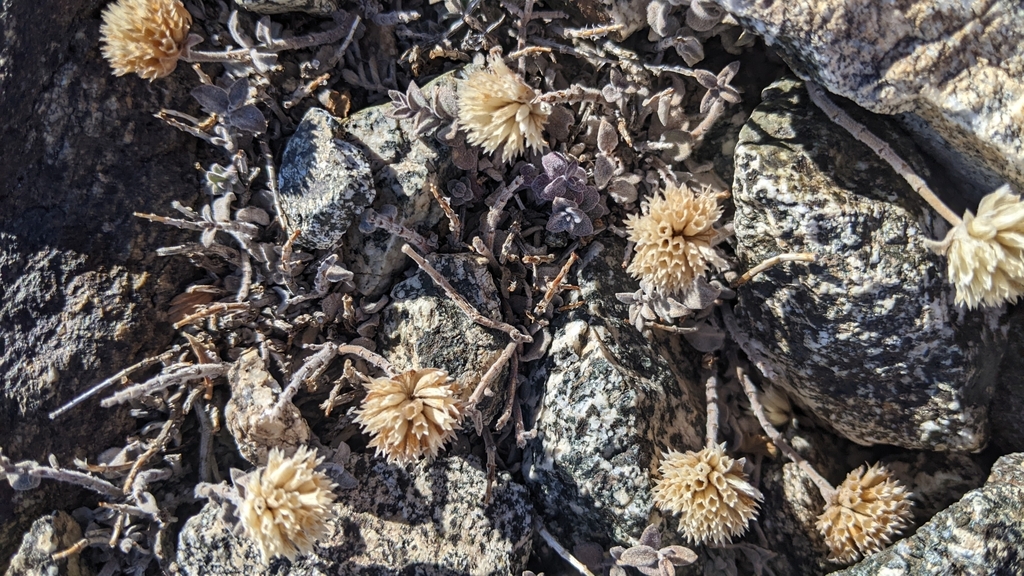
Photo: parent species Monardella australis · (c) velodrome, some rights reserved (CC BY) · licence
Family: Lamiaceae · Type: Shrub · Native
Conservation status: CNPS 4.3
Monardella australis subsp. cinerea (Gray monardella) is a native California shrub in the Lamiaceae family, recognized by distinctive glandular pubescence and fragrant flowers.
Gray monardella is a California native shrub found in the southern Gabilan Range in mid-montane to subalpine forest at elevations of 1,800 to 3,100 meters. Flowering from June to August, this plant produces rose-purple flowers in fragrant clusters 10 to 18 millimeters wide, with narrowly ovate bracts that have a subtle purple tinge. Growing as a matted plant with decumbent stems 3 to 15 centimeters long, it features distinctive long-spreading and short-glandular hairs. Its leaves are narrowly triangular-ovate, sessile, 5 to 10 millimeters long with occasional faint teeth or wavy margins. The plant's delicate flowers have stamens that extend slightly beyond the corolla, creating an intricate and aromatic display in its high-elevation mountain habitats.
Identification and appearance
Key characters: 10 sympatric species; distinctive glandular pubescence and fragrant flowers
Habitat and range
Habitat: Mid-montane to subalpine forest
Elevation: 1800-3100 m
California counties: Los Angeles, San Bernardino, El Dorado
Bloom period
Monardella australis subsp. cinerea blooms Jun-Aug.
Conservation status
CNPS 4.3
How to tell it apart
vs Mentha: Mint has multiple flower clusters spaced along the stem; Monardella has one terminal pom-pom head per stem.; vs Salvia: Sage has flowers spaced along an elongated spike; Monardella's flowers are densely packed into a rounded head.; vs Veronica: Speedwell has flowers in a loose spike and isn't aromatic; Monardella's flowers form a dense head with mint scent.; vs Phacelia: Phacelia's flower clusters uncurl like a fern; Monardella's form a compact, stationary head with a bract collar.; vs Valeriana: Valerian has tiny flowers in branched clusters; Monardella has larger mint flowers in a single terminal head.
Frequently asked questions
Is Monardella australis subsp. cinerea native to California?
Yes. Monardella australis subsp. cinerea is native to California (recorded as native).
When does Monardella australis subsp. cinerea bloom?
Monardella australis subsp. cinerea blooms Jun-Aug.
Where in California does Monardella australis subsp. cinerea grow?
Monardella australis subsp. cinerea occurs in Los Angeles, San Bernardino, El Dorado, at elevations of 1800-3100 m.
What plant family does Monardella australis subsp. cinerea belong to?
Monardella australis subsp. cinerea is in the Lamiaceae family, genus Monardella.
Is Monardella australis subsp. cinerea rare or endangered?
Monardella australis subsp. cinerea carries California Rare Plant Rank 4.3, state rank S3.
Related species
Other California species in the same genus, family, or bioregion.
Sources: Jepson eFlora · CNPS Rare Plant Inventory · Index of California Plant Names · CalPhotos · CDFW CNDDB
Last updated 2026-09-30
Data from The California Species Project — 14,000+ California species with verified data from CNPS, CDFW, USFWS, Cal-IPC, and more.