Monardella odoratissima
Coyote-mint, Coyote-Mint
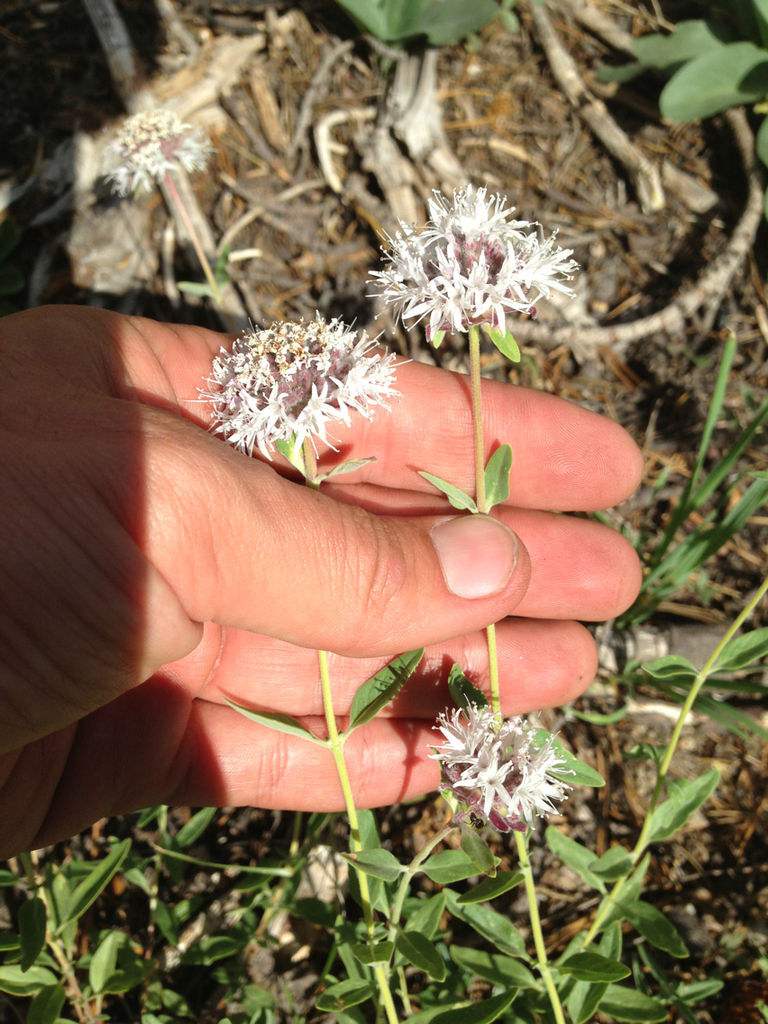
(c) Ken-ichi Ueda, some rights reserved (CC BY) · licence
Family: Lamiaceae · Type: Subshrub · Native
Monardella odoratissima (Coyote-mint) is a native California subshrub in the Lamiaceae family, recognized by glandular pits on leaf undersides and cup-like bract arrangement.
Coyote-mint is a California native shrub found in mountain and foothill regions, thriving in diverse habitats at elevations ranging from mid to high mountain zones. Flowering from June to September, this aromatic plant produces delicate white, lavender, or purple flowers in compact clusters 12 to 28 millimeters wide. Growing with ascending to erect stems 10 to 45 centimeters tall, the plant develops a distinctive branching structure with sparse hairs and occasional glandular features. Its leaves are lanceolate to ovate, 15 to 50 millimeters long, with a notable green to ash-gray coloration often tinged with purple and featuring glandular pits on the underside. The plant's flower clusters are subtly framed by erect bracts that range from pale green to rose-purple, creating an intricate and visually appealing botanical display.
Identification and appearance
Key characters: 15 sympatric species; glandular pits on leaf undersides and cup-like bract arrangement are diagnostic
Habitat and range
California counties: Mendocino, Fresno, Shasta, Mono, Siskiyou, Tulare, Placer, Nevada, Humboldt, Plumas, Sonoma, Tehama, Madera, Inyo, Tuolumne, Calaveras, Modoc, San Bernardino, Kern, Butte, Trinity, Alpine, Los Angeles, El Dorado, Amador, Lassen, Mariposa, Sierra, Glenn, Lake, Del Norte
How to tell it apart
vs Mentha: Mint has multiple flower clusters spaced along the stem; Monardella has one terminal pom-pom head per stem.; vs Salvia: Sage has flowers spaced along an elongated spike; Monardella's flowers are densely packed into a rounded head.; vs Veronica: Speedwell has flowers in a loose spike and isn't aromatic; Monardella's flowers form a dense head with mint scent.; vs Phacelia: Phacelia's flower clusters uncurl like a fern; Monardella's form a compact, stationary head with a bract collar.; vs Valeriana: Valerian has tiny flowers in branched clusters; Monardella has larger mint flowers in a single terminal head.
Frequently asked questions
Is Monardella odoratissima native to California?
Yes. Monardella odoratissima is native to California (recorded as native).
Where in California does Monardella odoratissima grow?
Monardella odoratissima occurs in Mendocino, Fresno, Shasta, Mono, Siskiyou, Tulare, Placer, Nevada and other counties.
What plant family does Monardella odoratissima belong to?
Monardella odoratissima is in the Lamiaceae family, genus Monardella.
Related species
Other California species in the same genus, family, or bioregion.
Sources: Jepson eFlora · Index of California Plant Names · CalPhotos
Last updated 2026-10-08
Data from The California Species Project — 14,000+ California species with verified data from CNPS, CDFW, USFWS, Cal-IPC, and more.