Monolopia major
Cupped monolopia
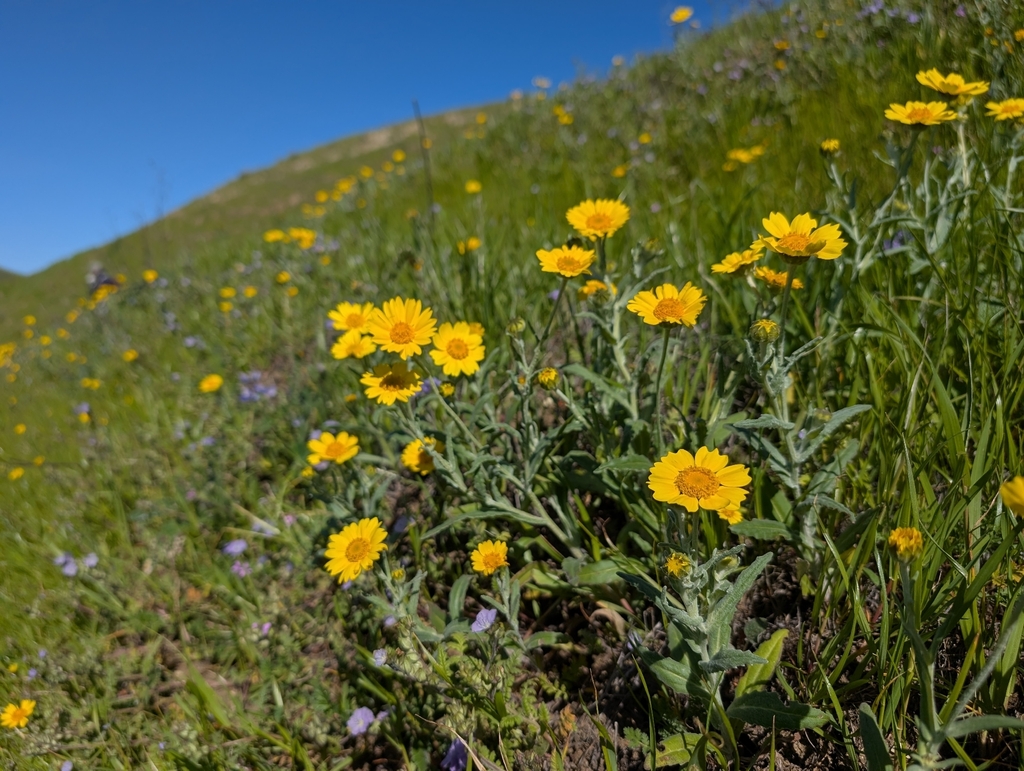
(c) Ken-ichi Ueda, some rights reserved (CC BY) · licence
Family: Asteraceae · Type: Herb · Native
Monolopia major (Cupped monolopia) is a native California herb in the Asteraceae family, recognized by cupped involucre is unique.
Cupped monolopia is a California native annual found in northern coastal interior, southwestern Sacramento Valley, northern San Joaquin Valley, San Francisco Bay Area, northern coastal ranges, and northern Transverse Ranges in grasslands and clay soils at elevations of 10 to 1,100 meters. Flowering from February to July, this plant produces cream to white ray flowers 8 to 20 millimeters long with distinctive three-lobed petals. Growing with erect or ascending stems that branch throughout, it forms delicate plants 10 to 40 centimeters tall. Its leaves are distributed along the stem, with flower heads emerging on peduncles up to 13 centimeters long and forming a unique cup-shaped involucre with triangular lobes. The fruits are small, disk-shaped, and slightly compressed with four distinct angles.
Identification and appearance
Key characters: 4 sympatric species; diagnostic cupped involucre is unique
Habitat and range
Habitat: Grassland, vertic clay, occasionally serpentine
Elevation: 10-1100 m
Bloom period
Monolopia major blooms Feb-Jul.
How to tell it apart
vs Lasthenia: Check ray petal backs - Monolopia has a tiny opposite lobe; Lasthenia rays lack this feature.; vs Eriophyllum: Monolopia lacks dense woolly coating; Eriophyllum is covered in white to gray wool.; vs Leptosyne: Monolopia is small annual with opposite ray lobes; Leptosyne is tall with simple rays and thread-like leaves.; vs Layia: Check ray petal backs - Monolopia has opposite lobe; Layia often has white-tipped rays without lobes.; vs Glebionis: Monolopia has tiny opposite ray lobes; Glebionis has fern-like cut leaves and simple rays.
Frequently asked questions
Is Monolopia major native to California?
Yes. Monolopia major is native to California (recorded as native).
When does Monolopia major bloom?
Monolopia major blooms Feb-Jul.
What plant family does Monolopia major belong to?
Monolopia major is in the Asteraceae family, genus Monolopia.
What habitat does Monolopia major grow in?
Monolopia major grows in Grassland, vertic clay, occasionally serpentine.
Related species
Other California species in the same genus, family, or bioregion.
Sources: Jepson eFlora · Index of California Plant Names · CalPhotos
Last updated 2026-10-07
Data from The California Species Project — 14,000+ California species with verified data from CNPS, CDFW, USFWS, Cal-IPC, and more.