Myriophyllum quitense
Andean water-milfoil
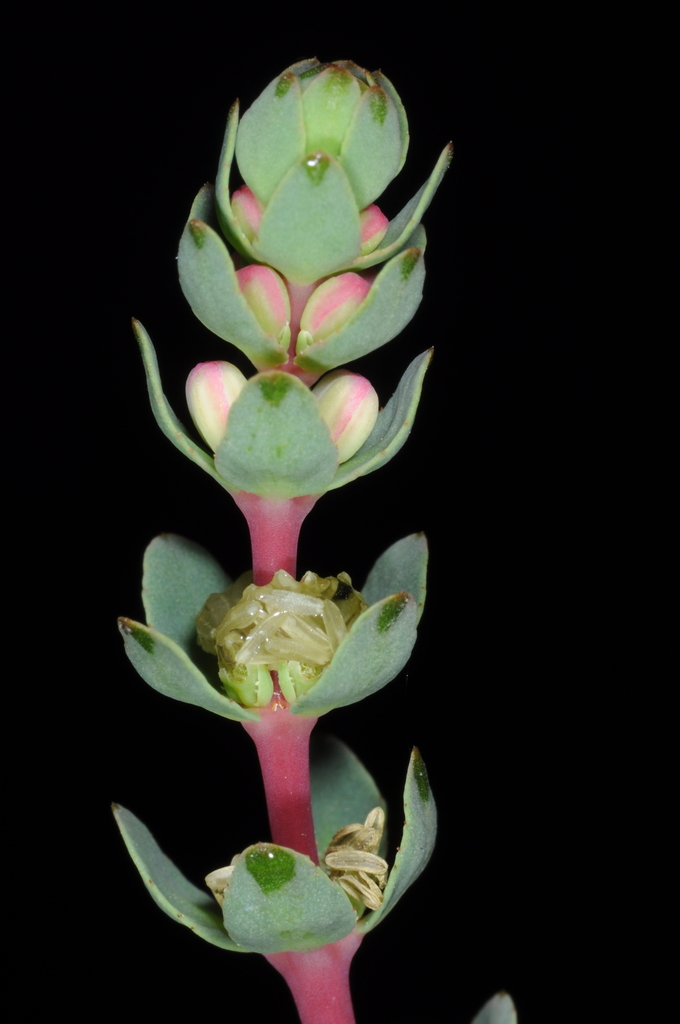
(c) aacocucci, some rights reserved (CC BY), uploaded by aacocucci · licence
Family: Haloragaceae · Type: Herb · Native
Myriophyllum quitense (Andean water-milfoil) is a native California herb in the Haloragaceae family, recognized by white rhizomes and dark gray dried stems.
Andean water-milfoil is a California native perennial found in northern Sierra Nevada, eastern San Bernardino Mountains, and northern California Ranges in streams, thermal creeks, and shallow lakeshores at elevations below 2,000 meters. Flowering from July to September, this aquatic plant produces small flowers in simple to branched spikes emerging from the water. Growing to over one meter long with strong white rhizomes and dark gray stems when dry, it spreads extensively in aquatic environments. Its distinctive leaves grow in whorls of 4 to 5, featuring intricate comb-like structures with 8 to 20 thread-like segments that create a delicate, feathery appearance. The plant produces emergent spikes 4 to 8 centimeters long with triangular bracts and produces both male and female flowers on the same plant.
Identification and appearance
Key characters: 3 sympatric species; key features are white rhizomes and dark gray dried stems
Habitat and range
Habitat: Uncommon. In streams, thermal creeks, shallow water along lakeshores with strong wave action
Elevation: < 2000 m
Outside California: to British Columbia, New Brunswick, Prince Edward Island, Wyoming, Utah, Arizona, Mexico, South America
Bloom period
Myriophyllum quitense blooms Jul-Sep.
How to tell it apart
vs Hippuris: Myriophyllum has feathery divided leaves; Hippuris has simple, undivided linear leaves in whorls.; vs Elodea: Myriophyllum has leaves pinnately divided into thread-like segments; Elodea has simple oval leaves.; vs Ceratophyllum: Myriophyllum leaves fork from a central spine; Ceratophyllum leaves fork repeatedly without central axis.; vs Ranunculus: Myriophyllum has whorled feathery leaves; aquatic Ranunculus has alternate or basal divided leaves.; vs Potamogeton: Myriophyllum has feathery divided leaves; Potamogeton has simple, entire leaves (blade-like or oval).
Frequently asked questions
Is Myriophyllum quitense native to California?
Yes. Myriophyllum quitense is native to California (recorded as native).
When does Myriophyllum quitense bloom?
Myriophyllum quitense blooms Jul-Sep.
What plant family does Myriophyllum quitense belong to?
Myriophyllum quitense is in the Haloragaceae family, genus Myriophyllum.
What habitat does Myriophyllum quitense grow in?
Myriophyllum quitense grows in Uncommon. In streams, thermal creeks, shallow water along lakeshores with strong wave action.
Related species
Other California species in the same genus, family, or bioregion.
Sources: Jepson eFlora · CalPhotos
Last updated 2026-10-07
Data from The California Species Project — 14,000+ California species with verified data from CNPS, CDFW, USFWS, Cal-IPC, and more.