Nemacladus orientalis
Eastern glandular threadplant
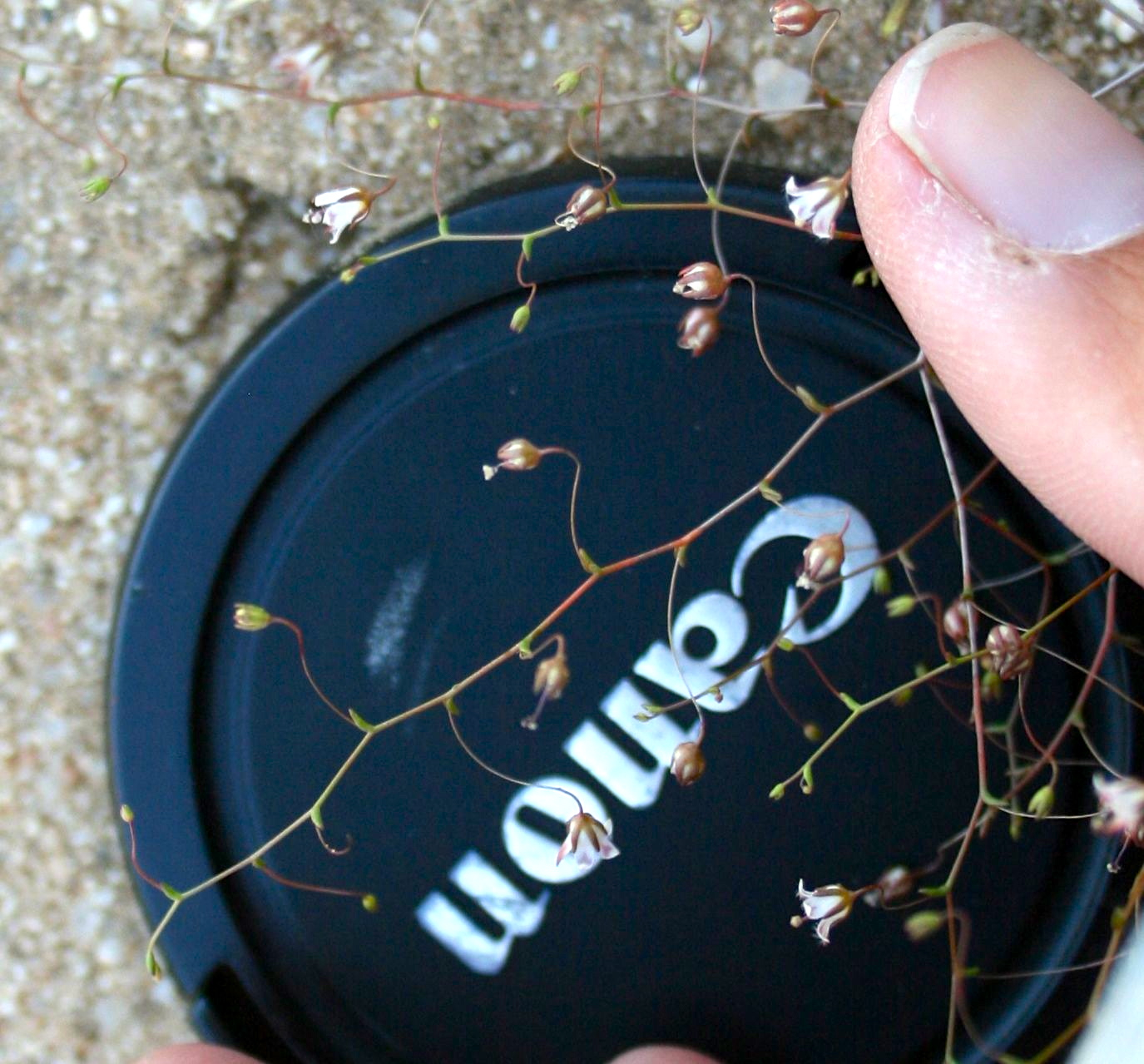
Photo by Chez Brungraber
Family: Campanulaceae · Type: Annual · Native
Nemacladus orientalis (Eastern glandular threadplant) is a native California annual in the Campanulaceae family, recognized by 16 sympatric - maroon-tipped upper lobes with ciliate margins.
Eastern glandular threadplant is a California native annual found in southern California interior ranges, southern Great Basin, northern Santa Barbara Mountains, eastern Sierra Nevada, and desert regions on dry slopes and sandy soils at elevations below 2,400 meters. Flowering from March to May, this delicate plant produces white flowers with distinctive maroon or brownish maroon tips on the corolla lobes. Growing 5 to 25 centimeters tall with stiffly ascending branched stems, it has an erect and slender appearance. Its leaves are 3 to 16 millimeters long, oblanceolate to elliptic, with toothed or pinnately lobed edges and a hairy texture. The fruit is small, approximately 2 to 4 millimeters long, with an obconic or nearly spherical shape and an acute tip.
Identification and appearance
Key characters: 16 sympatric - maroon-tipped upper lobes with ciliate margins
Habitat and range
Habitat: Dry slopes, sandy soils, washes
Elevation: < 2400 m
California counties: San Bernardino, Inyo, Riverside, Santa Barbara, Imperial, Kern, Los Angeles, Ventura, Mono, San Diego, Merced
Outside California: to Utah, New Mexico, northwestern Mexico
Bloom period
Nemacladus orientalis blooms Mar-May.
How to tell it apart
vs Hesperolinon: Hesperolinon has 5 separate styles and round petals; Nemacladus has fused stamens and irregular flowers.; vs Legenere: Legenere has white flowers in wet areas; Nemacladus has colored flowers in dry desert habitats.; vs Porterella: Porterella grows in wet areas; Nemacladus is a desert specialist of dry sandy soils.; vs Lobelia: Lobelia grows in wet areas with ridged lower lips; Nemacladus thrives in dry deserts.; vs Downingia: Downingia grows in vernal pools; Nemacladus grows in dry desert sands and gravels.
Frequently asked questions
Is Nemacladus orientalis native to California?
Yes. Nemacladus orientalis is native to California (recorded as native).
When does Nemacladus orientalis bloom?
Nemacladus orientalis blooms Mar-May.
Where in California does Nemacladus orientalis grow?
Nemacladus orientalis occurs in San Bernardino, Inyo, Riverside, Santa Barbara, Imperial, Kern, Los Angeles, Ventura and other counties, at elevations of < 2400 m.
What plant family does Nemacladus orientalis belong to?
Nemacladus orientalis is in the Campanulaceae family, genus Nemacladus.
What habitat does Nemacladus orientalis grow in?
Nemacladus orientalis grows in Dry slopes, sandy soils, washes.
Related species
Other California species in the same genus, family, or bioregion.
Sources: Jepson eFlora · Index of California Plant Names · CalPhotos
Last updated 2026-09-30
Data from The California Species Project — 14,000+ California species with verified data from CNPS, CDFW, USFWS, Cal-IPC, and more.