Nemacladus secundiflorus var. secundiflorus
Large-flowered nemacladus
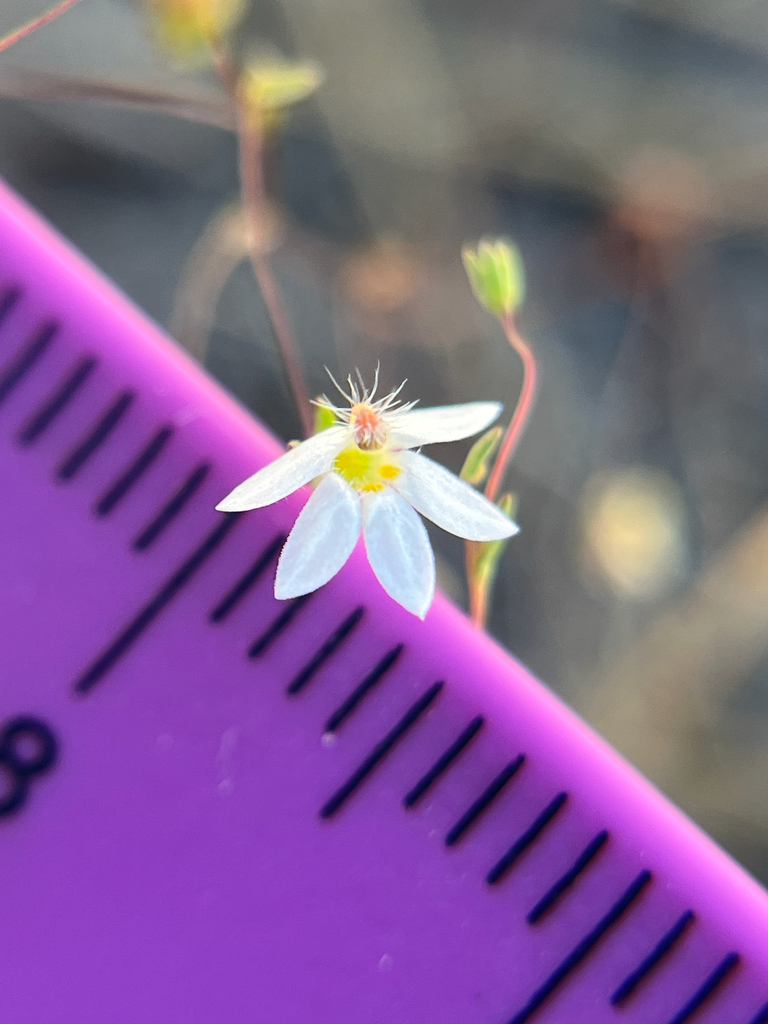
Photo: parent species Nemacladus secundiflorus · no rights reserved · CC0
Family: Campanulaceae · Type: Annual · Native
Conservation status: CNPS 4.3
Nemacladus secundiflorus var. secundiflorus (Large-flowered nemacladus) is a native California annual in the Campanulaceae family, recognized by 14 sympatric - large flowers with prominent anthers vs. small flowers in var. robbinsii.
Large-flowered nemacladus is a native annual found in southern Sierra Nevada and south Coast Ranges on dry, gravelly slopes at elevations of 200 to 800 meters. Flowering from April to May, this delicate plant produces white flowers with a distinctive yellow blotch at the lobe base and lavender veins, creating an intricate floral pattern. Growing with slender stems, it develops small, narrowly oblanceolate leaves measuring 2 to 6 millimeters long, almost spoon-shaped in appearance. Its flowers have an asymmetric one-sided inflorescence with tiny lance-linear bracts and horizontal pedicels, creating a unique architectural structure. The flower's corolla tube is widely cylindric, with two spreading adaxial lobes and three reflexed abaxial lobes that add to its delicate botanical complexity.
Identification and appearance
Key characters: 14 sympatric - large flowers with prominent anthers vs. small flowers in var. robbinsii
Habitat and range
Habitat: Dry, gravelly slopes
Elevation: 200-800 m
California counties: San Luis Obispo, Monterey, Tulare, Kern
Bloom period
Nemacladus secundiflorus var. secundiflorus blooms Apr-May.
Conservation status
CNPS 4.3
How to tell it apart
vs Hesperolinon: Hesperolinon has 5 separate styles and round petals; Nemacladus has fused stamens and irregular flowers.; vs Legenere: Legenere has white flowers in wet areas; Nemacladus has colored flowers in dry desert habitats.; vs Porterella: Porterella grows in wet areas; Nemacladus is a desert specialist of dry sandy soils.; vs Lobelia: Lobelia grows in wet areas with ridged lower lips; Nemacladus thrives in dry deserts.; vs Downingia: Downingia grows in vernal pools; Nemacladus grows in dry desert sands and gravels.
Frequently asked questions
Is Nemacladus secundiflorus var. secundiflorus native to California?
Yes. Nemacladus secundiflorus var. secundiflorus is native to California (recorded as native).
When does Nemacladus secundiflorus var. secundiflorus bloom?
Nemacladus secundiflorus var. secundiflorus blooms Apr-May.
Where in California does Nemacladus secundiflorus var. secundiflorus grow?
Nemacladus secundiflorus var. secundiflorus occurs in San Luis Obispo, Monterey, Tulare, Kern, at elevations of 200-800 m.
What plant family does Nemacladus secundiflorus var. secundiflorus belong to?
Nemacladus secundiflorus var. secundiflorus is in the Campanulaceae family, genus Nemacladus.
Is Nemacladus secundiflorus var. secundiflorus rare or endangered?
Nemacladus secundiflorus var. secundiflorus carries California Rare Plant Rank 4.3, state rank S3?.
Related species
Other California species in the same genus, family, or bioregion.
Sources: Jepson eFlora · CNPS Rare Plant Inventory · Index of California Plant Names · CalPhotos · CDFW CNDDB
Last updated 2026-09-30
Data from The California Species Project — 14,000+ California species with verified data from CNPS, CDFW, USFWS, Cal-IPC, and more.