Nitrophila occidentalis
Boraxweed
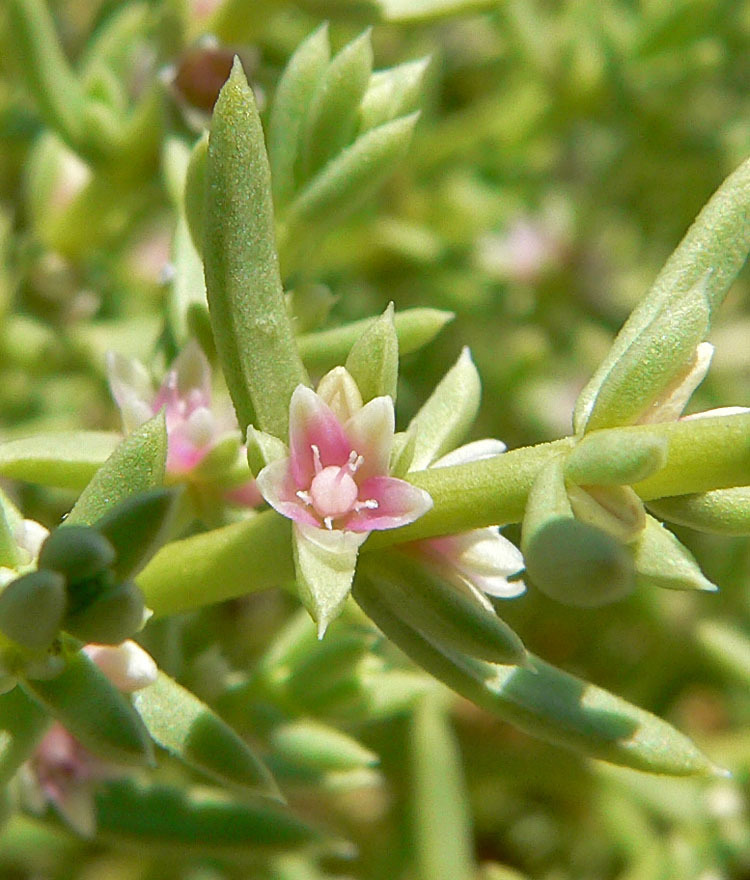
(c) Stan Shebs, some rights reserved (CC BY-SA) · licence
Family: Amaranthaceae · Type: Herb · Native
Nitrophila occidentalis (Boraxweed) is a native California herb in the Amaranthaceae family, recognized by key differences are stem habit (decumbent to erect vs erect) and leaf attachment (sessile vs clasping).
Boraxweed is a California native perennial found in the Klamath Ranges, Shasta Valley, Great Valley, southern California, western Peninsular Ranges, Great Basin, and Mojave Desert in moist, alkaline soils at elevations below 2,100 meters. Flowering from May to October, this plant produces pink to white flowers that start pink and fade to white with age. Growing with decumbent to erect stems that can be prostrate or upright, it forms low-spreading clumps with occasional scale-like leaves on its lower stems. Its leaves are sessile, often appearing minimal or reduced on the lower parts of the plant. The tiny seeds are approximately one millimeter long, colored black or brown with a dull finish.
Identification and appearance
Key characters: 1 sympatric species; key differences are stem habit (decumbent to erect vs erect) and leaf attachment (sessile vs clasping)
Habitat and range
Habitat: Moist, alkaline soils
Elevation: < 2100 m
California counties: San Diego, Merced, Riverside, Orange, Inyo, San Bernardino, Los Angeles, Kern, San Joaquin, Lassen, Fresno, Mono, Tulare, Siskiyou, Modoc, Kings, Alameda, Solano, Madera, Glenn
Outside California: to eastern Oregon, Utah, northern Mexico
Bloom period
Nitrophila occidentalis blooms May-Oct.
How to tell it apart
vs Amaranthus: Amaranthus has thin flat leaves; Nitrophila has thick succulent leaves like a mini ice plant.; vs Alternanthera: Alternanthera has thin leaves and aquatic habitat; Nitrophila has succulent leaves in alkaline flats.; vs Guilleminea: Guilleminea has thin flat leaves; Nitrophila has obvious thick succulent leaves.; vs Tidestromia: Tidestromia is densely woolly-hairy; Nitrophila is succulent and powdery but not fuzzy.; vs Sesuvium: Sesuvium has showy pink flowers with many stamens; Nitrophila has tiny inconspicuous flowers.
Frequently asked questions
Is Nitrophila occidentalis native to California?
Yes. Nitrophila occidentalis is native to California (recorded as native).
When does Nitrophila occidentalis bloom?
Nitrophila occidentalis blooms May-Oct.
Where in California does Nitrophila occidentalis grow?
Nitrophila occidentalis occurs in San Diego, Merced, Riverside, Orange, Inyo, San Bernardino, Los Angeles, Kern and other counties, at elevations of < 2100 m.
What plant family does Nitrophila occidentalis belong to?
Nitrophila occidentalis is in the Amaranthaceae family, genus Nitrophila.
What habitat does Nitrophila occidentalis grow in?
Nitrophila occidentalis grows in Moist, alkaline soils.
Related species
Other California species in the same genus, family, or bioregion.
Sources: Jepson eFlora · Index of California Plant Names · CalPhotos
Last updated 2026-10-07
Data from The California Species Project — 14,000+ California species with verified data from CNPS, CDFW, USFWS, Cal-IPC, and more.