Nuphar polysepala
Rocky mountain pond-lily
no rights reserved · CC0
Family: Nymphaeaceae · Type: Perennial · Native
Nuphar polysepala (Rocky mountain pond-lily) is a native California perennial in the Nymphaeaceae family, recognized by Represents ancient aquatic plant family (Nymphaeaceae) with limited distribution in California's montane aquatic habitats.
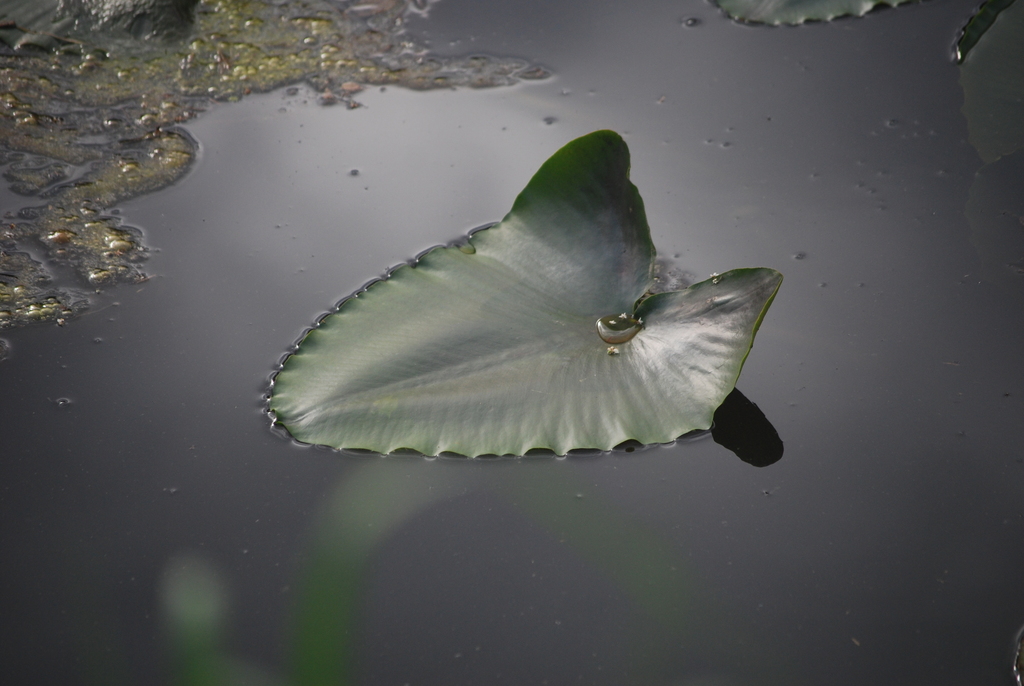
Rocky mountain pond-lily is a California native perennial found in northwestern California, northern Sierra Nevada, Central Valley, northern Central Western California, and Modoc Plateau in ponds and slow streams at elevations below 2,500 meters. Flowering from April to September, this plant produces yellow to yellow-green flowers with red-tinged sepals up to 10 centimeters wide. Growing with floating leaves 1 to 4 decimeters long, it forms large aquatic patches with substantial underwater structures. Its broad leaves are oblong to ovate with rounded basal lobes, spreading across the water's surface in characteristic pond-lily fashion. The plant produces small seeds 3 to 5 millimeters long and features a distinctive 2 to 3.5 centimeter wide stigmatic disk.
Identification and appearance
Key characters: Represents ancient aquatic plant family (Nymphaeaceae) with limited distribution in California's montane aquatic habitats
Habitat and range
Habitat: Ponds, slow streams
Elevation: < 2500 m
California counties: Del Norte, Mendocino, Alpine, Colusa, Fresno, Lassen, Mariposa, Nevada, Sierra, San Mateo, Tuolumne, Butte, Humboldt, El Dorado, Lake, Marin, Madera, Plumas, San Luis Obispo, Trinity, Santa Cruz, Siskiyou, Sonoma, Shasta, Yolo
Outside California: to Alaska, Rocky Mountains
Bloom period
Nuphar polysepala blooms Apr-Sep.
How to tell it apart
vs Nymphaea: Nuphar flowers are yellow cups that stay partly closed; waterlily flowers spread flat and open wide in white, pink, or yellow.; vs Polygala: Nuphar is aquatic with large floating leaves and yellow globe flowers; Polygala is terrestrial with small leaves and pink/purple flowers.; vs Romneya: Nuphar has yellow globe flowers above water; Romneya has large white poppy flowers on upright stems on land.; vs Carpenteria: Nuphar is aquatic with floating leaves; Carpenteria is a terrestrial shrub with white flowers.; vs Hypericum: Nuphar is aquatic with globe-shaped yellow flowers; Hypericum is terrestrial with flat, star-shaped yellow flowers.
Frequently asked questions
Is Nuphar polysepala native to California?
Yes. Nuphar polysepala is native to California (recorded as native).
When does Nuphar polysepala bloom?
Nuphar polysepala blooms Apr-Sep.
Where in California does Nuphar polysepala grow?
Nuphar polysepala occurs in Del Norte, Mendocino, Alpine, Colusa, Fresno, Lassen, Mariposa, Nevada and other counties, at elevations of < 2500 m.
What plant family does Nuphar polysepala belong to?
Nuphar polysepala is in the Nymphaeaceae family, genus Nuphar.
What habitat does Nuphar polysepala grow in?
Nuphar polysepala grows in Ponds, slow streams.
Related species
Other California species in the same genus, family, or bioregion.
Sources: Jepson eFlora · Index of California Plant Names · CalPhotos
Last updated 2026-09-30
Data from The California Species Project — 14,000+ California species with verified data from CNPS, CDFW, USFWS, Cal-IPC, and more.