Odontostomum hartwegii
Hartweg's doll's lily
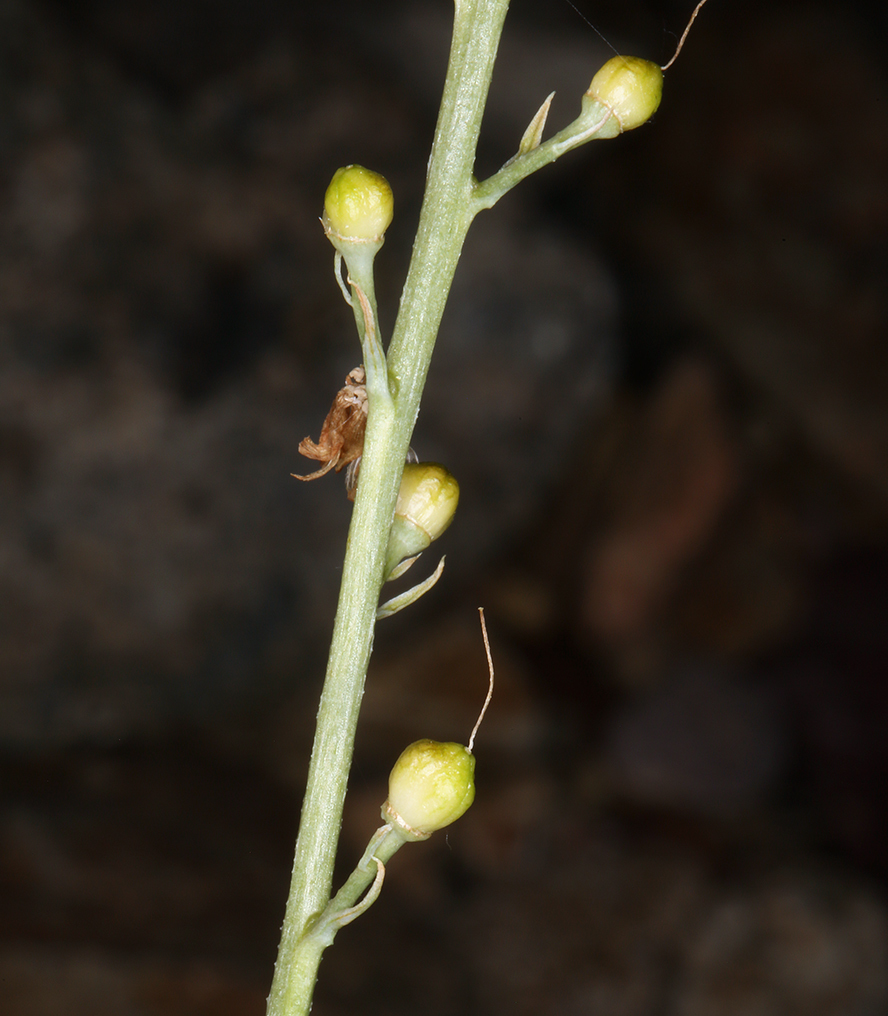
(c) Steve Matson, some rights reserved (CC BY), uploaded by Steve Matson · licence
Family: Tecophilaeaceae · Type: Herb · Native
Odontostomum hartwegii (Hartweg's doll's lily) is a native California herb in the Tecophilaeaceae family, recognized by Represents family Tecophilaeaceae with main distribution in southern Africa - remarkable biogeographic disjunction.
Hartweg's doll's lily is a California native perennial found in the Klamath Ranges, northern Coast Ranges, Cascade Range, and northern Sierra Nevada foothills in clay soils, often on serpentine landscapes at elevations below 600 meters. Flowering from April to May, this plant produces white to pale yellow flowers with strongly veined petals that spread out and later become reflexed. Growing 12 to 50 centimeters tall with a slightly curved stem that branches and emerges from a small ovoid corm, it develops slender leaves reaching 10 to 30 centimeters in length with upper leaves progressively reduced. Its leaves emerge from a distinctive corm, with delicate white to pale yellow flowers featuring six stamens and a thread-like style. The plant produces obovoid seeds in a unique display characteristic of its rare lily relatives.
Identification and appearance
Key characters: Represents family Tecophilaeaceae with main distribution in southern Africa - remarkable biogeographic disjunction
Habitat and range
Habitat: Clay, often serpentine soils
Elevation: < 600 m
California counties: Butte, Nevada, Shasta, Mariposa, Yuba, Tehama, Tuolumne, Calaveras, El Dorado, Napa, Sacramento, Placer, Stanislaus
Bloom period
Odontostomum hartwegii blooms Apr-May.
How to tell it apart
vs Triteleia: Brodiaeas and their kin bear flowers in an umbel on a naked scape from a corm; Odontostomum carries its flowers along a branched, leafy-based stem, not in a single umbel.; vs Chlorogalum: Soap plant has wavy-margined basal leaves and a tall open panicle opening in the evening; Odontostomum has flat linear leaves and daytime white-to-yellowish flowers with reflexing lobes.; vs Toxicoscordion: Death-camas grows from a bulb with greenish-white flowers glanded at each tepal base; Odontostomum grows from a corm and its tepals are strongly veined, without basal glands.; vs Muilla: Muilla bears an umbel of small greenish-white flowers; Odontostomum's flowers are borne in a branched raceme-like arrangement.; vs Bloomeria: Golden stars form a yellow umbel with cup-appendaged filaments; Odontostomum's flowers are whitish, tube-fused, and not in an umbel.
Frequently asked questions
Is Odontostomum hartwegii native to California?
Yes. Odontostomum hartwegii is native to California (recorded as native).
When does Odontostomum hartwegii bloom?
Odontostomum hartwegii blooms Apr-May.
Where in California does Odontostomum hartwegii grow?
Odontostomum hartwegii occurs in Butte, Nevada, Shasta, Mariposa, Yuba, Tehama, Tuolumne, Calaveras and other counties, at elevations of < 600 m.
What plant family does Odontostomum hartwegii belong to?
Odontostomum hartwegii is in the Tecophilaeaceae family, genus Odontostomum.
What habitat does Odontostomum hartwegii grow in?
Odontostomum hartwegii grows in Clay, often serpentine soils.
Related species
Other California species in the same genus, family, or bioregion.
Sources: Jepson eFlora · Index of California Plant Names · CalPhotos
Last updated 2026-10-07
Data from The California Species Project — 14,000+ California species with verified data from CNPS, CDFW, USFWS, Cal-IPC, and more.