Oenothera cespitosa subsp. crinita
Cespitose evening-primrose, Cespitose Evening-Primrose
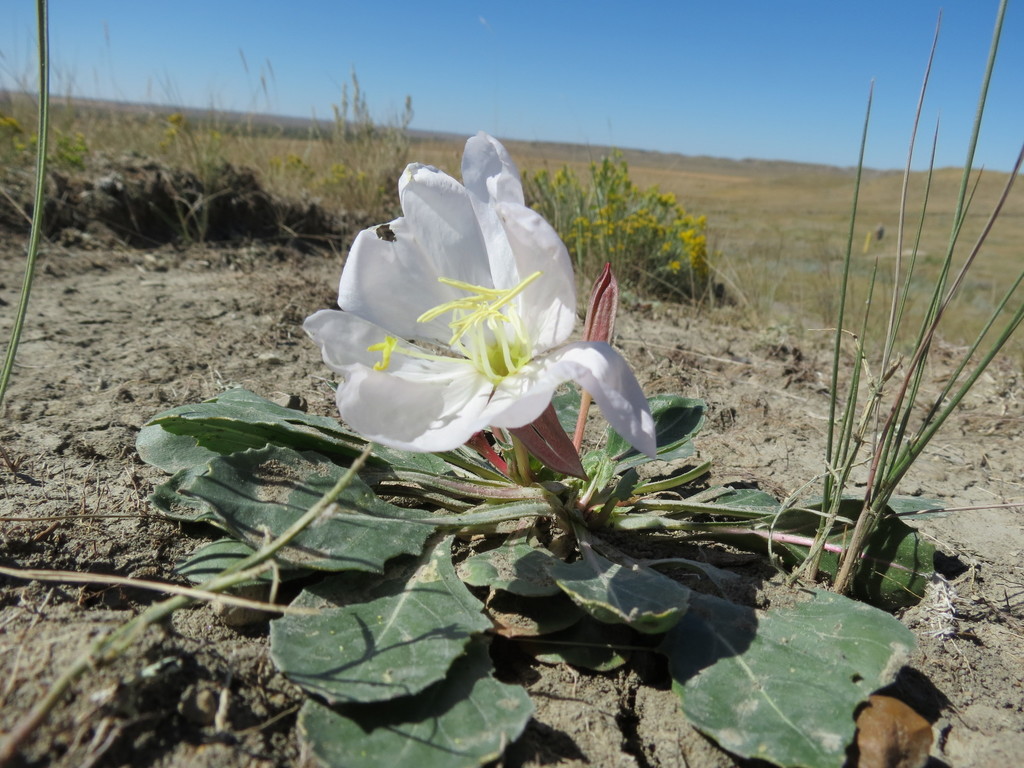
Photo: parent species Oenothera cespitosa · (c) James Telford, some rights reserved (CC BY) · licence
Family: Onagraceae · Type: Subshrub · Native
Conservation status: CNPS 4.2
Oenothera cespitosa subsp. crinita (Cespitose evening-primrose) is a native California subshrub in the Onagraceae family, recognized by Densely cespitose O. cespitosa w/ shorter hypanthium (30–85 mm), S-shaped nearly sessile fruit, lobed seed-cavity margin; petals fade….
Cespitose evening-primrose is a native perennial found in the Mojave Desert, eastern Sierra Nevada, and Modoc Plateau in bristlecone-pine forest, pinyon and juniper woodland, and desert scrub at elevations of 1,150 to 3,370 meters. Flowering from June to September, this plant produces delicate petals that fade from white to rose and purple in large blossoms with long hypanthiums up to 85 millimeters long. Growing in loosely to densely clustered formations with distinctive cespitose growth habit, it forms spreading clumps with multiple stems. Its leaves are generally arranged in rosettes, creating a compact and somewhat sprawling appearance across rocky, calcium-rich soils. The fruit is uniquely S-shaped, measuring 10 to 34 millimeters long, with small seeds approximately 3 millimeters in length.
Identification and appearance
Key characters: Densely cespitose O. cespitosa w/ shorter hypanthium (30–85 mm), S-shaped nearly sessile fruit, lobed seed-cavity margin; petals fade rose-purple
Habitat and range
Habitat: Calcium soils in bristlecone-pine forest, pinyon/juniper woodland, desert scrub
Elevation: 1150-3370 m
Outside California: western United States
Bloom period
Oenothera cespitosa subsp. crinita blooms Jun-Sep.
Conservation status
CNPS 4.2
How to tell it apart
vs Camissoniopsis: Oenothera has a 4-lobed cross-shaped stigma; Camissoniopsis has a round stigma and four-angled fruits.; vs Clarkia: Oenothera has 4-lobed stigma and yellow flowers; Clarkia has round stigma and pink/purple flowers.; vs Rosa: Oenothera has 4 petals and capsule fruits; Rosa has 5+ petals and rose hips.; vs Convolvulus: Oenothera has separate petals; Convolvulus has fused trumpet-shaped flowers (morning glory family).; vs Taraxia: Oenothera has robust stems with 4-lobed stigma; Taraxia is stemless with flowers at ground level.
Frequently asked questions
Is Oenothera cespitosa subsp. crinita native to California?
Yes. Oenothera cespitosa subsp. crinita is native to California (recorded as native).
When does Oenothera cespitosa subsp. crinita bloom?
Oenothera cespitosa subsp. crinita blooms Jun-Sep.
What plant family does Oenothera cespitosa subsp. crinita belong to?
Oenothera cespitosa subsp. crinita is in the Onagraceae family, genus Oenothera.
Is Oenothera cespitosa subsp. crinita rare or endangered?
Oenothera cespitosa subsp. crinita carries California Rare Plant Rank 4.2, state rank S4?.
What habitat does Oenothera cespitosa subsp. crinita grow in?
Oenothera cespitosa subsp. crinita grows in Calcium soils in bristlecone-pine forest, pinyon/juniper woodland, desert scrub.
Related species
Other California species in the same genus, family, or bioregion.
Sources: Jepson eFlora · CalPhotos · CDFW CNDDB
Last updated 2026-10-07
Data from The California Species Project — 14,000+ California species with verified data from CNPS, CDFW, USFWS, Cal-IPC, and more.