Opuntia basilaris var. brachyclada
Short-joint beavertail, Short-Joint Beavertail
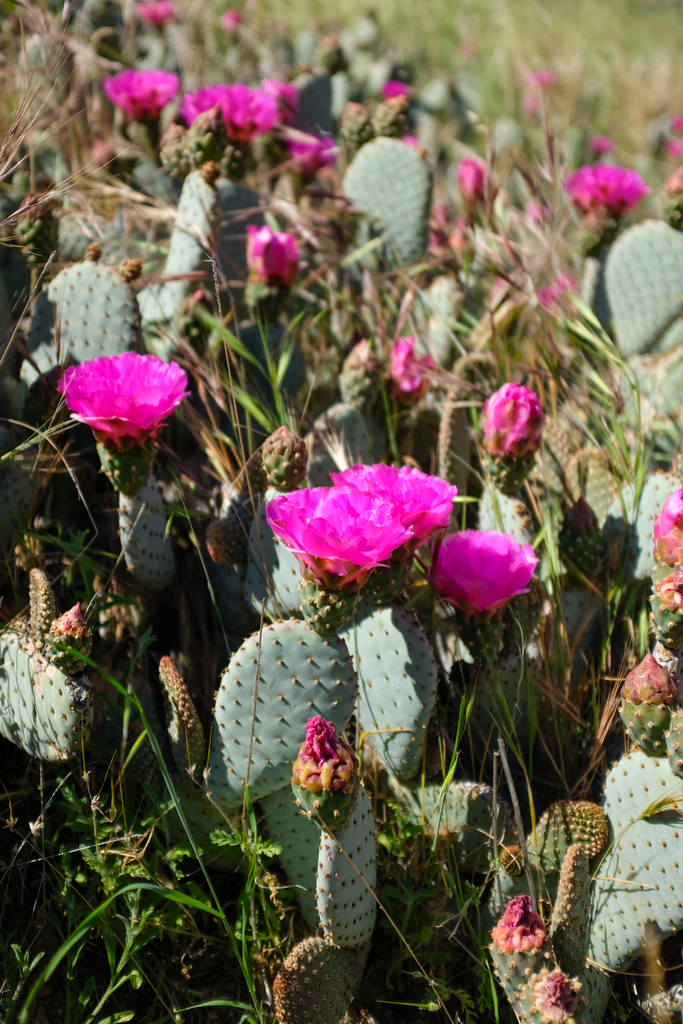
Photo: parent species Opuntia basilaris · (c) paulexcoff, some rights reserved (CC BY-SA) · licence
Family: Cactaceae · Type: Shrub · Native
Conservation status: CNPS 1B.2
Opuntia basilaris var. brachyclada (Short-joint beavertail) is a native California shrub in the Cactaceae family, recognized by segment size and shape distinguish from other varieties.
Short-joint beavertail is a rare (CNPS 1B.2) California native shrub found in the San Gabriel and San Bernardino Mountains in chaparral and oak/pine woodland at elevations of 1,200 to 1,800 meters. Flowering from April to June, this plant produces pale pink to magenta flowers with distinctive succulent paddle-shaped segments. Growing with flattened stem segments 5 to 13 centimeters long and 1.5 to 5 centimeters wide, it forms a low, spreading structure characteristic of desert succulents. Its segments are nearly cylindrical to slightly club-shaped, with no visible spines, creating a smooth, sculptural appearance in its native habitat. This distinctive cactus variety thrives in dry, rocky landscapes of southern California mountain ranges.
Identification and appearance
Key characters: 5 sympatric species; segment size and shape distinguish from other varieties
Habitat and range
Habitat: Chaparral, oak/pine woodland
Elevation: 1200-1800 m
California counties: San Bernardino, Los Angeles
Bloom period
Opuntia basilaris var. brachyclada blooms Apr-Jun.
Conservation status
CNPS 1B.2
How to tell it apart
vs Cylindropuntia: Opuntia has flat paddle segments; Cylindropuntia has cylindrical stems with papery spine sheaths.; vs Echinocereus: Opuntia has flat pads; Echinocereus has cylindrical stems that branch into clusters.; vs Euphorbia: Opuntia has true spines from areoles on fleshy pads; Euphorbia has milky sap and no areoles.; vs Austrocylindropuntia: Opuntia has broad flat pads; Austrocylindropuntia has pencil-thin cylindrical stems.; vs Cephalocereus: Opuntia has flat jointed pads; Cephalocereus has tall unbranched columns with woolly hair.
Frequently asked questions
Is Opuntia basilaris var. brachyclada native to California?
Yes. Opuntia basilaris var. brachyclada is native to California (recorded as native).
When does Opuntia basilaris var. brachyclada bloom?
Opuntia basilaris var. brachyclada blooms Apr-Jun.
Where in California does Opuntia basilaris var. brachyclada grow?
Opuntia basilaris var. brachyclada occurs in San Bernardino, Los Angeles, at elevations of 1200-1800 m.
What plant family does Opuntia basilaris var. brachyclada belong to?
Opuntia basilaris var. brachyclada is in the Cactaceae family, genus Opuntia.
Is Opuntia basilaris var. brachyclada rare or endangered?
Opuntia basilaris var. brachyclada carries California Rare Plant Rank 1B.2, state rank S3.
Related species
Other California species in the same genus, family, or bioregion.
Sources: Jepson eFlora · CNPS Rare Plant Inventory · Index of California Plant Names · CalPhotos · CDFW CNDDB
Last updated 2026-10-07
Data from The California Species Project — 14,000+ California species with verified data from CNPS, CDFW, USFWS, Cal-IPC, and more.