Opuntia polyacantha var. erinacea
Mojave prickly-pear, grizzly bear prickly-pear, Grizzly Bear Prickly-Pear
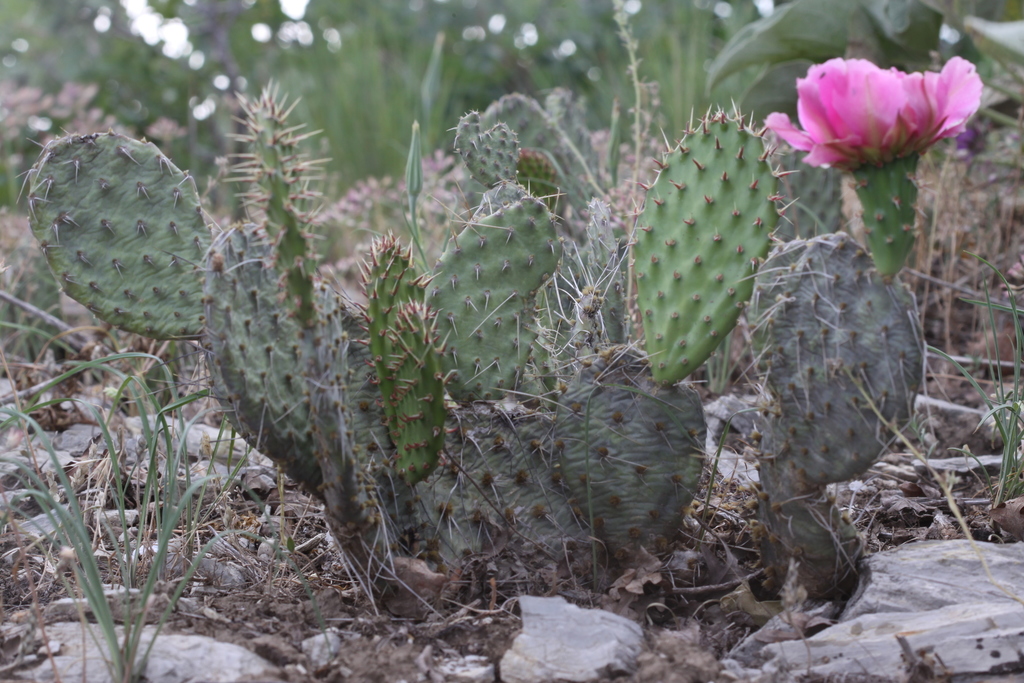
(c) Andrey Zharkikh, some rights reserved (CC BY) · licence
Family: Cactaceae · Type: Shrub · Native
Opuntia polyacantha var. erinacea (Mojave prickly-pear) is a native California shrub in the Cactaceae family, recognized by high spine count, hair-like basal spines, spiny fruits.
Mojave prickly-pear is a California native shrub found in southeastern Sierra Nevada, San Bernardino Mountains, San Jacinto Mountains, northeastern Sierra Nevada, and eastern Mojave Desert regions in desert scrub, Joshua-tree woodland, and pinyon woodland at elevations of 900 to 2,200 meters. Flowering from May to June, this plant produces pale flowers with distinctive spiny areoles covering its segments. Growing as a robust desert shrub with stems 30 to 100 centimeters tall, it features 4 to 24 spines per areole that are generally pale and longest on the oldest stem segments. Its stems have remarkable spines ranging from hair-like and curling near the base to straight and ascending at the tips, with spines measuring 1.7 to 18.5 centimeters long. The plant produces spiny fruit with 20 to 33 areoles, each containing 7 to 13 spines, making it a distinctive and well-defended desert succulent.
Identification and appearance
Key characters: 12 sympatric species; high spine count, hair-like basal spines, spiny fruits
Habitat and range
Habitat: Desert scrub, Joshua-tree woodland, pinyon woodland
Elevation: 900-2200 m
California counties: San Bernardino, Inyo, Mono, Riverside, Tulare, San Diego
Outside California: to Utah, Arizona
Bloom period
Opuntia polyacantha var. erinacea blooms May-Jun.
How to tell it apart
vs Cylindropuntia: Opuntia has flat paddle segments; Cylindropuntia has cylindrical stems with papery spine sheaths.; vs Echinocereus: Opuntia has flat pads; Echinocereus has cylindrical stems that branch into clusters.; vs Euphorbia: Opuntia has true spines from areoles on fleshy pads; Euphorbia has milky sap and no areoles.; vs Austrocylindropuntia: Opuntia has broad flat pads; Austrocylindropuntia has pencil-thin cylindrical stems.; vs Cephalocereus: Opuntia has flat jointed pads; Cephalocereus has tall unbranched columns with woolly hair.
Frequently asked questions
Is Opuntia polyacantha var. erinacea native to California?
Yes. Opuntia polyacantha var. erinacea is native to California (recorded as native).
When does Opuntia polyacantha var. erinacea bloom?
Opuntia polyacantha var. erinacea blooms May-Jun.
Where in California does Opuntia polyacantha var. erinacea grow?
Opuntia polyacantha var. erinacea occurs in San Bernardino, Inyo, Mono, Riverside, Tulare, San Diego, at elevations of 900-2200 m.
What plant family does Opuntia polyacantha var. erinacea belong to?
Opuntia polyacantha var. erinacea is in the Cactaceae family, genus Opuntia.
What habitat does Opuntia polyacantha var. erinacea grow in?
Opuntia polyacantha var. erinacea grows in Desert scrub, Joshua-tree woodland, pinyon woodland.
Related species
Other California species in the same genus, family, or bioregion.
Sources: Jepson eFlora · Index of California Plant Names · CalPhotos
Last updated 2026-10-07
Data from The California Species Project — 14,000+ California species with verified data from CNPS, CDFW, USFWS, Cal-IPC, and more.