Orthocarpus cuspidatus subsp. cryptanthus
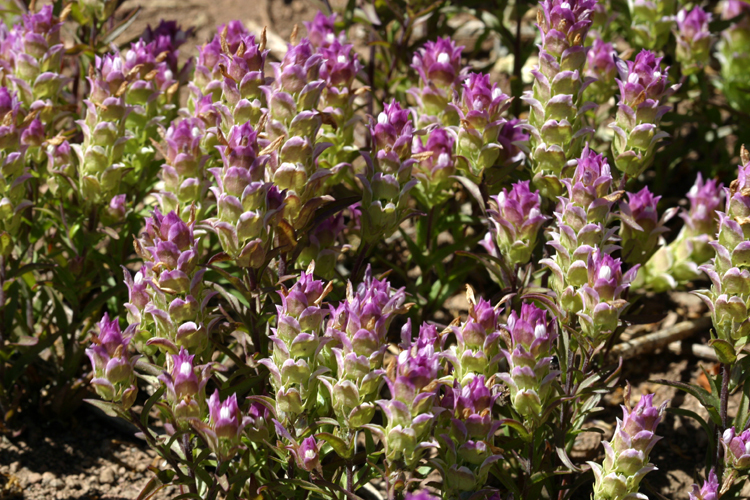
Photo: parent species Orthocarpus cuspidatus · (c) Steve Matson, some rights reserved (CC BY) · licence
Family: Orobanchaceae · Type: Herb · Native
Orthocarpus cuspidatus subsp. cryptanthus is a native California herb in the Orobanchaceae family, recognized by Smallest O. cuspidatus: corolla 9–14 mm, included & hidden by bract; drying meadows/sagebrush, high N mtns & GB.
Orthocarpus cuspidatus subsp. cryptanthus is a California native annual herb found in the northern Sierra Nevada, central Sierra Nevada, and Great Basin in drying meadows and open sagebrush at elevations of 1,500 to 3,200 meters. Flowering from June to August, this plant produces small white to pale yellow flowers with a distinctive beak 3 to 4 millimeters long, partially hidden by its own bracts. Growing with delicate, slender stems up to 30 centimeters tall, it forms compact clusters in open grassland and sagebrush environments. Its leaves are narrow and closely arranged along the stem, typical of the genus Orthocarpus. The plant's unique floral structure includes small pouches 1 to 2 millimeters deep, giving it a distinctive appearance among annual wildflowers.
Identification and appearance
Key characters: Smallest O. cuspidatus: corolla 9–14 mm, included & hidden by bract; drying meadows/sagebrush, high N mtns & GB
Habitat and range
Habitat: Drying meadows, open sagebrush
Elevation: 1500-3200 m
California counties: Modoc, Alpine, Tuolumne, Amador, Plumas, Mono, Sierra, Placer, Lassen, Butte, Shasta, Tehama, Nevada, El Dorado, Madera, Siskiyou
Outside California: to Oregon, north-central United States
Bloom period
Orthocarpus cuspidatus subsp. cryptanthus blooms Jun-Aug.
How to tell it apart
vs Castilleja: Orthocarpus has closed hood hiding stamens; Castilleja has open beak you can see into from front.; vs Triphysaria: Orthocarpus has closed hood and 4-lobed cup; Triphysaria has open beak with throat fold.; vs Cordylanthus: Orthocarpus has simple closed hood; Cordylanthus has lower lip middle lobe rolled under creating bird-beak look.; vs Dicranostegia: Orthocarpus has simple closed hood; Dicranostegia has lower lip middle lobe rolled under like Cordylanthus.; vs Chloropyron: Orthocarpus found in mountains; Chloropyron found in coastal salt marshes with succulent leaves.
Frequently asked questions
Is Orthocarpus cuspidatus subsp. cryptanthus native to California?
Yes. Orthocarpus cuspidatus subsp. cryptanthus is native to California (recorded as native).
When does Orthocarpus cuspidatus subsp. cryptanthus bloom?
Orthocarpus cuspidatus subsp. cryptanthus blooms Jun-Aug.
Where in California does Orthocarpus cuspidatus subsp. cryptanthus grow?
Orthocarpus cuspidatus subsp. cryptanthus occurs in Modoc, Alpine, Tuolumne, Amador, Plumas, Mono, Sierra, Placer and other counties, at elevations of 1500-3200 m.
What plant family does Orthocarpus cuspidatus subsp. cryptanthus belong to?
Orthocarpus cuspidatus subsp. cryptanthus is in the Orobanchaceae family, genus Orthocarpus.
What habitat does Orthocarpus cuspidatus subsp. cryptanthus grow in?
Orthocarpus cuspidatus subsp. cryptanthus grows in Drying meadows, open sagebrush.
Related species
Other California species in the same genus, family, or bioregion.
Sources: Jepson eFlora · Index of California Plant Names · CalPhotos
Last updated 2026-10-07
Data from The California Species Project — 14,000+ California species with verified data from CNPS, CDFW, USFWS, Cal-IPC, and more.