Oxytropis borealis
Boreal locoweed
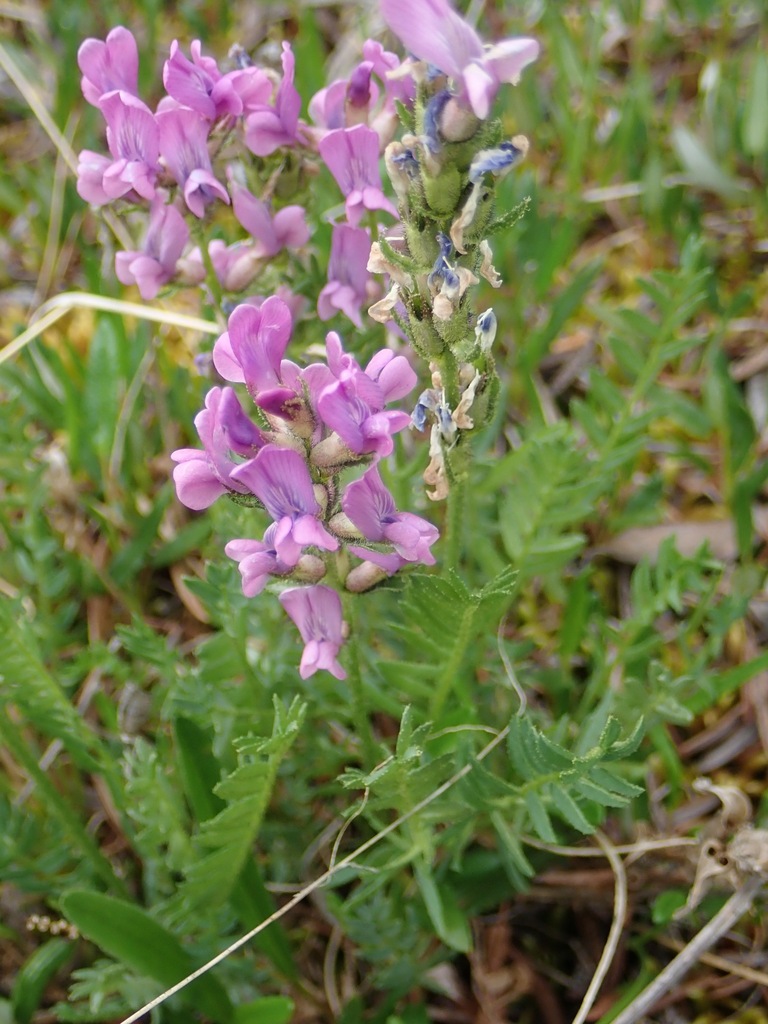
(c) Donald Hampton, some rights reserved (CC BY-SA) · licence
Family: Fabaceae · Type: Herb · Native
Oxytropis borealis (Boreal locoweed) is a native California herb in the Fabaceae family, recognized by Green, sticky-glandular locoweed w/ many leaflets (21–39), corolla 10–20 mm; s Sierra & White-Inyo.
Boreal locoweed is a California native perennial found in alpine and subalpine habitats at high elevations. Flowering from June to August, this plant produces white to red-purple flowers that often dry to a blue color, clustered in compact racemes. Growing in dense, green tufts with glandular and puberulent stems, it forms clusters up to 15 to 25 centimeters tall. Its basal leaves feature 21 to 39 leaflets, each 2 to 15 millimeters long, with ovate to lance-oblong shapes that become smaller toward the stem tips. The distinctive fruit is ascending and slightly inflated, with a papery lanceolate structure 8 to 14 millimeters long.
Identification and appearance
Key characters: Green, sticky-glandular locoweed w/ many leaflets (21–39), corolla 10–20 mm; s Sierra & White-Inyo
Habitat and range
California counties: Inyo
How to tell it apart
vs Astragalus: Oxytropis keel petal has sharp pointed beak; Astragalus keel is rounded or blunt.; vs Ornithopus: Oxytropis pods split open; Ornithopus pods break into bead-like segments.; vs Peteria: Oxytropis lacks spiny stipules; Peteria has conspicuous spines at leaf bases.; vs Marina: Oxytropis has beaked keel, loose clusters; Marina has rounded petals, dense 1cm spikes.; vs Acmispon: Oxytropis has beaked keel petal; Acmispon keel is rounded without beak.
Frequently asked questions
Is Oxytropis borealis native to California?
Yes. Oxytropis borealis is native to California (recorded as native).
Where in California does Oxytropis borealis grow?
Oxytropis borealis occurs in Inyo.
What plant family does Oxytropis borealis belong to?
Oxytropis borealis is in the Fabaceae family, genus Oxytropis.
Related species
Other California species in the same genus, family, or bioregion.
Sources: Jepson eFlora · Index of California Plant Names · CalPhotos
Last updated 2026-10-07
Data from The California Species Project — 14,000+ California species with verified data from CNPS, CDFW, USFWS, Cal-IPC, and more.