Oxytropis oreophila
(c) Stan Shebs, some rights reserved (CC BY-SA) · licence
Family: Fabaceae · Type: Herb · Native
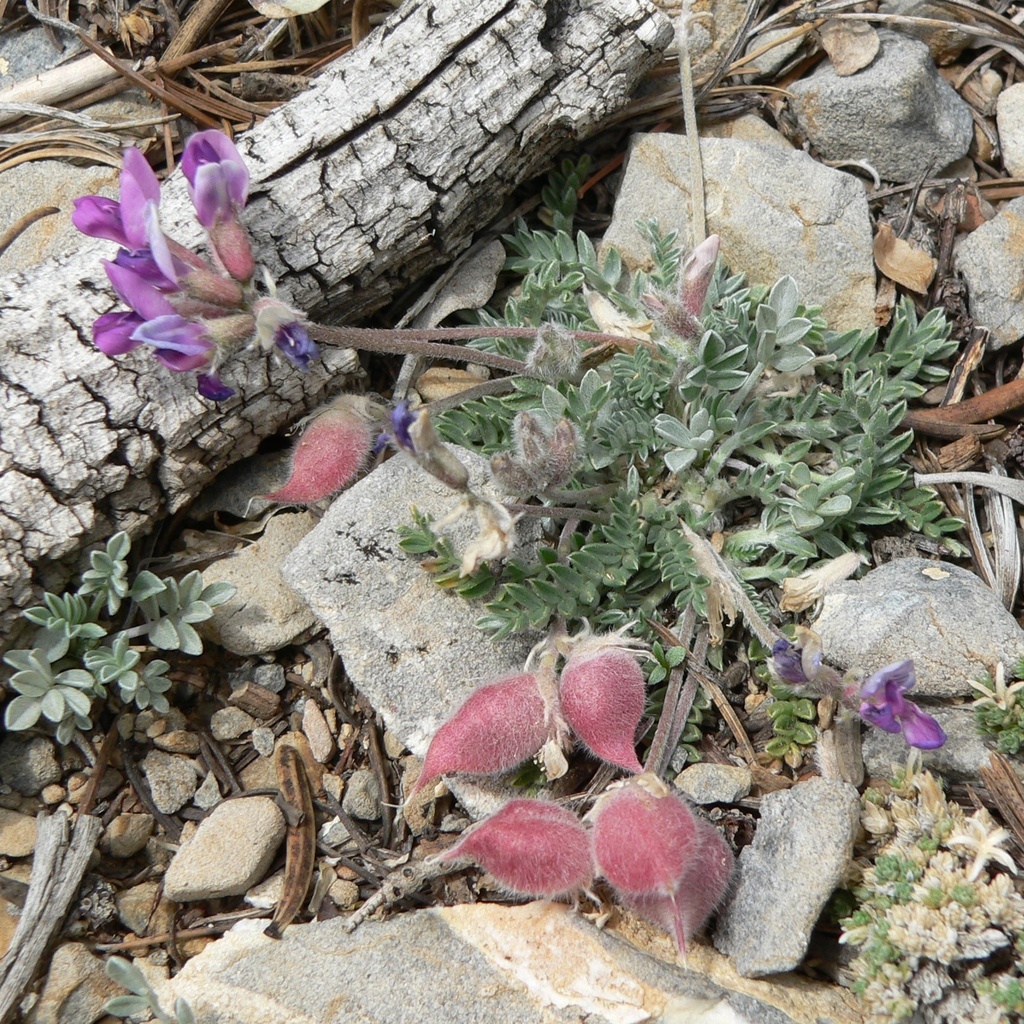
Oxytropis oreophila is a native California herb in the Fabaceae family, recognized by Silvery-silky San Bernardino Mtns locoweed w/ few leaflets (7–17), small corolla (7–12 mm) & inflated papery pods.
mountain locoweed is a California native perennial found in alpine and subalpine regions at elevations above 2,500 meters. Flowering from June to August, this plant produces delicate pink-purple to white flowers in compact head-like clusters. Growing in dense, silvery-gray tufted clumps with silky stems, it forms low-growing cushions characteristic of high-altitude environments. Its leaves are composed of 7 to 17 small elliptic to ovate leaflets, each 2 to 10 millimeters long, creating a soft, compact foliage. The plant's distinctive inflated, thinly papery fruits spread out from the plant, adding to its unique alpine appearance.
Identification and appearance
Key characters: Silvery-silky San Bernardino Mtns locoweed w/ few leaflets (7–17), small corolla (7–12 mm) & inflated papery pods
How to tell it apart
vs Astragalus: Oxytropis keel petal has sharp pointed beak; Astragalus keel is rounded or blunt.; vs Ornithopus: Oxytropis pods split open; Ornithopus pods break into bead-like segments.; vs Peteria: Oxytropis lacks spiny stipules; Peteria has conspicuous spines at leaf bases.; vs Marina: Oxytropis has beaked keel, loose clusters; Marina has rounded petals, dense 1cm spikes.; vs Acmispon: Oxytropis has beaked keel petal; Acmispon keel is rounded without beak.
Frequently asked questions
Is Oxytropis oreophila native to California?
Yes. Oxytropis oreophila is native to California (recorded as native).
What plant family does Oxytropis oreophila belong to?
Oxytropis oreophila is in the Fabaceae family, genus Oxytropis.
Related species
Other California species in the same genus, family, or bioregion.
Sources: Jepson eFlora · Index of California Plant Names · CalPhotos
Last updated 2026-10-07
Data from The California Species Project — 14,000+ California species with verified data from CNPS, CDFW, USFWS, Cal-IPC, and more.