Parietaria judaica
Spreading pellitory
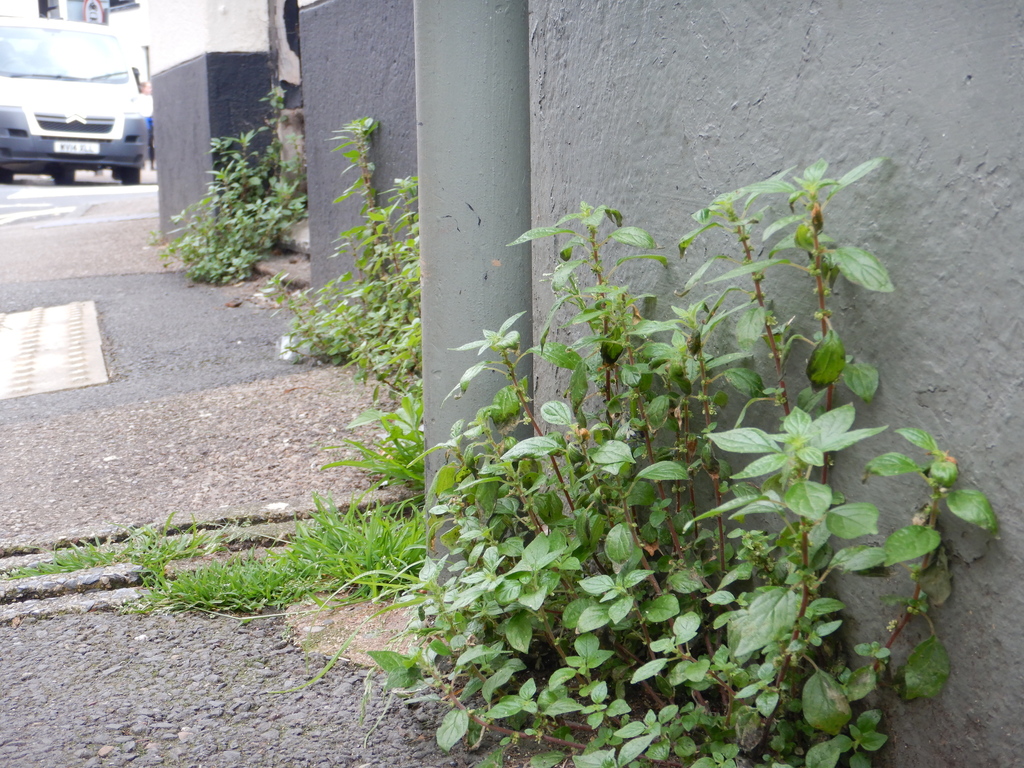
(c) Matt Lavin, some rights reserved (CC BY) · licence
Family: Urticaceae · Type: Herb · Not Native
Parietaria judaica (Spreading pellitory) is a non-native California herb in the Urticaceae family, recognized by clearly distinguished by perennial habit and size.
Spreading pellitory is a naturalized perennial herb found in southern coastal California regions including Santa Clara Valley, Central Coast, San Francisco Bay Area, and Southern California in roadsides and disturbed coastal bluff areas at elevations below 125 meters. Flowering from November to August, this plant produces inconspicuous green flowers in small clusters. Growing with decumbent to erect stems that become woody, reaching 10 to 80 centimeters tall, it spreads across disturbed landscapes. Its leaves are distinctively varied, ranging from 11 to 90 millimeters long, with shapes transitioning from narrow lanceolate to wide ovate, featuring tapered or rounded bases and acuminate tips. The small black fruits are approximately 1 to 1.5 millimeters long with acute tips.
Identification and appearance
Key characters: 2 sympatric species; clearly distinguished by perennial habit and size
Habitat and range
Habitat: Roadsides, disturbed areas on coastal bluffs
Elevation: < 125 m
California counties: San Francisco, San Bernardino, Alameda, Santa Cruz, Orange, Los Angeles, San Diego, San Mateo, Monterey, Yolo, Marin, Contra Costa, Santa Clara
Outside California: native to Eurasia, northern Africa
Bloom period
Parietaria judaica blooms Nov-Aug.
How to tell it apart
vs Stellaria: Parietaria has alternate leaves in nettle-family clusters; Stellaria has opposite leaves with chickweed flowers.; vs Mirabilis: Parietaria has tiny nettle flowers in small clusters; Mirabilis has showy trumpet-like flowers.; vs Acalypha: Parietaria has smooth leaf edges; Acalypha has toothed leaves and spike-like flower clusters.; vs Euphorbia: Parietaria has simple flowers in small clusters; Euphorbia has milky sap and unique cyathia.; vs Sairocarpus: Parietaria has tiny green nettle flowers; Sairocarpus has snapdragon-like flowers.
Frequently asked questions
Is Parietaria judaica native to California?
No. Parietaria judaica is not native to California (recorded as not native).
When does Parietaria judaica bloom?
Parietaria judaica blooms Nov-Aug.
Where in California does Parietaria judaica grow?
Parietaria judaica occurs in San Francisco, San Bernardino, Alameda, Santa Cruz, Orange, Los Angeles, San Diego, San Mateo and other counties, at elevations of < 125 m.
What plant family does Parietaria judaica belong to?
Parietaria judaica is in the Urticaceae family, genus Parietaria.
What habitat does Parietaria judaica grow in?
Parietaria judaica grows in Roadsides, disturbed areas on coastal bluffs.
Related species
Other California species in the same genus, family, or bioregion.
Sources: Jepson eFlora · Index of California Plant Names · CalPhotos
Last updated 2026-10-07
Data from The California Species Project — 14,000+ California species with verified data from CNPS, CDFW, USFWS, Cal-IPC, and more.