Parkinsonia aculeata
Mexican palo verde, Mexican Palo Verde
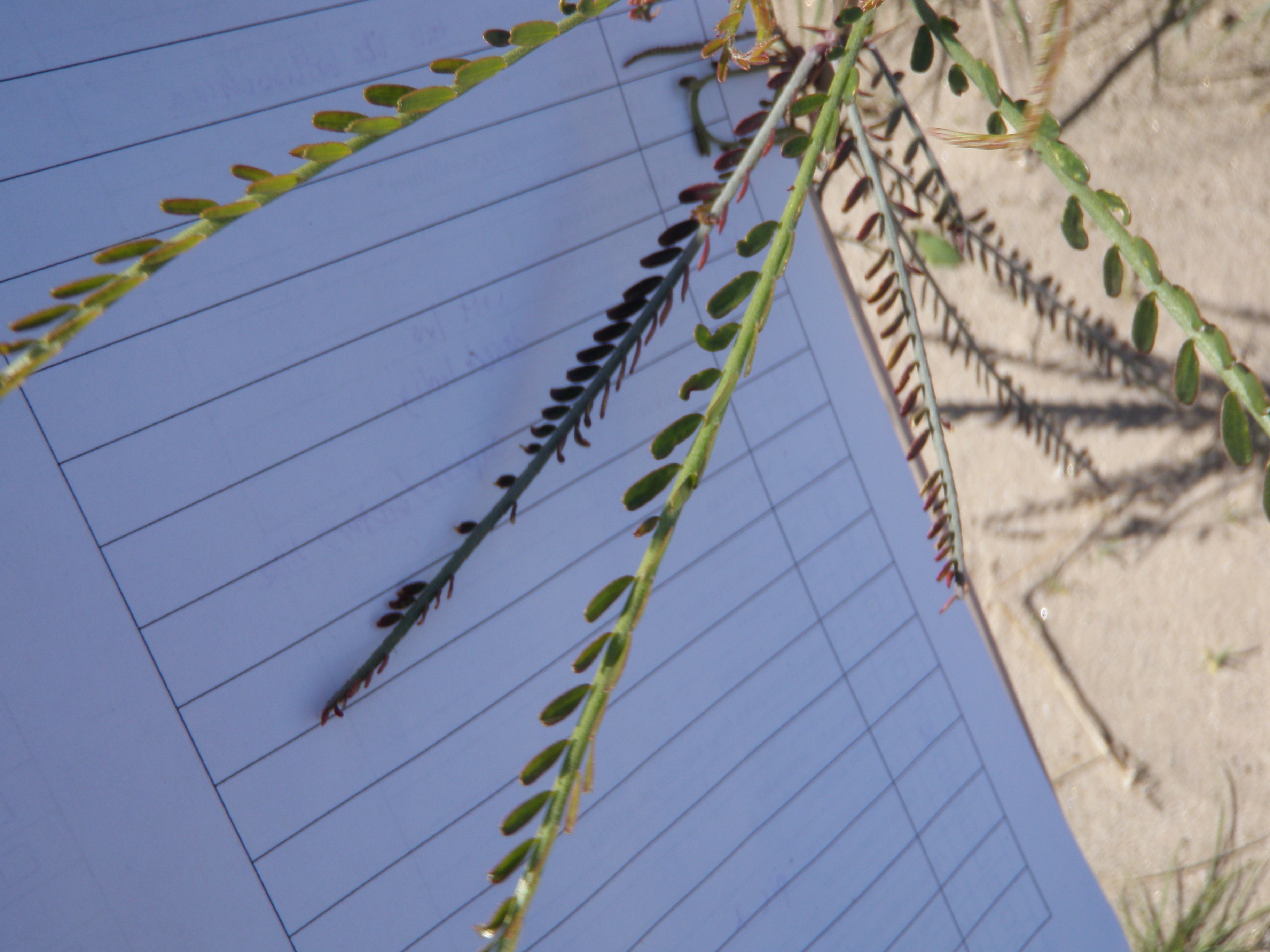
Photo by Chez Brungraber
Family: Fabaceae · Type: Shrub / Tree · Not Native
Parkinsonia aculeata (Mexican palo verde) is a non-native California shrub / tree in the Fabaceae family, recognized by persistent ribbon-like leaf axes and red-spotted banner petals.
Mexican palo verde is a naturalized tree found in southern California coastal areas, western Transverse Ranges, Peninsular Ranges, and southern desert regions in dry, disturbed places at elevations below 800 meters. Flowering from April to October, this tree produces distinctive yellow flowers with red-spotted banner petals that turn completely red with age. Growing 3 to 12 meters tall with spines at its nodes, it features a persistent main leaf axis that remains like a ribbon. Its leaves are complex, with two to four primary leaflets and 30 to 60 small, ephemeral secondary leaflets that are elliptic and just 3 to 5 millimeters long. The leathery fruit pods are 4 to 12 centimeters in length, adding to the tree's distinctive architectural presence.
Identification and appearance
Key characters: 2 sympatric species; key features are persistent ribbon-like leaf axes and red-spotted banner petals
Habitat and range
Habitat: Uncommon. Disturbed, dry places
Elevation: < 800 m
California counties: Los Angeles, Imperial, Riverside, San Bernardino, Kern, Ventura, Orange, San Diego, Tulare, Santa Barbara, Santa Clara, Sacramento, Yolo, Monterey
Outside California: native to deserts of Arizona, Baja California, South America, widely cultivated in tropics
Bloom period
Parkinsonia aculeata blooms Generally Apr-Oct.
How to tell it apart
vs Neltuma: Parkinsonia has bright green bark and spine-like leaf stems; Neltuma has brown bark and normal compound leaves.; vs Acacia: Parkinsonia has green bark and straight spines at nodes; California Acacias have gray bark and fluffy ball flowers.; vs Senna: Parkinsonia has prominent spines at nodes and green bark; Senna is spineless with normal bark.; vs Psorodendron: Parkinsonia has straight spines at nodes and green bark; Psorodendron has spine-tipped branches.; vs Vachellia: Parkinsonia has green photosynthetic bark; Vachellia has gray-brown bark and paired white spines.
Frequently asked questions
Is Parkinsonia aculeata native to California?
No. Parkinsonia aculeata is not native to California (recorded as not native).
When does Parkinsonia aculeata bloom?
Parkinsonia aculeata blooms Generally Apr-Oct.
Where in California does Parkinsonia aculeata grow?
Parkinsonia aculeata occurs in Los Angeles, Imperial, Riverside, San Bernardino, Kern, Ventura, Orange, San Diego and other counties, at elevations of < 800 m.
What plant family does Parkinsonia aculeata belong to?
Parkinsonia aculeata is in the Fabaceae family, genus Parkinsonia.
What habitat does Parkinsonia aculeata grow in?
Parkinsonia aculeata grows in Uncommon. Disturbed, dry places.
Related species
Other California species in the same genus, family, or bioregion.
Sources: Jepson eFlora · Index of California Plant Names · CalPhotos
Last updated 2026-10-07
Data from The California Species Project — 14,000+ California species with verified data from CNPS, CDFW, USFWS, Cal-IPC, and more.