Parnassia cirrata var. cirrata
San bernardino grass-of-parnassus, San Bernardino Grass-Of-Parnassus
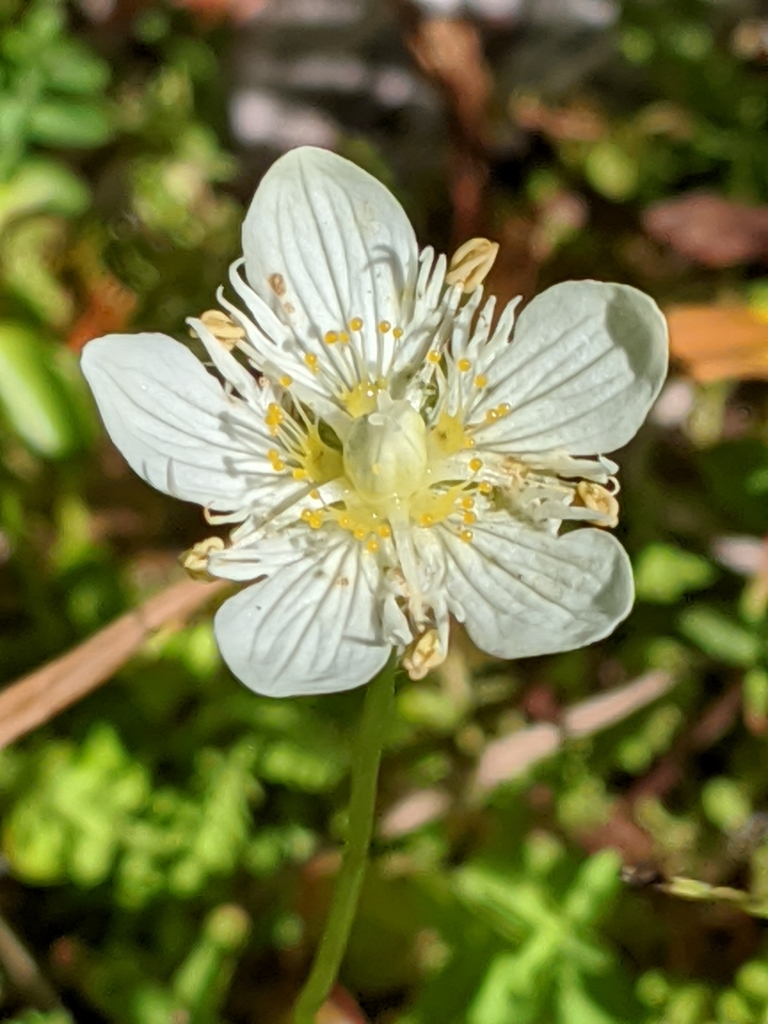
(c) David Anderson, some rights reserved (CC BY), uploaded by David Anderson · licence
Family: Parnassiaceae · Type: Perennial · Native
Conservation status: CNPS 1B.3
Parnassia cirrata var. cirrata (San bernardino grass-of-parnassus) is a native California perennial in the Parnassiaceae family, recognized by varietal differences based on leaf size and fringe length.
San bernardino grass-of-parnassus is a rare (CNPS 1B.3) California native perennial found in the San Gabriel and San Bernardino Mountains in wet places at elevations of 700 to 2,500 meters. Flowering from July to October, this plant produces white flowers with delicate petals 3 to 5 millimeters wide and distinctive fringed staminodes. Growing with slender stems up to 30 centimeters tall, it forms compact clumps in moist mountain habitats. Its leaves have broad blades 0.7 to 2.5 centimeters wide, creating a lush green base for the elegant white flowers. The plant's intricate staminode fringe, with filaments 3 to 6 millimeters long, adds a unique textural element to its delicate floral structure.
Identification and appearance
Key characters: 2 sympatric species; varietal differences based on leaf size and fringe length
Habitat and range
Habitat: Wet places
Elevation: 700-2500 m
Outside California: Mexico (Durango)
Bloom period
Parnassia cirrata var. cirrata blooms Jul-Oct.
Conservation status
CNPS 1B.3
How to tell it apart
vs Limnanthes: Parnassia has fringed staminodes between stamens; meadowfoam has simple stamens without staminodes.; vs Limonium: Parnassia has solitary flowers on single stems; sea lavender has flowers in branching clusters.; vs Linum: Parnassia has fringed staminodes; flax has simple stamens and capsules splitting into 10 segments.; vs Ayenia: Parnassia has broad petals and fringed staminodes; Ayenia has thread-like petals and fused stamen tube.; vs Drosera: Parnassia has smooth leaves; sundew has leaves covered with sticky insect-trapping hairs.
Frequently asked questions
Is Parnassia cirrata var. cirrata native to California?
Yes. Parnassia cirrata var. cirrata is native to California (recorded as native).
When does Parnassia cirrata var. cirrata bloom?
Parnassia cirrata var. cirrata blooms Jul-Oct.
What plant family does Parnassia cirrata var. cirrata belong to?
Parnassia cirrata var. cirrata is in the Parnassiaceae family, genus Parnassia.
Is Parnassia cirrata var. cirrata rare or endangered?
Parnassia cirrata var. cirrata carries California Rare Plant Rank 1B.3, state rank S2.
What habitat does Parnassia cirrata var. cirrata grow in?
Parnassia cirrata var. cirrata grows in Wet places.
Related species
Other California species in the same genus, family, or bioregion.
Sources: Jepson eFlora · CalPhotos · CDFW CNDDB
Last updated 2026-09-30
Data from The California Species Project — 14,000+ California species with verified data from CNPS, CDFW, USFWS, Cal-IPC, and more.