Parnassia parviflora
Small-flowered grass-of-parnassus
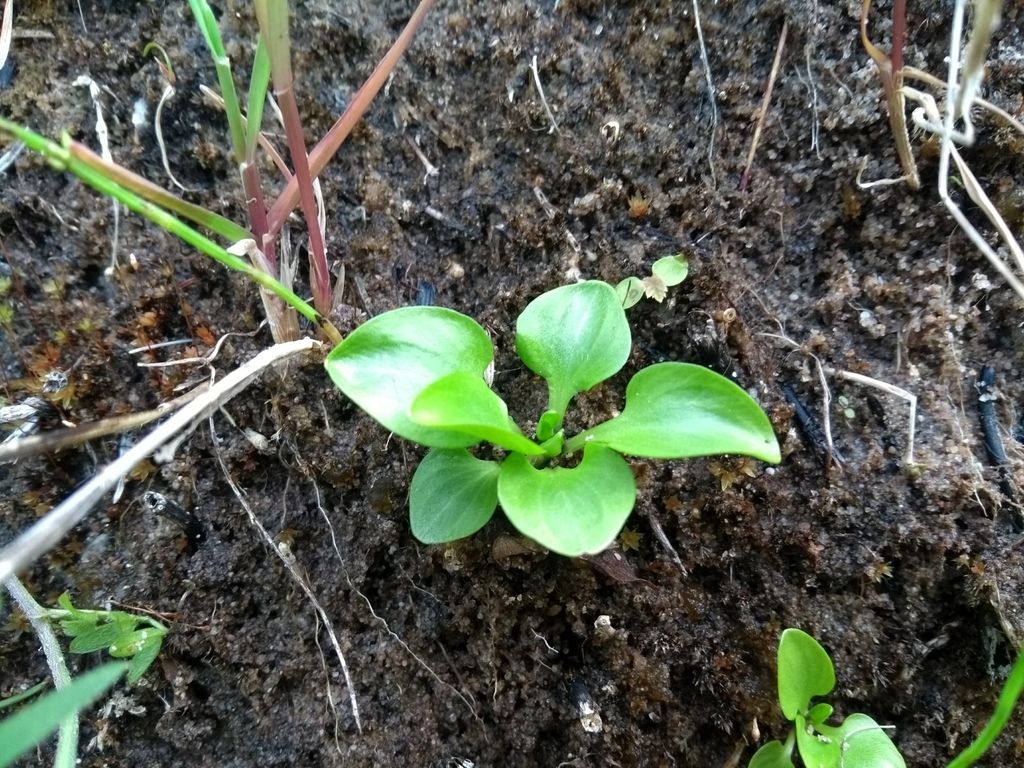
no rights reserved · CC0
Family: Parnassiaceae · Type: Perennial · Native
Conservation status: CNPS 2B.2
Parnassia parviflora (Small-flowered grass-of-parnassus) is a native California perennial in the Parnassiaceae family, recognized by small flower size and reduced staminode segments clearly diagnostic.
Small-flowered grass-of-parnassus is a rare (CNPS 2B.2) California native perennial found in central Sierra Nevada Mountains near Convict Lake in Mono County, inhabiting rocky seeps at elevations of 2,000 to 2,800 meters. Flowering from August to September, this plant produces white flowers about 3.5 to 10 millimeters long with delicate ovate-elliptic petals. Growing with slender stems 10 to 35 centimeters tall, it develops a distinctive growth pattern with a bract positioned at or below the middle of the scape. Its leaves are ovate to oblong, 2 to 7 centimeters long, with blades 1 to 3.5 centimeters wide and typically featuring a truncate base. The fruit is 7 to 13 millimeters long, developing with elliptic calyx lobes that spread open as the plant matures.
Identification and appearance
Key characters: 2 sympatric species; small flower size and reduced staminode segments clearly diagnostic
Habitat and range
Habitat: Rocky seeps
Elevation: 2000-2800 m
California counties: Mono, Inyo
Outside California: Washington to Michigan, Canada
Bloom period
Parnassia parviflora blooms Aug-Sep.
Conservation status
CNPS 2B.2
How to tell it apart
vs Limnanthes: Parnassia has fringed staminodes between stamens; meadowfoam has simple stamens without staminodes.; vs Limonium: Parnassia has solitary flowers on single stems; sea lavender has flowers in branching clusters.; vs Linum: Parnassia has fringed staminodes; flax has simple stamens and capsules splitting into 10 segments.; vs Ayenia: Parnassia has broad petals and fringed staminodes; Ayenia has thread-like petals and fused stamen tube.; vs Drosera: Parnassia has smooth leaves; sundew has leaves covered with sticky insect-trapping hairs.
Frequently asked questions
Is Parnassia parviflora native to California?
Yes. Parnassia parviflora is native to California (recorded as native).
When does Parnassia parviflora bloom?
Parnassia parviflora blooms Aug-Sep.
Where in California does Parnassia parviflora grow?
Parnassia parviflora occurs in Mono, Inyo, at elevations of 2000-2800 m.
What plant family does Parnassia parviflora belong to?
Parnassia parviflora is in the Parnassiaceae family, genus Parnassia.
Is Parnassia parviflora rare or endangered?
Parnassia parviflora carries California Rare Plant Rank 2B.2, state rank S2.
Related species
Other California species in the same genus, family, or bioregion.
- Parnassia sp. — Grass-of-parnassus
- Parnassia cirrata — San Bernardino Grass-Of-Parnassus
- Parnassia cirrata var. cirrata — San bernardino grass-of-parnassus
- Parnassia cirrata var. intermedia — Cascade grass-of-parnassus
- Parnassia fimbriata — Fringed grass of parnassus
- Parnassia palustris — Marsh grass of parnassus
- Parnassiaceae sp. — Grass-of-parnassus family
Sources: Jepson eFlora · CNPS Rare Plant Inventory · Index of California Plant Names · CalPhotos · CDFW CNDDB
Last updated 2026-09-30
Data from The California Species Project — 14,000+ California species with verified data from CNPS, CDFW, USFWS, Cal-IPC, and more.