Passiflora caerulea
Blue passion flower, Blue Passion Flower
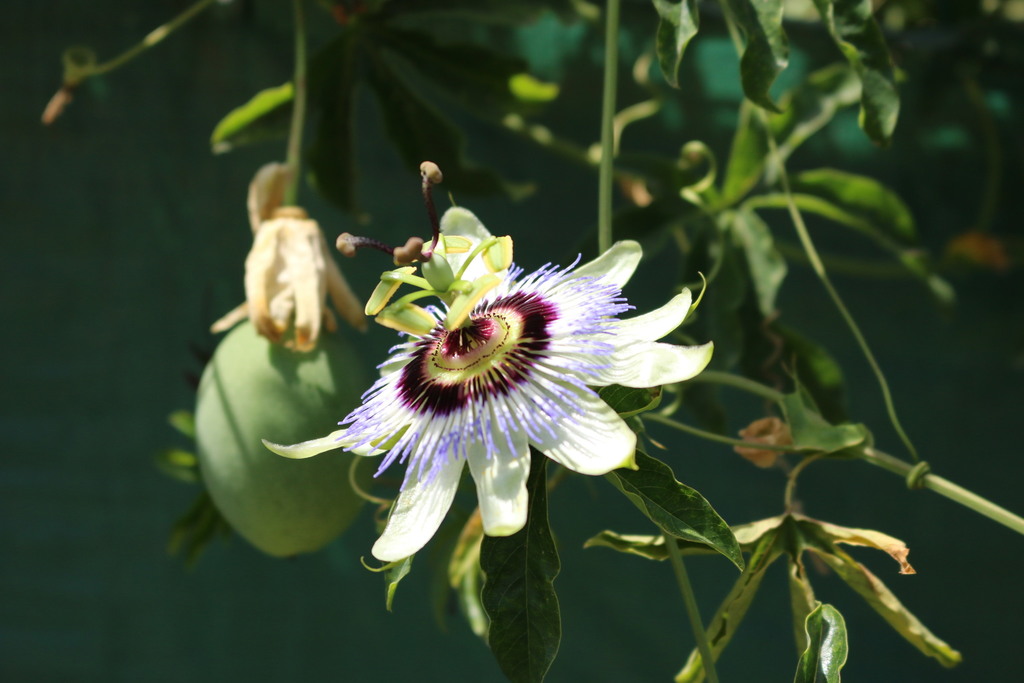
(c) Victoria Prosdocimo, some rights reserved (CC BY) · licence
Family: Passifloraceae · Type: Vine · Not Native
Passiflora caerulea (Blue passion flower) is a non-native California vine in the Passifloraceae family, recognized by . Key features: corona filaments striped white and purple, orange fruits 3-5 cm long.
Blue passion flower is a naturalized annual found in southern coastal California, western Transverse Ranges, and Peninsular Ranges in open woodlands and chaparral margins at elevations below 400 meters. Flowering from March to June, this plant produces white flowers with distinctive corona filaments striped white and purple, creating an intricate floral display. Growing with climbing or spreading stems, it develops ovoid fruits 3 to 5 centimeters long that turn yellow-orange to orange when mature. Its leaves have margins that are nearly entire, occasionally serrate at lobe bases, with persistent stipules that add to the plant's distinctive appearance. The fruit is ovoid to ellipsoid, providing a striking contrast to the complex flower structure.
Identification and appearance
Key characters: Geographically isolated with no sympatric species. Key features: corona filaments striped white and purple, orange fruits 3-5 cm long
Habitat and range
Habitat: Open woodland, chaparral margins, disturbed areas
Elevation: < 400 m
California counties: Los Angeles, San Bernardino, Riverside, Ventura, San Mateo, Butte, Tehama, Fresno, Napa, San Luis Obispo, Santa Clara, San Diego, Santa Barbara
Outside California: native to central South America
Bloom period
Passiflora caerulea blooms Mar-Jun.
How to tell it apart
vs Clematis: Passiflora has complex flowers with a corona of filaments; Clematis has simple flowers without this crown.; vs Citrus: Passiflora climbs with tendrils; Citrus is an upright woody plant without tendrils.; vs Crescentia: Passiflora is a vine with tendrils; Crescentia is a tree without tendrils.; vs Nigella: Passiflora is a woody vine; Nigella is an herbaceous annual without tendrils.; vs Hedera: Passiflora climbs with tendrils; ivy climbs with aerial rootlets, no tendrils.
Frequently asked questions
Is Passiflora caerulea native to California?
No. Passiflora caerulea is not native to California (recorded as not native).
When does Passiflora caerulea bloom?
Passiflora caerulea blooms Mar-Jun.
Where in California does Passiflora caerulea grow?
Passiflora caerulea occurs in Los Angeles, San Bernardino, Riverside, Ventura, San Mateo, Butte, Tehama, Fresno and other counties, at elevations of < 400 m.
What plant family does Passiflora caerulea belong to?
Passiflora caerulea is in the Passifloraceae family, genus Passiflora.
What habitat does Passiflora caerulea grow in?
Passiflora caerulea grows in Open woodland, chaparral margins, disturbed areas.
Related species
Other California species in the same genus, family, or bioregion.
Sources: Jepson eFlora · Index of California Plant Names · CalPhotos
Last updated 2026-10-07
Data from The California Species Project — 14,000+ California species with verified data from CNPS, CDFW, USFWS, Cal-IPC, and more.