Pastinaca sativa
Garden parsnip
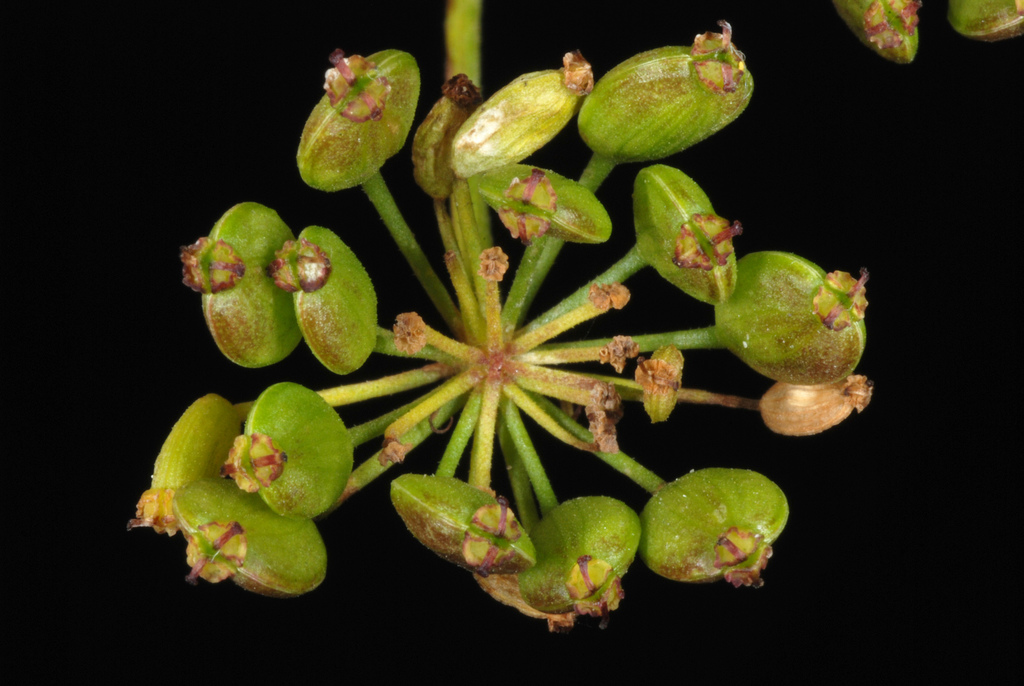
(c) Douglas Goldman, some rights reserved (CC BY-SA), uploaded by Douglas Goldman · licence
Family: Apiaceae · Type: Herb · Not Native
Pastinaca sativa (Garden parsnip) is a non-native California herb in the Apiaceae family, recognized by European introduction, sole representative of Pastinaca in California.
Garden parsnip is a naturalized biennial found in the Klamath Ranges, northern California Coast Ranges, high California Ranges, Sacramento Valley, Central Coast, Transverse Ranges, and North Coast Ranges in roadsides and disturbed areas at elevations below 1,600 meters. Flowering from July to August, this plant produces small yellow flowers in flat-topped clusters. Growing 0.5 to 2 meters tall with conspicuously angled and grooved stems that are nearly hairless, it spreads readily in open landscapes. Its large compound leaves feature 5 to 11 leaflets, each 5 to 10 centimeters long, with coarsely serrated edges that are oblong to ovate in shape. The fruit is 4 to 6 millimeters wide, forming oblong to round seed structures.
Identification and appearance
Key characters: European introduction, sole representative of Pastinaca in California
Habitat and range
Habitat: Roadsides, disturbed areas
Elevation: < 1600 m
Outside California: to eastern United States, native to Eurasia
Bloom period
Pastinaca sativa blooms Jul-Aug.
How to tell it apart
vs Foeniculum: Pastinaca has broad, toothed once-divided leaflets; Foeniculum has thread-like, finely divided leaves.; vs Conioselinum: Pastinaca has yellow flowers and simple once-divided leaves; Conioselinum has white flowers and lacy multi-divided leaves.; vs Lomatium: Pastinaca has yellow/orange flowers; Lomatium has white, yellow, or purple flowers but never orange.; vs Orogenia: Pastinaca has bright yellow flowers; Orogenia has white flowers.; vs Heracleum: Pastinaca has yellow flowers and once-divided leaves; Heracleum has white flowers and enormous maple-like leaf segments.
Frequently asked questions
Is Pastinaca sativa native to California?
No. Pastinaca sativa is not native to California (recorded as not native).
When does Pastinaca sativa bloom?
Pastinaca sativa blooms Jul-Aug.
What plant family does Pastinaca sativa belong to?
Pastinaca sativa is in the Apiaceae family, genus Pastinaca.
What habitat does Pastinaca sativa grow in?
Pastinaca sativa grows in Roadsides, disturbed areas.
Related species
Other California species in the same genus, family, or bioregion.
Sources: Jepson eFlora · CalPhotos
Last updated 2026-10-07
Data from The California Species Project — 14,000+ California species with verified data from CNPS, CDFW, USFWS, Cal-IPC, and more.