Pectocarya anisocarpa
Unequal-fruited pectocarya
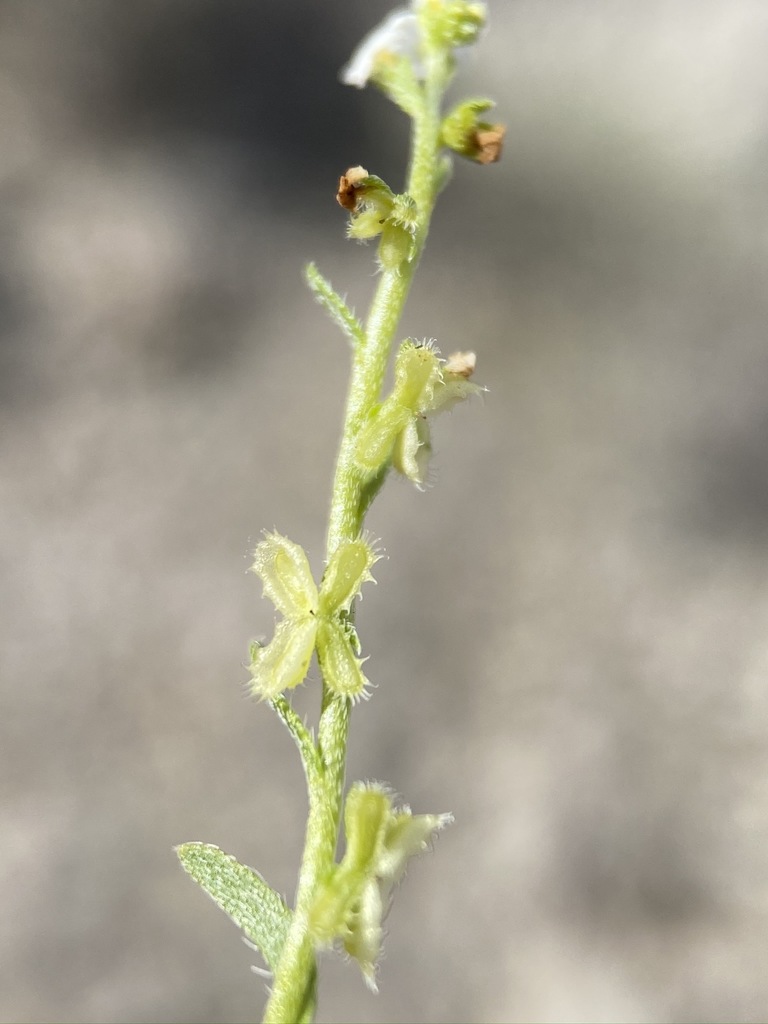
(c) Matt Berger, some rights reserved (CC BY), uploaded by Matt Berger · licence
Family: Boraginaceae · Type: Annual · Native
Pectocarya anisocarpa (Unequal-fruited pectocarya) is a native California annual in the Boraginaceae family.
Unequal-fruited pectocarya is a California native annual found in desert scrub, grassland, chaparral openings, oak woodland, and disturbed habitats across California at elevations of 90 to 1,500 meters. Flowering from March to April, this plant produces tiny white flowers with a delicate corolla less than 1.5 millimeters in diameter. Growing with prostrate to decumbent stems 4 to 30 centimeters long, it spreads low across the ground in open landscapes. Its leaves are small and inconspicuous, characteristic of its delicate desert and grassland habitats. The distinctive fruit features unequal nutlets with winged margins, often bearing hook-tipped bristles that help distinguish this subtle annual from other similar plants.
Identification and appearance
Key characters: Geographically isolated with no sympatric species
Habitat and range
Habitat: Disturbed habitats, desert scrub, grassland, chaparral openings, oak woodland, roadsides, washes
Elevation: 90-1500 m
Outside California: Arizona, Utah, northwestern Baja California
Bloom period
Pectocarya anisocarpa blooms Mar-Apr.
How to tell it apart
vs Plagiobothrys: Pectocarya sepals stay equal and separate; Plagiobothrys sepals become unequal or partly fused in fruit.; vs Cryptantha: Pectocarya nutlets have hooked bristles on edges; Cryptantha nutlets are smooth or rough, not hooked.; vs Harpagonella: Pectocarya has 4 nutlets with equal sepals; Harpagonella has 2 nutlets with huge arching spiny sepals.; vs Johnstonella: Pectocarya has flattened nutlets with marginal hooks; Johnstonella has rounded nutlets with covering bristles.; vs Greeneocharis: Pectocarya has hooked marginal bristles; Greeneocharis has smooth or minutely rough nutlets without hooks.
Frequently asked questions
Is Pectocarya anisocarpa native to California?
Yes. Pectocarya anisocarpa is native to California (recorded as native).
When does Pectocarya anisocarpa bloom?
Pectocarya anisocarpa blooms Mar-Apr.
What plant family does Pectocarya anisocarpa belong to?
Pectocarya anisocarpa is in the Boraginaceae family, genus Pectocarya.
What habitat does Pectocarya anisocarpa grow in?
Pectocarya anisocarpa grows in Disturbed habitats, desert scrub, grassland, chaparral openings, oak woodland, roadsides, washes.
Related species
Other California species in the same genus, family, or bioregion.
Sources: Jepson eFlora · Index of California Plant Names · CalPhotos
Last updated 2026-09-30
Data from The California Species Project — 14,000+ California species with verified data from CNPS, CDFW, USFWS, Cal-IPC, and more.