Pectocarya heterocarpa
Mixed-nut pectocarya, Mixed-Nut Pectocarya
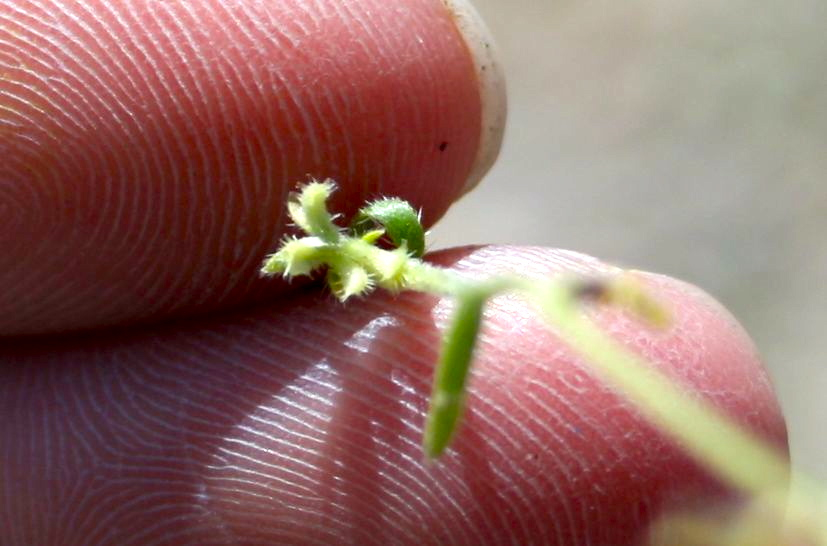
Photo by Chez Brungraber
Family: Boraginaceae · Type: Herb · Native
Pectocarya heterocarpa (Mixed-nut pectocarya) is a native California herb in the Boraginaceae family, recognized by mixed nutlet types and basal cleistogamous flowers.
Mixed-nut pectocarya is a California native annual found in southern Sierra Nevada Foothills, Tehachapi, southwestern California, White and Inyo Mountains, and desert regions in washes, roadsides, and openings in creosote-bush scrub and Joshua-tree woodland at elevations below 1,600 meters. Flowering from February to May, this delicate plant produces tiny white flowers with corolla limbs less than 1.5 millimeters in diameter. Growing with prostrate to ascending stems 2 to 25 centimeters long, it spreads low across open ground with a distinctive growth habit. Its leaves are small and inconspicuous, supporting intricate fruit structures with nutlets that curve in unusual planes and feature jagged or toothed wings. The plant produces unusual asymmetrical nutlets that spread in different directions, with some pairs curving inward while others extend outward from the flowering axis.
Identification and appearance
Key characters: 6 sympatric species; diagnostic mixed nutlet types and basal cleistogamous flowers
Habitat and range
Habitat: Washes, roadsides, openings in creosote-bush scrub, Joshua-tree woodland
Elevation: < 1600 m
California counties: San Bernardino, Riverside, Inyo, San Diego, Kern, Santa Barbara, Imperial, Santa Cruz, San Luis Obispo, Ventura, Los Angeles
Outside California: to southwestern Utah, western Texas, northern Mexico
Bloom period
Pectocarya heterocarpa blooms Feb-May.
How to tell it apart
vs Plagiobothrys: Pectocarya sepals stay equal and separate; Plagiobothrys sepals become unequal or partly fused in fruit.; vs Cryptantha: Pectocarya nutlets have hooked bristles on edges; Cryptantha nutlets are smooth or rough, not hooked.; vs Harpagonella: Pectocarya has 4 nutlets with equal sepals; Harpagonella has 2 nutlets with huge arching spiny sepals.; vs Johnstonella: Pectocarya has flattened nutlets with marginal hooks; Johnstonella has rounded nutlets with covering bristles.; vs Greeneocharis: Pectocarya has hooked marginal bristles; Greeneocharis has smooth or minutely rough nutlets without hooks.
Frequently asked questions
Is Pectocarya heterocarpa native to California?
Yes. Pectocarya heterocarpa is native to California (recorded as native).
When does Pectocarya heterocarpa bloom?
Pectocarya heterocarpa blooms Feb-May.
Where in California does Pectocarya heterocarpa grow?
Pectocarya heterocarpa occurs in San Bernardino, Riverside, Inyo, San Diego, Kern, Santa Barbara, Imperial, Santa Cruz and other counties, at elevations of < 1600 m.
What plant family does Pectocarya heterocarpa belong to?
Pectocarya heterocarpa is in the Boraginaceae family, genus Pectocarya.
What habitat does Pectocarya heterocarpa grow in?
Pectocarya heterocarpa grows in Washes, roadsides, openings in creosote-bush scrub, Joshua-tree woodland.
Related species
Other California species in the same genus, family, or bioregion.
Sources: Jepson eFlora · Index of California Plant Names · CalPhotos
Last updated 2026-10-07
Data from The California Species Project — 14,000+ California species with verified data from CNPS, CDFW, USFWS, Cal-IPC, and more.