Pediomelum californicum
California indian breadroot
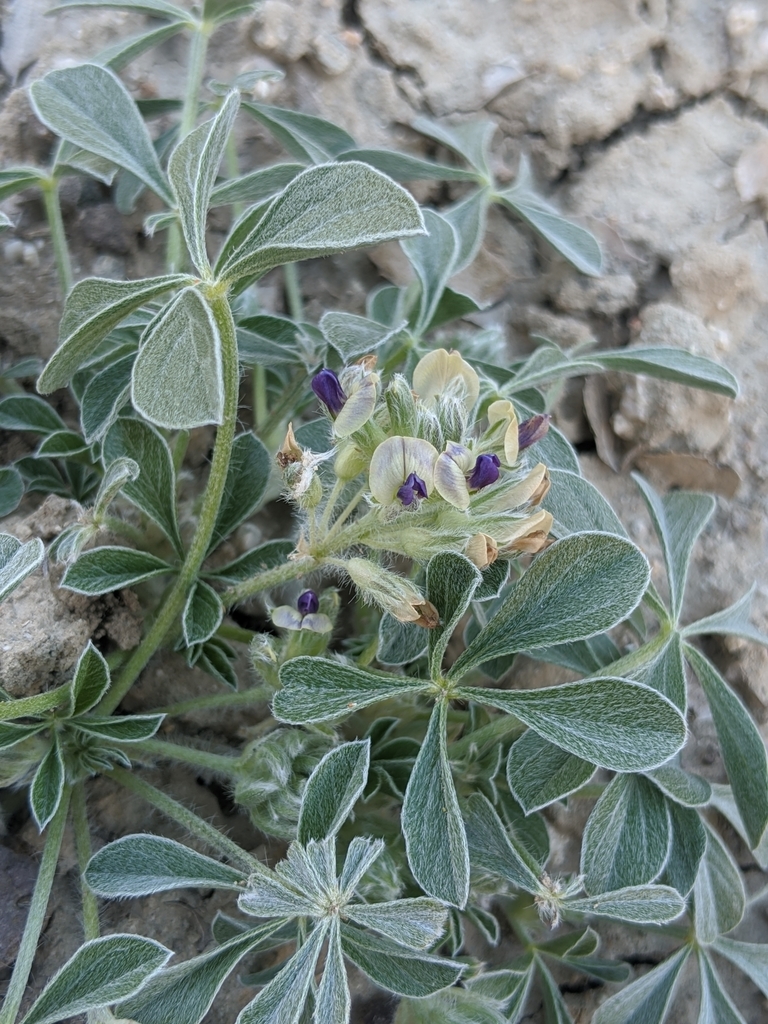
no rights reserved · CC0
Family: Fabaceae · Type: Herb · Native
Pediomelum californicum (California indian breadroot) is a native California herb in the Fabaceae family, recognized by . Key features include 5-7 leaflets and ovate to round fruits with straight beaks.
California indian breadroot is a California native perennial found in northern Coast Ranges, southern Sierra Nevada foothills, central western California, Transverse Ranges, and Peninsular Ranges in open chaparral and woodland at elevations of 1,000 to 2,500 meters. Flowering from April to July, this plant produces flowers typically 8 to 12 millimeters long with a distinctive banner 10 to 11 millimeters in size. Growing with erect stems and a complex underground structure, it develops a robust root system characteristic of breadroot species. Its compound leaves feature 5 to 7 leaflets with prominent stipules 7 to 10 millimeters long, and petioles extending 8 to 11 centimeters. The fruit develops as an ovate to round structure with a straight linear beak 1 to 4 millimeters long, containing reddish-brown reniform seeds 5 to 5.5 millimeters in size.
Identification and appearance
Key characters: Geographically isolated with 0 sympatric species. Key features include 5-7 leaflets and ovate to round fruits with straight beaks.
Habitat and range
Habitat: Open chaparral, woodland
Elevation: 1000-2500 m
California counties: Ventura, Kern, Alameda, San Benito, Contra Costa, Inyo, Los Angeles, San Bernardino, Riverside, Santa Barbara, Glenn, San Luis Obispo, San Mateo, Lake, Tehama, Colusa, Santa Clara, San Diego, Monterey, Fresno
Outside California: Baja California
Bloom period
Pediomelum californicum blooms Apr-Jul.
How to tell it apart
vs Lupinus: Pediomelum has leaves clustered basally; Lupinus has leaves evenly distributed along stems.; vs Trifolium: Pediomelum has fruits mostly hidden in calyx; Trifolium has small round pods in dense heads.; vs Astragalus: Pediomelum has basal leaf clusters; Astragalus has leaves distributed along stems.; vs Lotus: Pediomelum has leaves clustered at base; Lotus has leaves along stems.; vs Ladeania: Pediomelum has basal leaf clusters; Ladeania has leaves distributed along stems.
Frequently asked questions
Is Pediomelum californicum native to California?
Yes. Pediomelum californicum is native to California (recorded as native).
When does Pediomelum californicum bloom?
Pediomelum californicum blooms Apr-Jul.
Where in California does Pediomelum californicum grow?
Pediomelum californicum occurs in Ventura, Kern, Alameda, San Benito, Contra Costa, Inyo, Los Angeles, San Bernardino and other counties, at elevations of 1000-2500 m.
What plant family does Pediomelum californicum belong to?
Pediomelum californicum is in the Fabaceae family, genus Pediomelum.
What habitat does Pediomelum californicum grow in?
Pediomelum californicum grows in Open chaparral, woodland.
Related species
Other California species in the same genus, family, or bioregion.
Sources: Jepson eFlora · Index of California Plant Names · CalPhotos
Last updated 2026-10-07
Data from The California Species Project — 14,000+ California species with verified data from CNPS, CDFW, USFWS, Cal-IPC, and more.