Pentachaeta exilis
Meager pygmydaisy
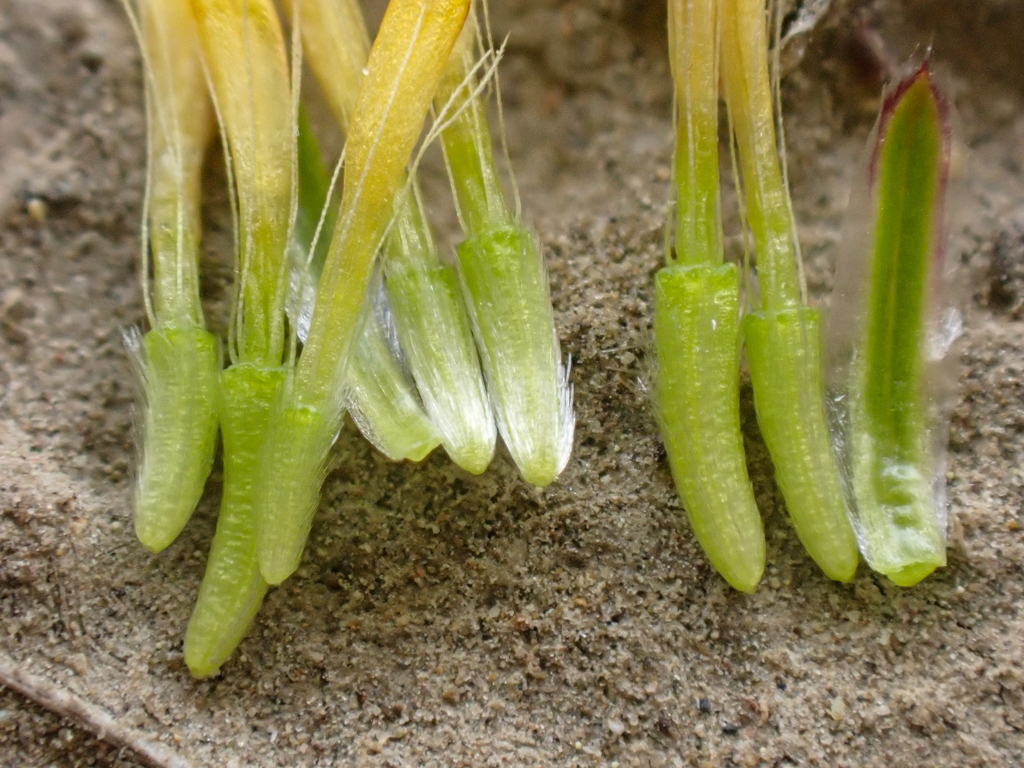
(c) Trevor Van Loon, some rights reserved (CC BY), uploaded by Trevor Van Loon · licence
Family: Asteraceae · Type: Herb · Native
Pentachaeta exilis (Meager pygmydaisy) is a native California herb in the Asteraceae family.
Meager pygmydaisy is a California native annual found in dry, open habitats at low elevations across the state's grasslands and coastal areas. Flowering from March to May, this diminutive plant produces delicate white to pink ray flowers less than 2 millimeters long, with yellow disk flowers tinged with red at the center. Growing with small, slender stems 2 to 15 centimeters tall, the plant emerges with soft hairs near the base and below the flower heads. Its tiny leaves are less than 3.2 centimeters long and only 1 millimeter wide, sparsely hairy on the upper surface and smooth underneath. Each plant can produce up to 23 flower heads with soft, shaggy-hairy stalks, creating a delicate and intricate appearance in its native grassland habitat.
How to tell it apart
vs Lasthenia: Pentachaeta has only 1-5 female flowers per head; Lasthenia has many more female flowers.; vs Thymophylla: Pentachaeta is non-glandular and unscented; Thymophylla is strongly aromatic with glands.; vs Eriophyllum: Pentachaeta has thread-like delicate stems; Eriophyllum has sturdier stems and woolly coating.; vs Bebbia: Pentachaeta is tiny delicate annual; Bebbia is woody shrub with nearly leafless stems.; vs Hazardia: Pentachaeta is thread-like delicate annual; Hazardia is woody leafy shrub.
Frequently asked questions
Is Pentachaeta exilis native to California?
Yes. Pentachaeta exilis is native to California (recorded as native).
What plant family does Pentachaeta exilis belong to?
Pentachaeta exilis is in the Asteraceae family, genus Pentachaeta.
Related species
Other California species in the same genus, family, or bioregion.
Sources: Jepson eFlora · Index of California Plant Names · CalPhotos
Last updated 2026-10-07
Data from The California Species Project — 14,000+ California species with verified data from CNPS, CDFW, USFWS, Cal-IPC, and more.