Peteria thompsoniae
Spine-noded milkvetch
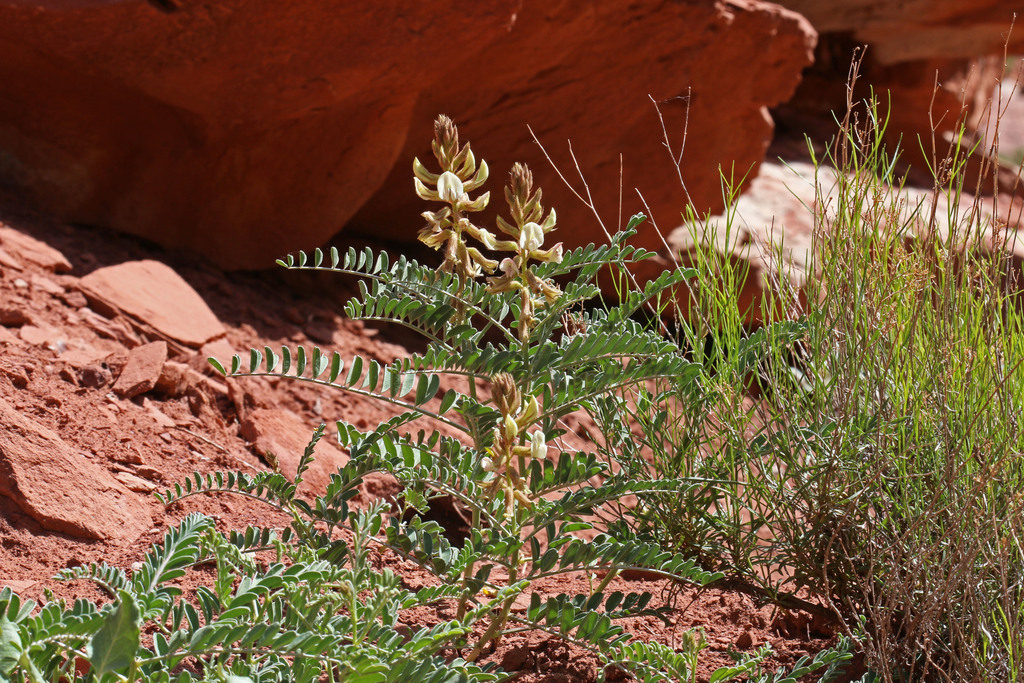
(c) Andrey Zharkikh, some rights reserved (CC BY) · licence
Family: Fabaceae · Type: Herb · Native
Conservation status: CNPS 2B.1
Peteria thompsoniae (Spine-noded milkvetch) is a native California herb in the Fabaceae family, recognized by Extremely limited California range, Great Basin endemic genus.
Spine-noded milkvetch is a rare (CNPS 2B.1) California native perennial found in the California Valley and southeastern Inyo County Mountains in sandy alluvial fans at elevations of 800 to 1,800 meters. Flowering from May to June, this plant produces small flowers with a pale yellow to white corolla approximately 15 to 20 millimeters long. Growing with spreading stems 20 to 100 centimeters tall and tuberous roots, it forms an open, delicate structure. Its compound leaves feature 13 to 31 elliptic or obovate leaflets, giving the plant a fine, intricate appearance. The fruit is a glabrous pod 4 to 6 centimeters long, with dark glandular-puberulent calyces adding textural interest.
Identification and appearance
Key characters: Extremely limited California range, Great Basin endemic genus
Habitat and range
Habitat: Sandy alluvial fans
Elevation: 800-1800 m
California counties: Inyo
Outside California: to Idaho, Utah, southwestern Colorado, Arizona
Bloom period
Peteria thompsoniae blooms May-Jun.
Conservation status
CNPS 2B.1
How to tell it apart
vs Ornithopus: Peteria has spiny stipules; Ornithopus lacks spines and has segmented pods.; vs Oxytropis: Peteria has obvious spiny stipules; Oxytropis has beaked keel, no spines.; vs Astragalus: Peteria stipules are spiny; Astragalus stipules are soft, never spiny.; vs Marina: Peteria has spiny stipules on stems; Marina lacks spines entirely.; vs Acmispon: Peteria has prominent spiny stipules; Acmispon stipules are small, never spiny.
Frequently asked questions
Is Peteria thompsoniae native to California?
Yes. Peteria thompsoniae is native to California (recorded as native).
When does Peteria thompsoniae bloom?
Peteria thompsoniae blooms May-Jun.
Where in California does Peteria thompsoniae grow?
Peteria thompsoniae occurs in Inyo, at elevations of 800-1800 m.
What plant family does Peteria thompsoniae belong to?
Peteria thompsoniae is in the Fabaceae family, genus Peteria.
Is Peteria thompsoniae rare or endangered?
Peteria thompsoniae carries California Rare Plant Rank 2B.1, state rank S1.
Related species
Other California species in the same genus, family, or bioregion.
Sources: Jepson eFlora · CNPS Rare Plant Inventory · Index of California Plant Names · CalPhotos · CDFW CNDDB
Last updated 2026-10-07
Data from The California Species Project — 14,000+ California species with verified data from CNPS, CDFW, USFWS, Cal-IPC, and more.