Phacelia campanularia var. campanularia
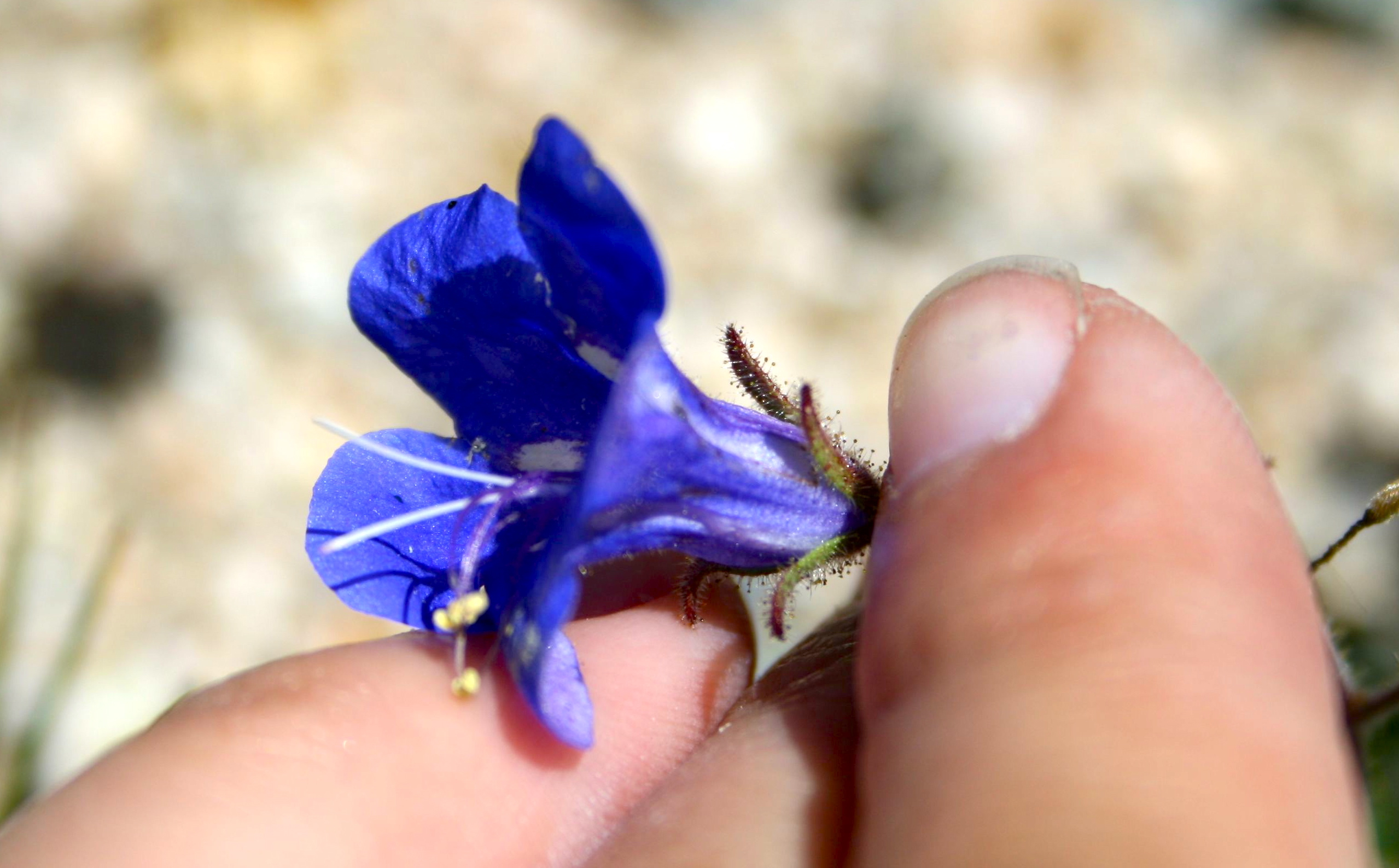
Photo: parent species Phacelia campanularia · Photo by Chez Brungraber
Family: Hydrophyllaceae · Type: Herb · Native
Phacelia campanularia var. campanularia is a native California herb in the Hydrophyllaceae family, recognized by Rotate/bell blue corolla (width >= length), w DSon (vs funnel-shaped Mojave var. *vasiformis*).
Desert Canterbury bells is a California native annual found in western Colorado Desert regions in open, sandy or gravelly areas to pinyon and juniper woodland at elevations below 1,600 meters. Flowering from February to May, this plant produces deep blue flowers in delicate bell-shaped corollas 6 to 30 millimeters wide, with rotate to bell-like petals. Growing with slender stems 15 to 45 centimeters tall, it develops an upright, somewhat branching habit. Its leaves feature long petioles 10 to 100 millimeters in length, with blades 20 to 70 millimeters long that provide a soft, delicate backdrop to the vibrant blue blossoms. The plant's distinctive stamens extend 20 to 35 millimeters, complemented by an equally long style cleft nearly halfway down its length.
Identification and appearance
Key characters: Rotate/bell blue corolla (width >= length), w DSon (vs funnel-shaped Mojave var. *vasiformis*)
Habitat and range
Habitat: Open, sandy or gravelly areas to pinyon/juniper woodland
Elevation: < 1600 m
California counties: San Diego
Bloom period
Phacelia campanularia var. campanularia blooms Feb-May.
How to tell it apart
vs Nemophila: Phacelia has flowers in coiled scorpion-tail clusters; Nemophila has solitary showy flowers at leaf axils.; vs Eucrypta: Phacelia is typically non-sticky with seeds that fall out cleanly; Eucrypta feels very sticky and retains 1-2 seeds in fruit.; vs Pholistoma: Phacelia has coiled flower clusters; Pholistoma has flowers scattered along stems with backward-pointing stem bristles.; vs Echium: Phacelia has coiled clusters of small flowers; Echium has large showy blue-purple flowers in tall spike-like clusters.; vs Gilia: Phacelia has coiled flower clusters and bristly foliage; Gilia has flowers in round heads or loose clusters with smoother foliage.
Frequently asked questions
Is Phacelia campanularia var. campanularia native to California?
Yes. Phacelia campanularia var. campanularia is native to California (recorded as native).
When does Phacelia campanularia var. campanularia bloom?
Phacelia campanularia var. campanularia blooms Feb-May.
Where in California does Phacelia campanularia var. campanularia grow?
Phacelia campanularia var. campanularia occurs in San Diego, at elevations of < 1600 m.
What plant family does Phacelia campanularia var. campanularia belong to?
Phacelia campanularia var. campanularia is in the Hydrophyllaceae family, genus Phacelia.
What habitat does Phacelia campanularia var. campanularia grow in?
Phacelia campanularia var. campanularia grows in Open, sandy or gravelly areas to pinyon/juniper woodland.
Related species
Other California species in the same genus, family, or bioregion.
Sources: Jepson eFlora · Index of California Plant Names · CalPhotos
Last updated 2026-10-07
Data from The California Species Project — 14,000+ California species with verified data from CNPS, CDFW, USFWS, Cal-IPC, and more.