Phleum alpinum
Alpine timothy, mountain timothy, Mountain Timothy
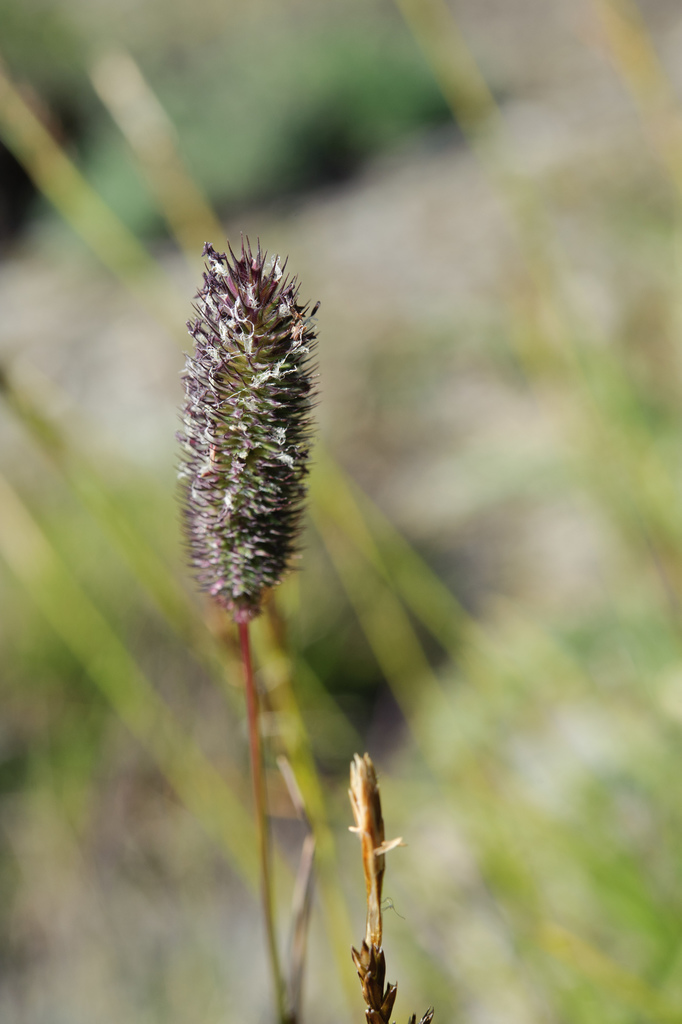
(c) Cheng-Tao Lin, some rights reserved (CC BY) · licence
Family: Poaceae · Type: Grass · Native
Phleum alpinum (Alpine timothy) is a native California grass in the Poaceae family, recognized by (P. pratense). Key differences: habitat (alpine/montane wet vs disturbed lowland), elevation, and inflorescence width.
Alpine timothy is a California native perennial found in northern coastal, Klamath Ranges, northern Coast Ranges, high Cascade Range, Sierra Nevada, northern coastal, San Bernardino Mountains, San Jacinto Mountains, Warner Mountains, and eastern Sierra Nevada in wet meadows, streambanks, conifer forest, and alpine habitats at elevations up to 3,700 meters. Flowering from July to August, this plant produces small greenish-white flowers in dense, cylindrical clusters 7 to 12 millimeters wide. Growing in clumped clusters 20 to 60 centimeters tall with loosely tufted stems, it forms dense grass-like mounds with occasional rhizomatous growth. Its leaves are basal and cauline, with blade-like leaves 2 to 12 centimeters long and 3 to 8 millimeters wide. The grass produces small spikelet structures with delicate, scabrous glumes 2 to 5 millimeters long.
Identification and appearance
Key characters: 1 sympatric species (P. pratense). Key differences: habitat (alpine/montane wet vs disturbed lowland), elevation, and inflorescence width
Habitat and range
Habitat: Wet meadows, streambanks, conifer forest, alpine
Elevation: < 3700 m
California counties: Fresno, Sonoma, Alpine, Inyo, Humboldt, Tulare, Tehama, Riverside, Mono, Plumas, Mendocino, Mariposa, Siskiyou, Glenn, San Bernardino, El Dorado, Nevada, Placer, Trinity, Tuolumne, Modoc, Madera, Amador, Shasta, Del Norte, Lassen, Marin, Sierra, Lake, Butte, San Francisco
Outside California: to Alaska, eastern Canada, northeastern United States, Mexico, also in South America, Europe
Bloom period
Phleum alpinum blooms Jul-Aug.
How to tell it apart
vs Phalaris: Phleum has a perfectly cylindrical spike; Phalaris spikes are more oval or egg-shaped.; vs Alopecurus: Phleum seeds lack awns entirely; Alopecurus has a bristle from each flower creating a softer look.; vs Plantago: Phleum is a grass with split leaf blades; Plantago has broad, uncut leaves in a basal rosette.; vs Holcus: Phleum has a tight cylinder; Holcus has a looser, more branched flower cluster.; vs Setaria: Phleum's spike lacks bristles beyond the flowers; Setaria has long bristles creating a foxtail.
Frequently asked questions
Is Phleum alpinum native to California?
Yes. Phleum alpinum is native to California (recorded as native).
When does Phleum alpinum bloom?
Phleum alpinum blooms Jul-Aug.
Where in California does Phleum alpinum grow?
Phleum alpinum occurs in Fresno, Sonoma, Alpine, Inyo, Humboldt, Tulare, Tehama, Riverside and other counties, at elevations of < 3700 m.
What plant family does Phleum alpinum belong to?
Phleum alpinum is in the Poaceae family, genus Phleum.
What habitat does Phleum alpinum grow in?
Phleum alpinum grows in Wet meadows, streambanks, conifer forest, alpine.
Related species
Other California species in the same genus, family, or bioregion.
Sources: Jepson eFlora · Index of California Plant Names · CalPhotos
Last updated 2026-10-07
Data from The California Species Project — 14,000+ California species with verified data from CNPS, CDFW, USFWS, Cal-IPC, and more.