Phoenix canariensis
Canary island palm, Canary Island Palm
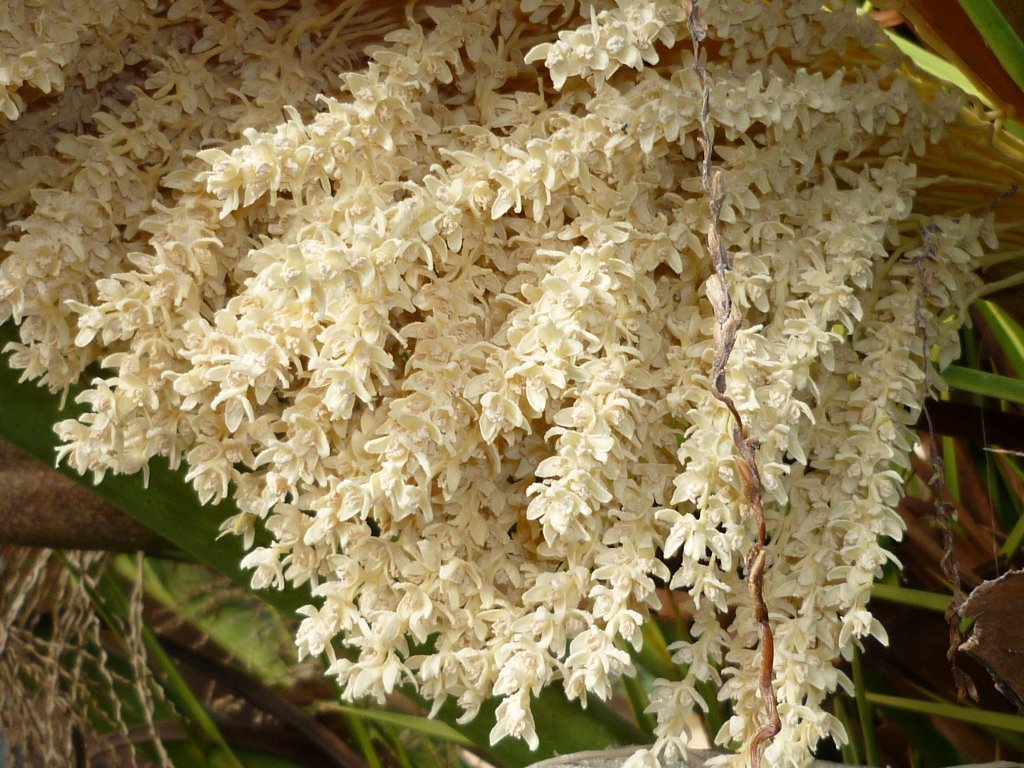
(c) Jesús Cabrera, some rights reserved (CC BY) · licence
Family: Arecaceae · Type: Tree · Not Native
Conservation status: Cal-IPC Yes
Phoenix canariensis (Canary island palm) is a non-native California tree in the Arecaceae family, recognized by clear fruit size and shape differences.
Canary island palm is a naturalized shrub found in southern coastal and San Francisco Bay Area regions near development and disturbed areas at elevations below 1,000 meters. Flowering from October to April, this palm produces small inconspicuous flowers. Growing with massive, arching fronds typically 5 to 7 meters long, it forms a distinctive rounded crown. Its large palm leaves create a dramatic silhouette with dense, feather-like pinnate structure. The fruit is approximately 2 centimeters long, rounded to ovate, and brown with a thin pulp.
Identification and appearance
Key characters: 1 sympatric species; clear fruit size and shape differences
Habitat and range
Habitat: Uncommon. Near development, disturbed areas
Elevation: < 1000 m
California counties: Santa Clara, Los Angeles, San Bernardino, Orange, Riverside, San Diego, San Luis Obispo, Contra Costa
Outside California: native to Canary Islands
Bloom period
Phoenix canariensis blooms Oct-Apr.
Conservation status
Cal-IPC Yes
How to tell it apart
vs Washingtonia: Phoenix has feather-like leaves with rows of leaflets; Washingtonia has fan-shaped leaves spreading from one point.; vs Cycas: Phoenix is a true palm with a single unbranched trunk; Cycas has a thick, stumpy trunk and new leaves emerge in whorls.; vs Syagrus: Phoenix leaflets stand stiffly at angles; Syagrus leaflets droop gracefully downward in an arching tent-like arrangement.; vs Butia: Phoenix leaflets are stiff and V-shaped; Butia leaflets curve backward and have a softer, more flexible appearance.; vs Chrysalidocarpus: Phoenix has a single massive trunk; Chrysalidocarpus forms clumps of multiple slender stems from the base.
Frequently asked questions
Is Phoenix canariensis native to California?
No. Phoenix canariensis is not native to California (recorded as not native).
When does Phoenix canariensis bloom?
Phoenix canariensis blooms Oct-Apr.
Where in California does Phoenix canariensis grow?
Phoenix canariensis occurs in Santa Clara, Los Angeles, San Bernardino, Orange, Riverside, San Diego, San Luis Obispo, Contra Costa, at elevations of < 1000 m.
What plant family does Phoenix canariensis belong to?
Phoenix canariensis is in the Arecaceae family, genus Phoenix.
Is Phoenix canariensis invasive in California?
Phoenix canariensis is listed by Cal-IPC with an invasiveness rating of Yes.
Related species
Other California species in the same genus, family, or bioregion.
Sources: Jepson eFlora · Index of California Plant Names · CalPhotos
Last updated 2026-10-07
Data from The California Species Project — 14,000+ California species with verified data from CNPS, CDFW, USFWS, Cal-IPC, and more.