Pholistoma membranaceum
White fiesta flower
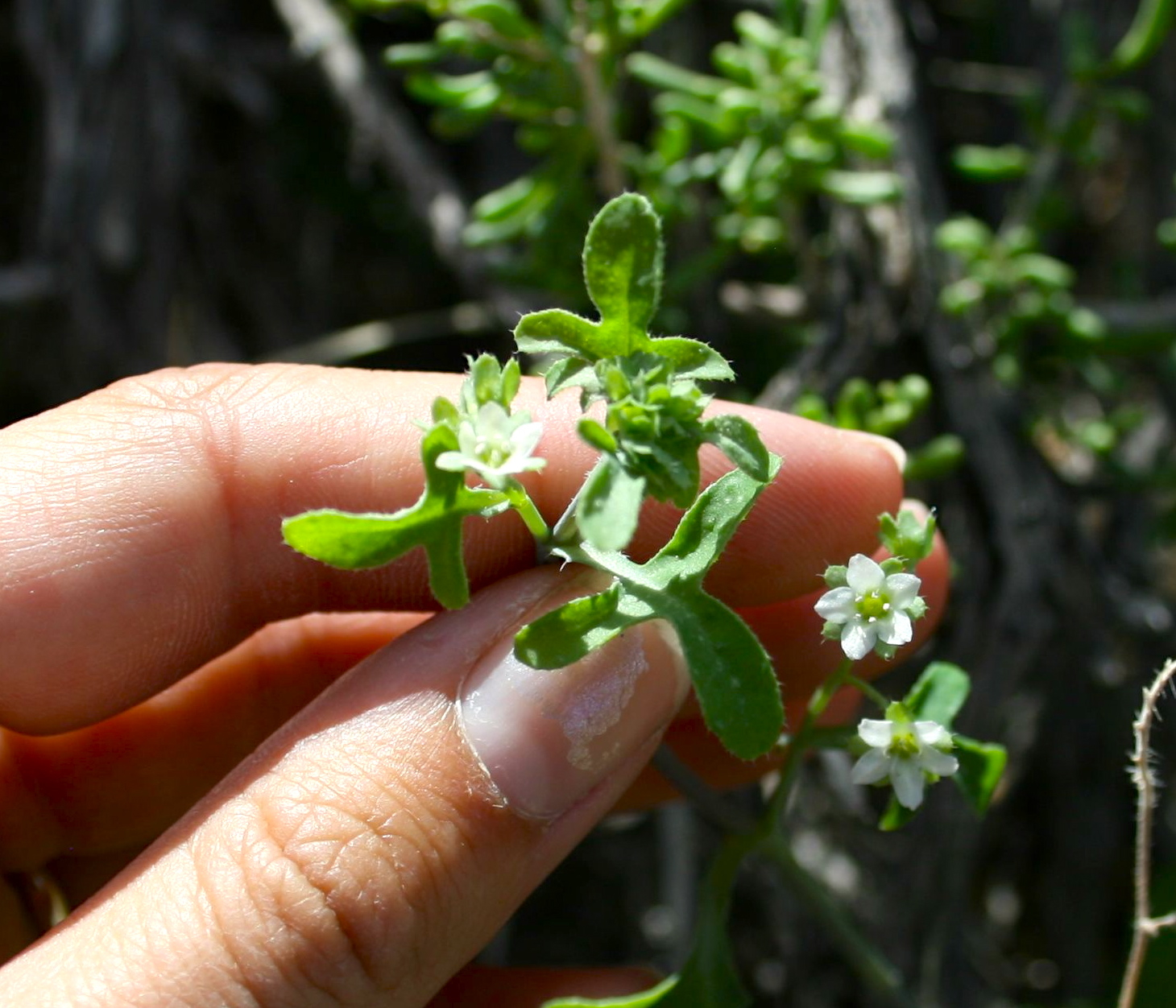
Photo by Chez Brungraber
Family: Hydrophyllaceae · Type: Herb · Native
Pholistoma membranaceum (White fiesta flower) is a native California herb in the Hydrophyllaceae family, recognized by flower color and stem coating most diagnostic.
White fiesta flower is a California native annual found in central Coast Ranges, Sierra Nevada Foothills, San Joaquin Valley, Central Western California, southwestern California, and desert regions in beaches, bluffs, ravines, wooded slopes, and desert washes at elevations of 40 to 1,400 meters. Flowering from February to May, this plant produces delicate white flowers with distinctive purple-spotted lobes in small clusters of 2 to 10 blossoms. Growing with slender, pale bluish-green stems 10 to 90 centimeters tall, it spreads across varied landscapes with an elegant, somewhat sprawling form. Its lower leaves are broadly oblong to ovate, 2 to 13 centimeters long, with 5 to 11 rounded lobes and a heart-shaped or truncate base, creating a distinctive leafy appearance. Small fruits develop 2 to 4 millimeters wide, containing one or two seeds.
Identification and appearance
Key characters: 4 sympatric species; flower color and stem coating most diagnostic
Habitat and range
Habitat: Beaches, bluffs, ravines, wooded slopes, desert washes
Elevation: 40-1400 m
California counties: Santa Barbara, San Bernardino, Inyo, Kern, Imperial, Riverside, Los Angeles, Tulare, San Luis Obispo, Alameda, San Benito, Fresno, Stanislaus, San Diego, Santa Clara, Monterey, Kings, Contra Costa, Ventura, Merced, San Joaquin, Mariposa, Trinity
Outside California: Baja California
Bloom period
Pholistoma membranaceum blooms Feb-May.
How to tell it apart
vs Phacelia: Pholistoma has bristly fruits and long stamens protruding from flowers; Phacelia has smooth capsules and included stamens.; vs Nemophila: Pholistoma fruits are covered in stiff rough bristles; Nemophila fruits are soft and velvety.; vs Eucrypta: Pholistoma has bristly fruits and long protruding stamens; Eucrypta has smooth fruits and tiny included stamens.; vs Solanum: Pholistoma has protruding stamens from tubular flowers; Solanum has stamens forming a yellow cone in star-shaped flowers.; vs Brandegea: Pholistoma has regular 5-petaled flowers; Brandegea has separate male/female flowers with tendrils.
Frequently asked questions
Is Pholistoma membranaceum native to California?
Yes. Pholistoma membranaceum is native to California (recorded as native).
When does Pholistoma membranaceum bloom?
Pholistoma membranaceum blooms Feb-May.
Where in California does Pholistoma membranaceum grow?
Pholistoma membranaceum occurs in Santa Barbara, San Bernardino, Inyo, Kern, Imperial, Riverside, Los Angeles, Tulare and other counties, at elevations of 40-1400 m.
What plant family does Pholistoma membranaceum belong to?
Pholistoma membranaceum is in the Hydrophyllaceae family, genus Pholistoma.
What habitat does Pholistoma membranaceum grow in?
Pholistoma membranaceum grows in Beaches, bluffs, ravines, wooded slopes, desert washes.
Related species
Other California species in the same genus, family, or bioregion.
Sources: Jepson eFlora · Index of California Plant Names · CalPhotos
Last updated 2026-10-07
Data from The California Species Project — 14,000+ California species with verified data from CNPS, CDFW, USFWS, Cal-IPC, and more.