Phyla nodiflora
Common lippia
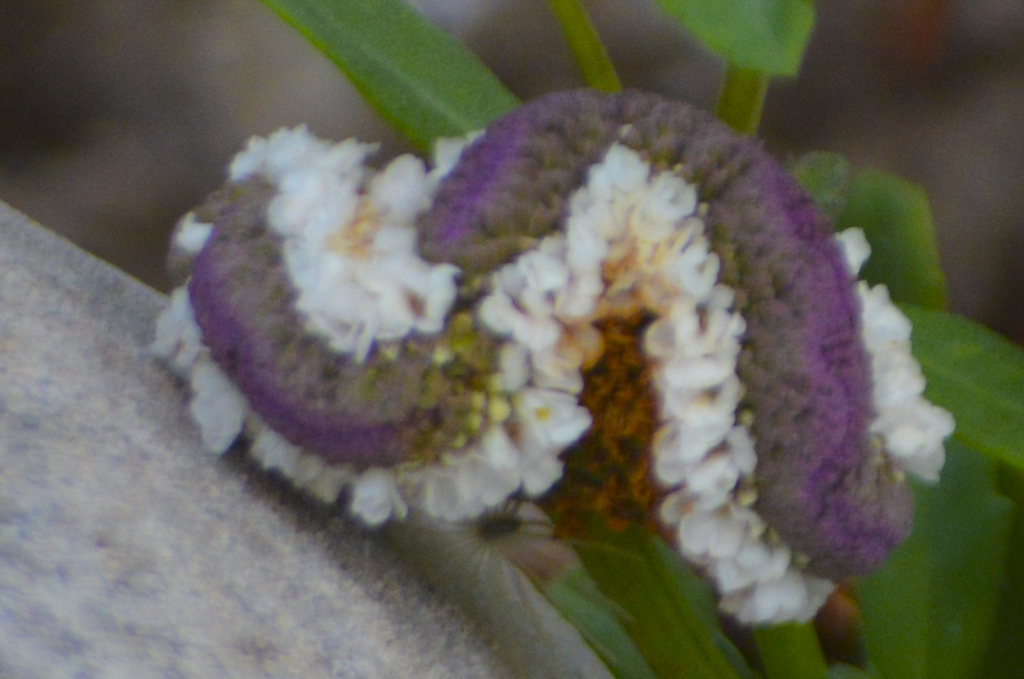
(c) ANABEL CHAIDES, some rights reserved (CC BY) · licence
Family: Verbenaceae · Type: Herb · Native
Conservation status: CNPS CBR
Phyla nodiflora (Common lippia) is a native California herb in the Verbenaceae family, recognized by . Clear morphological differences in leaf size, serration pattern, and growth form.
Common lippia is a California native perennial found in northwestern California, the Great Valley, Central Coast, San Francisco Bay Area, southern California, Channel Islands, Peninsular Ranges, southeastern Mojave Desert, and Sonoran Desert in wet places and pond margins at elevations below 400 meters. Flowering from May to November, this plant produces white to reddish flowers in compact heads 6 to 10 millimeters long. Growing with spreading branches less than 15 centimeters long and internodes typically shorter than 4 centimeters, it forms low-spreading clumps. Its leaves are 5 to 30 millimeters long, with margins that are nearly entire or lightly serrated toward the leaf tip. The plant spreads easily in moist habitats, creating dense ground-covering patches.
Identification and appearance
Key characters: 1 sympatric species. Clear morphological differences in leaf size, serration pattern, and growth form.
Habitat and range
Habitat: Wet places, pond margins
Elevation: < 400 m
California counties: Orange, Tulare, Imperial, Sutter, Ventura, Napa, Fresno, Los Angeles, San Diego, San Joaquin, Lake, Merced, Kern, Riverside, Santa Barbara, Sonoma, Kings, San Bernardino, Contra Costa, Tehama, Santa Clara, Yolo, Colusa, Calaveras, Solano, Alameda, Mendocino, Sacramento, Stanislaus, Humboldt, San Mateo, San Luis Obispo, Butte, Santa Cruz, Monterey
Outside California: warm temperate, tropics +- worldwide
Bloom period
Phyla nodiflora blooms May-Nov.
Conservation status
CNPS CBR
How to tell it apart
vs Trifolium: Phyla has tubular two-lipped flowers; Trifolium has pea-family flowers with clover leaves.; vs Lantana: Phyla forms low mats in wetlands; Lantana is a woody shrub in disturbed dry areas.; vs Lippia: Phyla has distinctly flattened calyx; Lippia has cylindrical calyx (note: Lippia may be synonym).; vs Verbena: Phyla has flattened calyx with 2-4 teeth; Verbena has cylindrical calyx with 5 teeth.; vs Aloysia: Phyla grows as low mat in wetlands; Aloysia is desert shrub with narrow flower spikes.
Frequently asked questions
Is Phyla nodiflora native to California?
Yes. Phyla nodiflora is native to California (recorded as native).
When does Phyla nodiflora bloom?
Phyla nodiflora blooms May-Nov.
Where in California does Phyla nodiflora grow?
Phyla nodiflora occurs in Orange, Tulare, Imperial, Sutter, Ventura, Napa, Fresno, Los Angeles and other counties, at elevations of < 400 m.
What plant family does Phyla nodiflora belong to?
Phyla nodiflora is in the Verbenaceae family, genus Phyla.
Is Phyla nodiflora rare or endangered?
Phyla nodiflora carries California Rare Plant Rank CBR.
Related species
Other California species in the same genus, family, or bioregion.
Sources: Jepson eFlora · Index of California Plant Names · CalPhotos
Last updated 2026-10-07
Data from The California Species Project — 14,000+ California species with verified data from CNPS, CDFW, USFWS, Cal-IPC, and more.