Physalis philadelphica
Tomatillo, Tomatillo
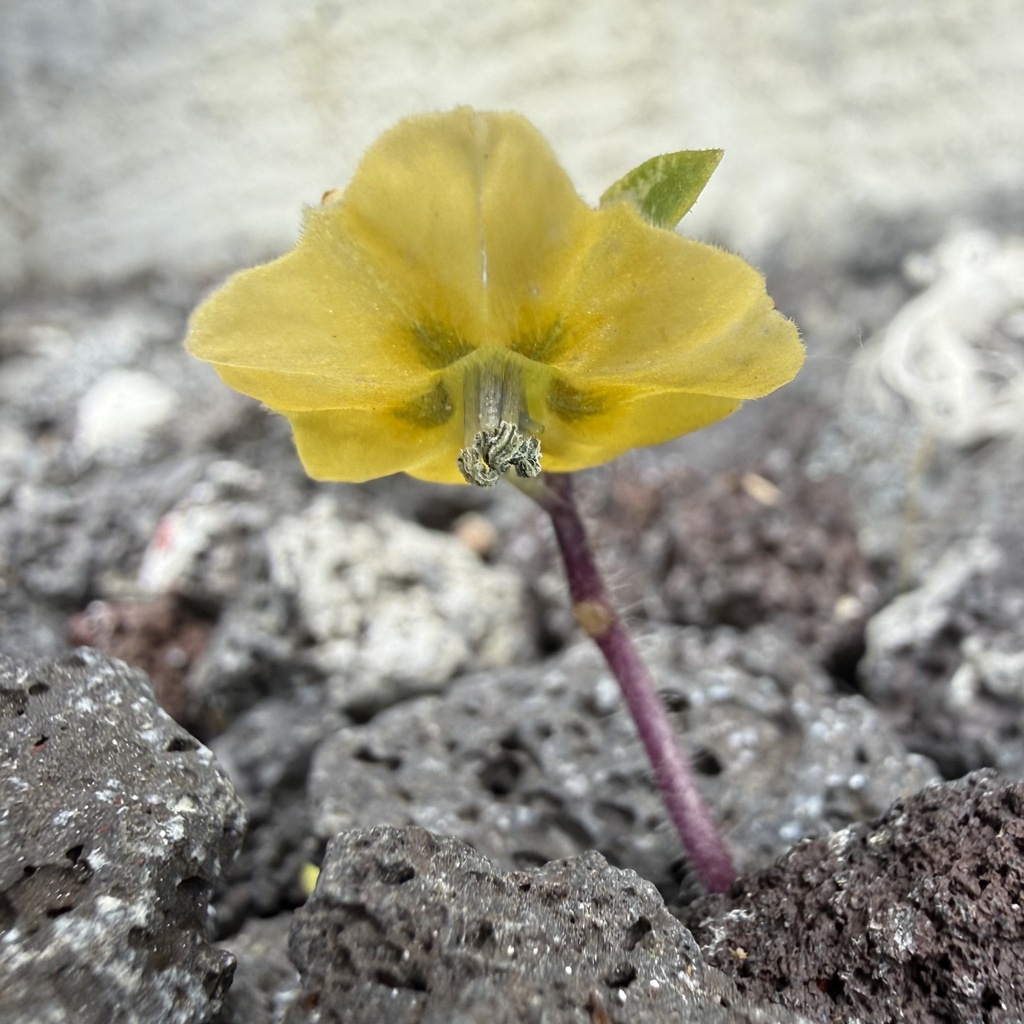
(c) Tara Severns, some rights reserved (CC BY) · licence
Family: Solanaceae · Type: Herb · Not Native
Physalis philadelphica (Tomatillo) is a non-native California herb in the Solanaceae family, recognized by (P. acutifolia, P. crassifolia). Key features: short pedicels, purple-spotted flowers with hairy tube interior.
Tomatillo is a naturalized annual found in the Sierra Nevada foothills, Central Valley, central western California, southern coastal California, and Peninsular Ranges in disturbed places, moist ground, and roadsides at elevations below 700 meters. Flowering from May to September, this plant produces yellow flowers with five dark purple spots and a rotate shape 8 to 15 millimeters wide. Growing up to one meter tall with glabrous or sparsely puberulent stems, it develops lance-ovate to ovate leaves 2 to 8 centimeters long with rounded to tapered bases and entire or toothed margins. Its leaves have petioles generally half the length of the leaf blade, with acute to acuminate tips. The fruit develops in an expanded calyx 20 to 30 millimeters long, which provides a distinctive characteristic for identification.
Identification and appearance
Key characters: 2 sympatric species (P. acutifolia, P. crassifolia). Key features: short pedicels, purple-spotted flowers with hairy tube interior.
Habitat and range
Habitat: Disturbed places, moist ground, roadsides
Elevation: < 700(2000) m
Outside California: to eastern United States, native to Mexico
Bloom period
Physalis philadelphica blooms May-Sep.
How to tell it apart
vs Solanum: Physalis fruit is enclosed in a papery lantern; Solanum berries are exposed.; vs Datura: Physalis has small flowers and papery lantern fruits; Datura has huge trumpet flowers and spiny capsules.; vs Chylismia: Physalis has 5-petaled flowers and lantern fruits; Chylismia has 4 petals and elongated capsules.; vs Mirabilis: Physalis has papery lantern fruits; Mirabilis has hard, ribbed fruits without any husk.; vs Capsicum: Physalis lantern completely encloses fruit; Capsicum peppers are fully exposed when ripe.
Frequently asked questions
Is Physalis philadelphica native to California?
No. Physalis philadelphica is not native to California (recorded as not native).
When does Physalis philadelphica bloom?
Physalis philadelphica blooms May-Sep.
What plant family does Physalis philadelphica belong to?
Physalis philadelphica is in the Solanaceae family, genus Physalis.
What habitat does Physalis philadelphica grow in?
Physalis philadelphica grows in Disturbed places, moist ground, roadsides.
Related species
Other California species in the same genus, family, or bioregion.
Sources: Jepson eFlora · CalPhotos
Last updated 2026-10-07
Data from The California Species Project — 14,000+ California species with verified data from CNPS, CDFW, USFWS, Cal-IPC, and more.